



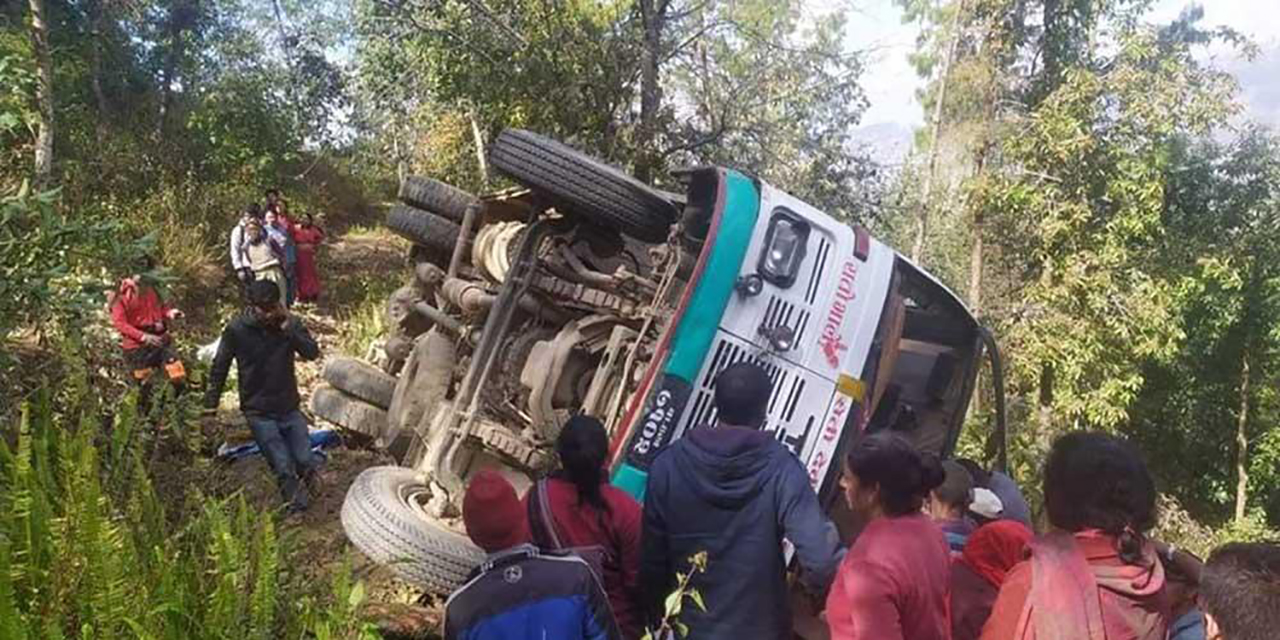

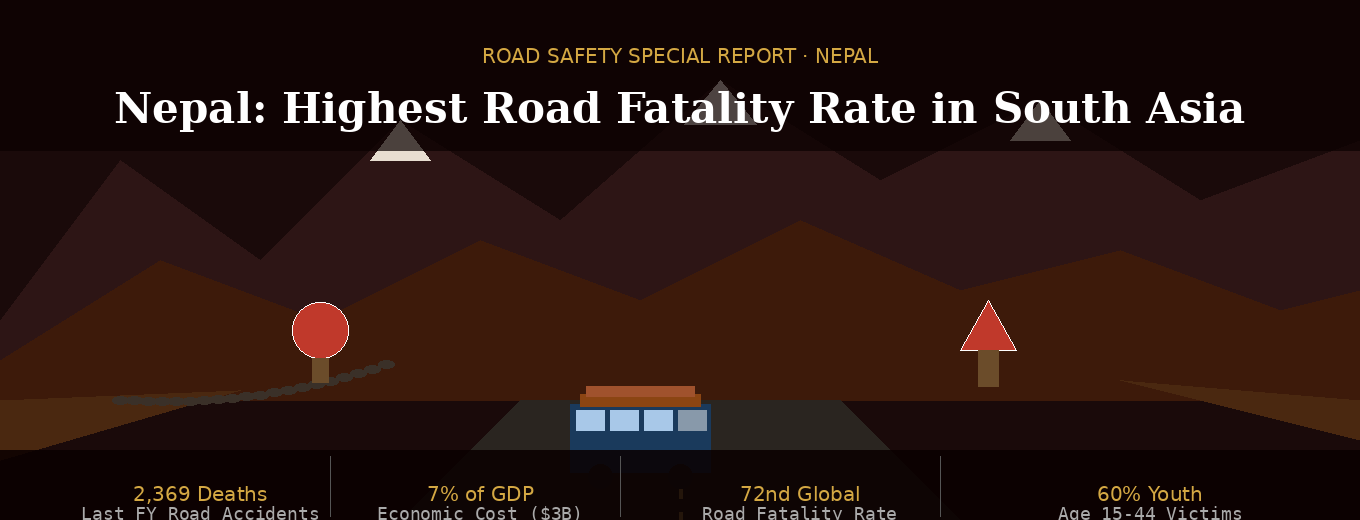
Kathmandu. Nepal ranks first among the South Asian countries in terms of the number of people losing their lives on road accidents. Nepal is ranked 72nd among Asian countries and 72nd in the world.
The economic burden of road accidents is very high compared to Nepal’s GDP. Deaths and serious injuries cost an estimated $3 billion in 2021, equivalent to about 7 percent of Nepal’s GDP. This is more than the 5.4 percent spent on health care in the same year. The damage caused by floods and landslides is many times more than the damage caused every year.


According to a report published by the Asian Transport Observatory, 60 percent of the people killed in road accidents in Nepal are between the ages of 15 and 44.
Traffic police officials say geography or roads are not the only reason behind the accidents. According to them, overcrowded buses, weak brakes, worn tyres, and poor vehicle testing system are all contributing to accidents. Apart from this, there is also organized resistance by the so-called syndicate mafia to replace old vehicles.
Minimum fines for speeding, overloading, or drunk driving, and bribery or political influence are often giving criminals a chance to get away.
Corruption in the distribution of vehicle licenses has also increased the number of accidents. Those who go to the trial with full preparation are forced to go for trial by giving them a small vehicle (brakes or gears not working). And they fail. Instead, most aspiring drivers think that it is better to pass the exam by paying a bribe than learning to drive.
Nepal’s increasing road traffic fatalities reflect the consequences of poor governance, not the inevitability of the terrain. Without secure infrastructure, strong laws, proper signals, adequate staffing, and serious investment in accountability, the death rate will continue to rise.
The International Road Accident Profile estimates that about 0.4% of Nepal’s GDP (annual investment of US$134 million) is likely to save nearly 3,000 lives annually through improved road safety infrastructure.
For any vehicle owner in Nepal, the minimum legal requirement is third-party insurance. But by paying a little more premium, more compensation can be included in the insurance. Comprehensive risk insurance provides some relief for the financial loss to the vehicle owner and the pain of the victim’s family after the accident.