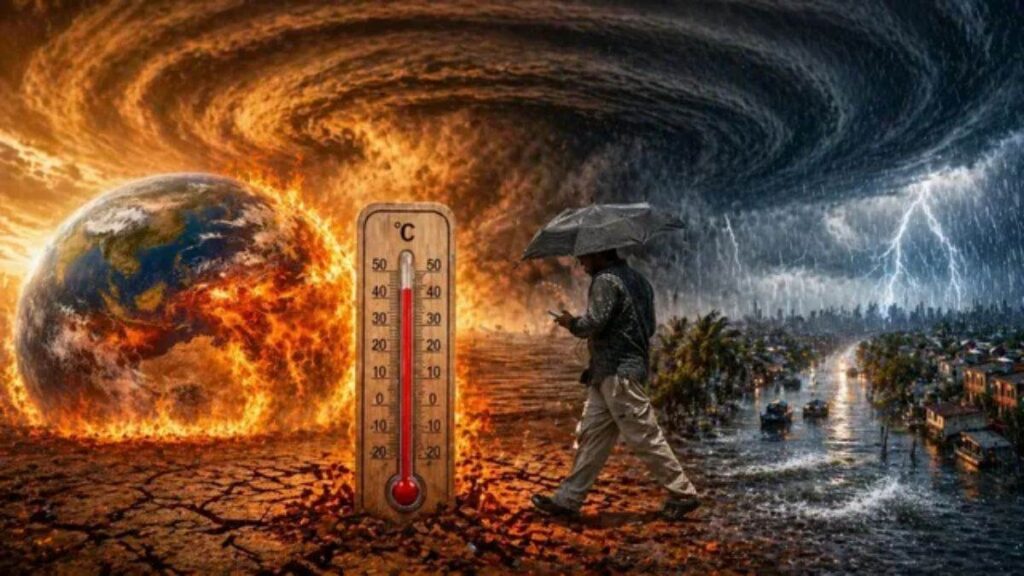





Kathmandu. According to the International Organization for Migration (IOM), climate change in South Asia is threatening people’s livelihoods and forcing them to leave their homes. In the worst-case scenario, 40.5 million people in South Asia could be forced to leave their homes by 2050.
Speaking to AFP in New Delhi, IOM Director-General Amy Pope said rising sea levels, flooding and drought could threaten people’s homes and farmlands. “However, this damage can be mitigated through technology and government action,” she said.



According to Pope, with better data and AI, governments can identify vulnerable communities before disasters occur. “With advances in AI forecasting, we can now better predict communities that are at risk of displacement,” she said.
By combining weather forecasts and local livelihood information, officials can identify which communities need the most help. “If we know a community is at risk, we don’t have to wait for them to be displaced; rather, we can take action quickly,” Pope said, adding that these measures could include improving farming practices, training people for other jobs and, if necessary, relocating communities frequently affected by floods or droughts. ’
The Pope recently visited India on an official visit. She said, “When people are not able to grow food or feed their animals, they are more likely to be displaced. In such a situation, people often have no other option but to leave their homes.” Climate change is accelerating urbanization in India. ’
According to Pope, India’s technological capabilities can help its workers compete internationally. “Especially at a time when AI is transforming employment patterns,” she said, “AI can jeopardize some jobs. Especially those jobs that routinely involve analyzing documents and reports.” However, human labor is still needed in many other sectors. ’
“If we combine this technological ability with labor mobility, so that workers can be skilled for new emerging jobs, they will have an edge,” the pope said.
These threats are particularly acute in South Asia. Where large populations and limited resources leave many communities in a very vulnerable position. “There is a lack of seriousness globally about the threats faced by these vulnerable communities. In addition, the funds to prepare people for climate change are inadequate,” she said.