




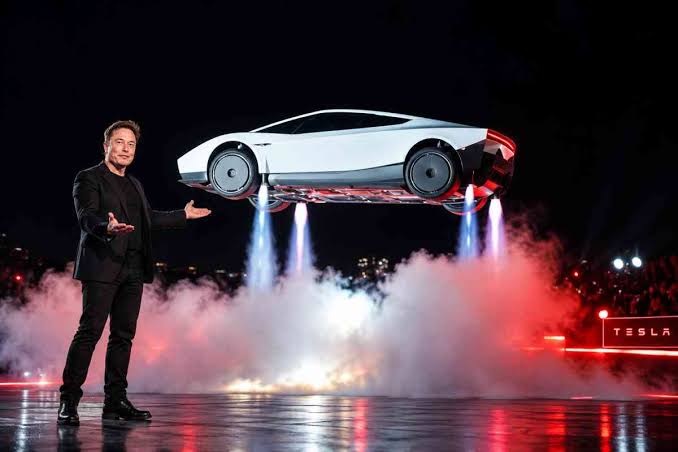

Kathmandu. Tesla’s new Roadster car flies slightly above the ground with the help of special equipment. But if there is an accident at this time, who will pay for the insurance?
This question has been raised after the car was exhibited in the US. It is not yet clear whether such an accident will be covered by regular motor insurance.



Tesla demonstrated the car at the SpaceX test center in Texas on Thursday (October 15). During the test, the driverless car was driven upside down using a special system. It then got up from the ground, rotated, and then came down again. It also jumped on top of many other cars. However, it has not yet been proven whether it can fly for a long time like an airplane.
The Roadster is an electric sports car. Tesla plans to release three versions of it. The first version is designed for driving on public roads. The second has a special system for accelerating. The third version has technology to lift the car from the ground.
It has 10 special devices to release pressurized gas. These devices have tanks that can hold a total of 600 liters of nitrogen gas. Tesla developed this technology in collaboration with SpaceX. However, this version has not been approved for road use.
Tesla claims that its ‘thrust’ version can accelerate from a stationary position to about 97 kilometers per hour in less than a second. The company also said that the new roadster will have a top speed of more than 370 kilometers per hour and a range of more than 480 kilometers on a single charge.
The car was first announced in 2017 and was scheduled for delivery in 2020. After much delay, production is now scheduled to begin in 2028.
Motor insurance provides separate protection for damage to your own car and damage to other people or their property. However, not all insurance policies offer both of these benefits. According to the National Association of Insurance Commissioners (NAIC), insurance agreements clearly state the extent of damage coverage. As a result, whether or not you get compensation if your roadster (flying car) is involved in an accident while flying depends on the terms and laws of the insurance.
If the car falls from a height and injures someone or damages a house or other vehicle, an indemnity claim can be made. If the accident occurred due to the driver’s negligence, he or she may be liable. However, if there is an error in the design or construction of the car, the manufacturer may also be liable. However, the amount of compensation to be paid by the insurance company should be determined individually.
The car’s unique technology can also create new risks. A pressurized gas tank burst, a mechanical failure, or a loss of control of the car can all lead to major damage. However, more testing data is needed to determine the extent of such incidents.
It is not clear whether motor insurance alone will be sufficient for such a vehicle or whether aviation insurance will also be required. Aviation insurance provides protection against damage to the aircraft and injuries to passengers or others. Therefore, roadster may require special insurance. Which includes both.
Pricing insurance can also be challenging. The amount that a customer pays for insurance is called a ‘premium’. This amount is usually determined by considering the value of the car, its use, and the risk of an accident. However, there is currently a lack of adequate data on accidents related to cars such as roadsters. Therefore, it will be necessary to determine the premium based on the safety of the car and the test results.
Obtaining permission to drive this car also creates many complications. The US aviation regulator, the FAA, states that the roadster currently on display cannot be considered an aircraft. However, this does not mean that the car is approved to fly. In the future, it may require separate approval and special driver training. Insurance regulations may also depend on the type of vehicle it is considered.
Paying excessive compensation in a major accident can put financial pressure on insurance companies. Reinsurance (reciprocal insurance) is used to reduce such risks. Through this, the insurance company shares a portion of the risk of major damage with another insurance or reinsurance company. Such an arrangement may also be necessary for roadsters.
An international discussion has begun about the insurance of flying cars. In an analysis published on January 2 of this year, U.S. insurance data analysis firm Verisk said the high cost of these vehicles and determining liability for accidents could pose a major challenge for insurance companies.
There is currently no information about any specific insurance or premiums for the roadster’s unique technology. Tesla has stated that it aims to start production in 2028. However, the car will need safety and government approval before it can be put into public use. This new technology could create new business opportunities for insurance companies.