



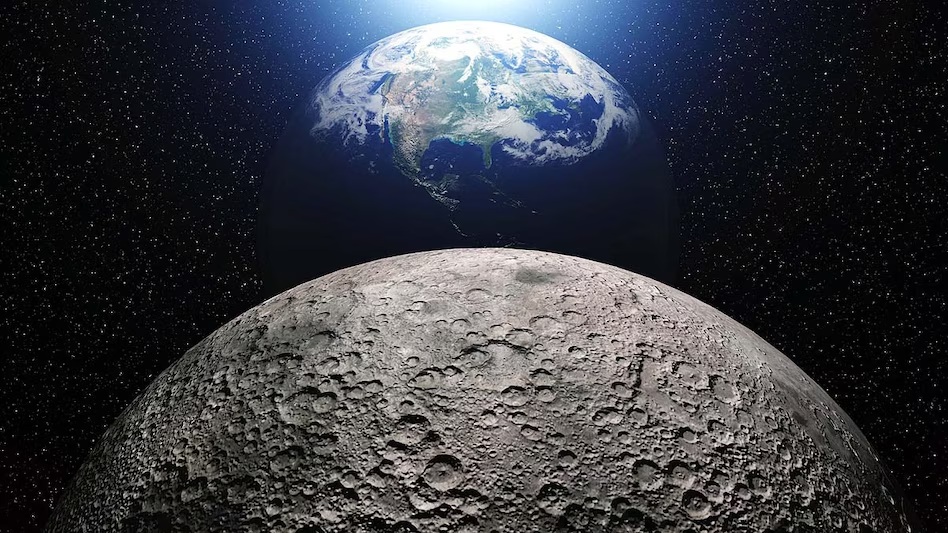

Kathmandu. The moon, shining in the sky, moves closer and farther every month. Its orbit is not completely round, but elliptical.
That’s why sometimes the moon comes closest to the Earth. Which is called perigee. Sometimes it moves the farthest. This is called apogee. Next Friday (October 30), the moon will reach the farthest distance from the Earth.



This distance will be about 4,03,945 kilometers. The average distance is about 3,84,400 kilometers. Now the question is, what will be the effect on the earth if the moon goes so far? What will change in the life of ordinary people?
tidal effects as the moon moves away
}
The biggest effect of the moon is on the water of the sea. The moon pulls the water of the sea with its gravitational force. This causes the tides of the sea. That is, high tides and low tides. When the moon is closer, this tone is slightly higher. Due to which the tide is higher. When the moon is farther away, the tone is weaker.
The tide will weaken a little on Friday due to the distance of the moon. The difference between high tide and low tide may decrease by a few centimeters. People living on the beach will not notice much difference. Because this change is very small. Weather and wind have a very big impact. Fishermen and sailors will have to work normally.
When the moon is farther away, it appears a little smaller and less bright in the sky. If that day was a full moon, it would be called a micromoon. But not every full moon is in apogee. The average person does not notice much difference with the naked eye. Because the change is only 10-14 percent. A little difference can be seen clearly in the picture or through a telescope. The nights will appear a little less bright, but the light will not be so low that it will be dark.
What happens if the moon goes away forever?
Now the moon is moving away only for a few days. Then it will return. But the question also arises: if the moon slowly moves away forever, what big changes can happen on the earth? According to scientists, the moon is moving about 4 centimeters away every year. This is a very slow process. Its effects will be seen after millions or billions of years.
The tides will be significantly weaker. This can reduce the supply of nutrients in the ocean. This can affect fish and marine life. Many organisms operate their life cycles based on the light of the moon and the tides. For example, some fish or migrating birds lay eggs. These can be affected.
The moon helps to keep the Earth’s axis stable. If the moon moves too far, the Earth’s axis will be more wobbly. This can change the seasons. Sometimes it can be very hot. Sometimes it can be very cold. The weather can be erratic. The length of the day can also increase slowly. This is because the moon slows down the Earth’s orbit. Currently, the day is 24 hours long; if it moves farther away, the days can be longer.
Solar eclipses will also be less frequent or disappear. Because the moon will appear smaller and less able to cover the sun completely. The nights will get darker. But this is a matter of millions of years. For now, there is no need to worry.
What should the average person do?
If the sky is clear this Friday, look at the moon. It will look small. However, it will still be beautiful. People living on the beach should take the usual precautions like every day. Scientists continuously measure the distance of the moon using lasers and satellites. This phenomenon is completely natural and normal. It happens every month.
The moon is a friend of our earth. It not only illuminates the night sky but also influences the tides, weather and life. This time it is moving farther away. However, its tone will only weaken and its size will shrink. Everything else will remain normal. Understanding these small changes in nature connects us to science. – Agency