



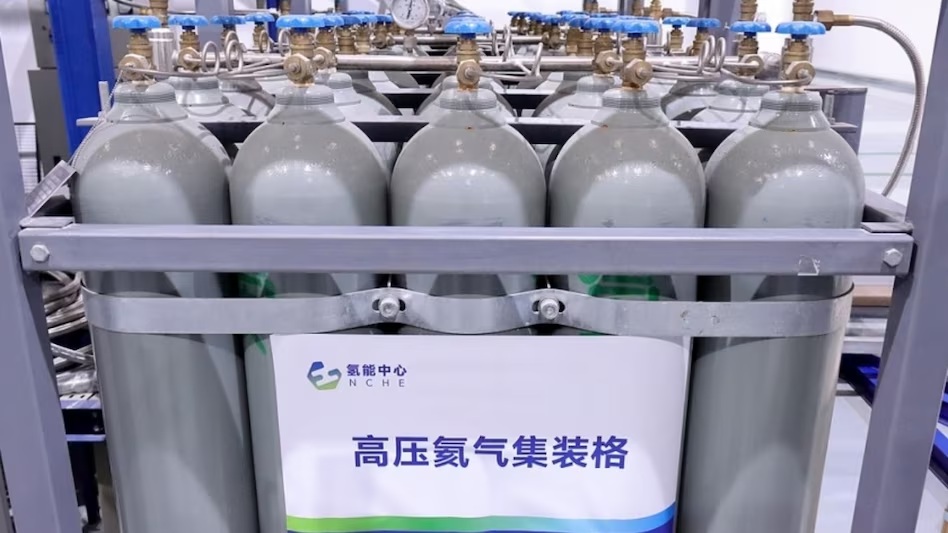

Kathmandu. Amid geopolitical tensions, China has once again taken a big step. China has shocked the whole world by banning helium exports. China exports up to 80 percent of helium. But now, after China’s ban, there is a new crisis in the chip manufacturing sector.
Helium is a gas that is considered very useful in semiconductor plants. If this ban continues for a long time, semiconductor makers will face higher costs and concerns about supply risks could increase.



Rising semiconductor costs could lead to higher prices for electronics and all chip-based components. In addition, the entire semiconductor-based industry could face a crisis.
Helium is responsible for a very small portion of the chipmaker’s operating costs. However, it is used in many stages of production. According to industry experts, there are no viable alternatives to this gas in many critical semiconductor processes. This makes it an important gas, even though it accounts for a small share of the overall cost of production. Advanced chip production also relies on specialty chemicals and industrial gases. Helium is one of the most essential gases due to its unique physical properties.
The latest disruption follows a military attack on Qatar’s Ras Lafan refinery earlier this year. Ras Lafan is one of the largest helium centers in the world. While supplies are expected to improve once hostilities end, China’s decision to halt helium exports has tightened an already limited market.
Helium has become a strategically important gas for semiconductor production due to its high thermal conductivity, chemical inertia, and ultra-low boiling point. This wafer is required for backside cooling, leak detection, cryogenic systems, passive purification and selection implantation and metrology processes.
However, helium only contributes a small part of the construction cost. This represents a significant single-point dependency. This can hinder production if there is less supply. This gas is used in the manufacturing of GPUs, AI accelerators, logic chips, DRAM, NADA flash, high-bandwidth memory (HBM), automotive chips, RF components, and power semiconductors.
In 2025, U.S. sales of grade-A and gaseous helium reached approximately 81 million cubic meters. Qatar produced about 63 million cubic meters out of a total of 191 million cubic meters worldwide. So the two countries supplied about three-quarters of the market. Of these, Russia had 18 million cubic meters, Algeria 11 million cubic meters and Canada 6 million cubic meters.
South Korea, one of the world’s largest semiconductor production hubs, sources about 65 percent of its helium imports from Qatar. That highlights the industry’s reliance on certain suppliers.
Not only is China the world’s largest helium producer, but it plays a major role in helium processing, distribution, and supply to semiconductor manufacturers across Asia. –Agency