



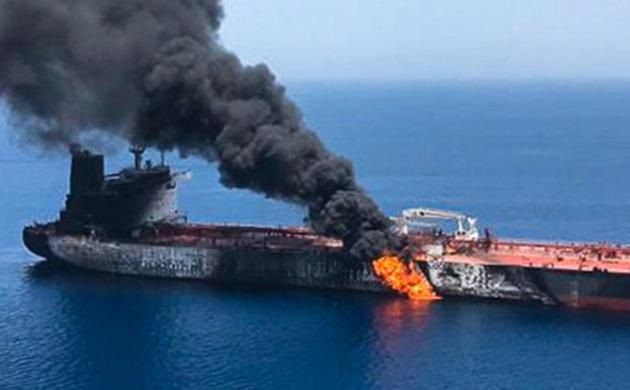

Kathmandu. Heightened military tensions around the Strait of Hormuz have disrupted global energy supplies and maritime trade. Oil tanker fares have risen sharply, war risk insurance premiums are rising and many ships are waiting in Gulf waters. As a regional energy and transshipment hub, the United Arab Emirates (UAE) is under the most pressure.
Increased oil transportation rate{



}
According to market watchers and ship brokers, many large crude oil tanker (VLCC) charter rates have risen sharply due to the growing security risks around the Strait of Hormuz.
The Worldscale Index, an international tanker freight index, measures charter rates for the transportation of oil from the Middle East to various destinations in Asia. This index has shown a significant increase in rates.
According to recent shipping market transactions, some VLCC charter rates have reached several hundred global points. Which is many times more than before. As a result, the cost of transporting oil to East Asia is rising rapidly. Market analysts predict that these costs could rise further if this situation continues for a long time.
Strait Ship Traffic
Several maritime monitoring sources, including Reuters, said at least 150 oil and LNG tankers were waiting at anchor around the Strait of Hormuz following the recent attacks.
Many ships are waiting at a safe distance instead of entering the strait. Others are stuck on the other side of the straight. This has led to shipping delays and increased logistical pressures.
The U.S. Navy-led Joint Marine Information Center said while no formal maritime closure had been announced, sailors were advised to increase safety precautions, increase radio communications and increase naval presence.
increased war risk insurance premium
}
The stress has also directly affected the marine insurance market. Some insurance companies are offering war risk insurance for the Gulf region, issuing notices to cancel coverage or asking for higher premiums.
According to insurance brokers, war risk premiums for ships transiting the Strait of Hormuz could rise by up to 50 percent. According to insurance consultancy Marsh, the insurance cost of ships transiting in the Gulf was previously about 0.25 percent of the replacement price of the aircraft. This meant $100 million for the ship and about $25,000 per voyage insurance cost. A 50 percent increase in premiums could reach about $375,000.
According to insurance analysts, when the risk of attack or ship capture increases, underwriters adjust premiums for additional risk.
Multirisks for the UAE
The UAE is one of OPEC’s biggest oil producers and relies on the Strait of Hormuz for a significant portion of the country’s oil exports. However, the Habsan-Fujairah pipeline bypasses the Strait of Hormuz. It has the capacity to transport about 1.5 million barrels of oil per day from Abu Dhabi’s oil fields to the port of Fujairah. However, most energy exports from countries such as Iraq, Kuwait and Qatar still go through this route.
The UAE is also important as a regional trade hub. Dubai’s Jebel Ali and Khor Fakkan ports serve as major transshipment hubs between Asia, Europe and Africa. Increasing maritime security risks can lead to delays and additional costs in container shipping.
Shipping companies alert
Major international shipping companies are monitoring the situation closely. Some have temporarily suspended transit or are using alternative routes. This is increasing the risk of delays and additional costs for transporting goods to and from the Middle East.
Potential impact on the global energy market
}
About 5 percent of the world’s seafood passes through the Strait of Hormuz. Disruptions in this waterway could therefore affect global energy markets rapidly.
If the system remains nearly constant for a long time, oil prices could rise sharply and put pressure on global energy supply systems, according to energy analysts. The Middle East region accounts for about 15% of global aluminum exports and a significant share of the fertilizer trade, and a significant portion of these products also pass through the Strait of Hormuz.
Prolonged closures can increase the price of oil, transportation fares, and insurance premiums. Globally, production costs could rise and create new inflationary pressures.
Currently, the UAE’s ports, pipelines and trade routes have emerged as an important hub for the global energy supply system. How long will this crisis of security risks and insurance costs continue? This is now a big question in the international market. –Agency