




Kathmandu. US President Donald Trump’s crackdown on Venezuelan President Nicolas Maduro has greatly benefited a small country. Venezuela’s neighbor Guyana has taken the jackpot since Maduro’s ouster. That’s because big companies have lined up to invest in its newly discovered crude oil fields.
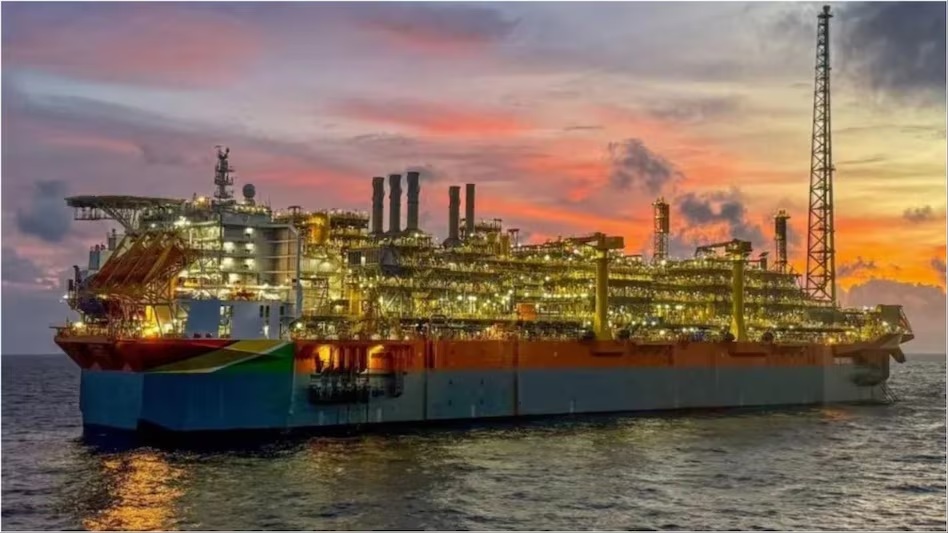
A decade ago, U.S. company ExxonMobil discovered huge oil reserves in Guyana’s Stabroek block. Before the discovery, Guyana was one of the poorest countries in South America.



Guyana, with a population of less than 1 million, strengthened its economy by selling oil and receiving royalties. In 2019, it became a double-digit economic powerhouse.
But in the midst of all this, Guyana has faced constant threats and territorial disputes from Venezuela. Guyana and Venezuela have a century-old territorial dispute. Nicolás Maduro has been threatening to annex Guyana’s Essequibo region and is seeking to increase his military and naval presence in the region. All these obstacles are plaguing Guyana.
Maduro’s claims against Acequibo intensified after reports emerged that billions of barrels of oil had been discovered off the coast of Guyana. But now Maduro has been removed from the path of Guyana.
Earlier this year, US President Donald Trump kidnapped Maduro in a military operation. He is currently in US custody and facing drug and corruption charges. Maduro’s departure has eased Guyana’s tensions.
Regarding the Essequibo region, the dispute is ongoing at the International Court of Justice and may take years to reach a final decision.
Exxon CEO Darren Woods said Maduro’s departure would reduce Venezuelan naval patrols in the disputed region and create a more conducive environment. “The company will now have the opportunity to explore more areas for oil,” Woods said. ’
The U.S. company Chevron also has a stake in Guyana’s oil field. Last year, the company completed its acquisition of Hess Corp., a partner of Exxon. It had a 30% stake in Stabroek Block. Guyana’s offshore oil fields are considered a “golden treasure” for companies.
Guyana’s offshore oil fields are considered highly attractive assets. That can generate billions of dollars in revenue for partner companies. The cost of oil production here is estimated to be around 430 per barrel. Which is very low. This will significantly benefit oil producing companies.
Guyana would also benefit from a reduction in tensions with its neighbour, Venezuela. This is because foreign investors will now feel less risky when they invest in Guyana.
Henry Zimmer of the Center for Strategic and International Studies told Oil Price, an energy price monitoring website, “If there is one country that will benefit the most from the ouster of Maduro, it will be Guyana.” —Agency