



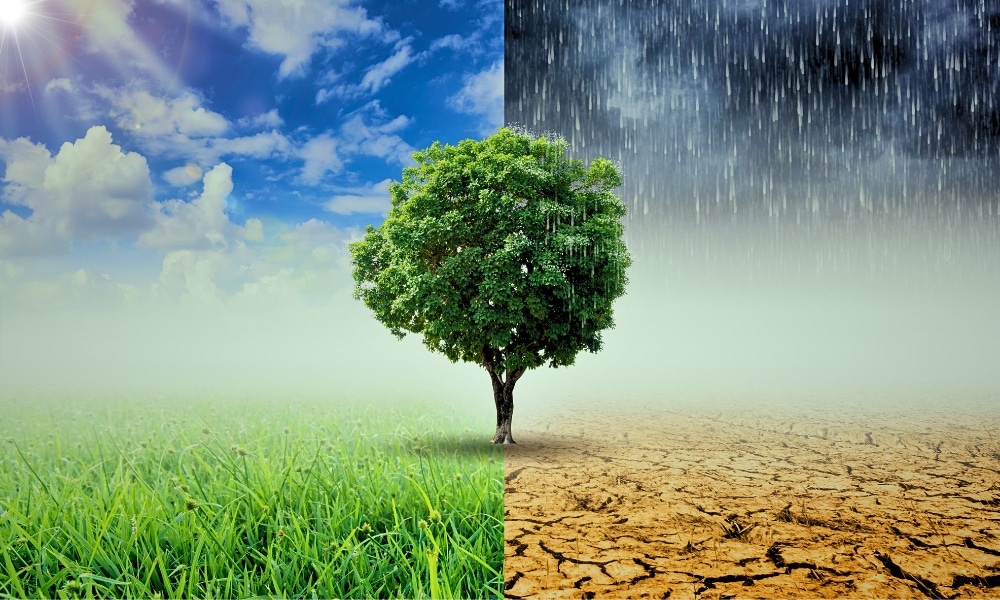

Kathmandu. Due to its contribution of less than 0.1 percent to the global greenhouse gas emissions, Nepal is in the list of the most vulnerable countries to the effects of climate change. Due to this, it has been suffering a large amount of loss of life and property every year.
According to the United Nations Development Programme (UNDP) and various studies, Nepal is projected to lose about 3 percent of the Gross Domestic Product (GDP) by 2050 due to climate change. This is sure to create a crisis in the economy and hurt poverty alleviation and the achievement of the Sustainable Development Goals.



Recently, snowfall and unseasonal rains, droughts and excessive rains in the Bhotekoshi river basin have caused huge loss of life and property every year. Last year, more than two dozen people lost their lives due to floods in the Bhotekoshi river at Tatopani border.
More than 1,100 people have lost their lives due to the devastating floods in the Bhotekoshi River in Rasuwa after almost a year. More than 4,000 people are still missing. The floods have caused damage to physical infrastructure, hydropower projects, major highways, bridges and private property worth billions of rupees.
The international community is now preparing to take up the agenda of ‘climate and compensation’ with priority instead of asking for simplified ‘disaster assistance’. For this, it will raise its voice in diplomatic initiatives and even in the United Nations General Assembly.
Low-emitting and smaller countries such as Nepal are under pressure due to the world’s top emitters (China 32 percent, the US 25 percent and India 8 percent).
In this context, Nepal has formally written to the United Nations’ ‘Loss and Damage Fund’ (Loss and Damage Response Fund) for assistance in emergency financial times. Apart from this, Nepal is preparing to raise the issue of climate and pollution by the countries of climate and pollution in the United Nations General Assembly in September.