



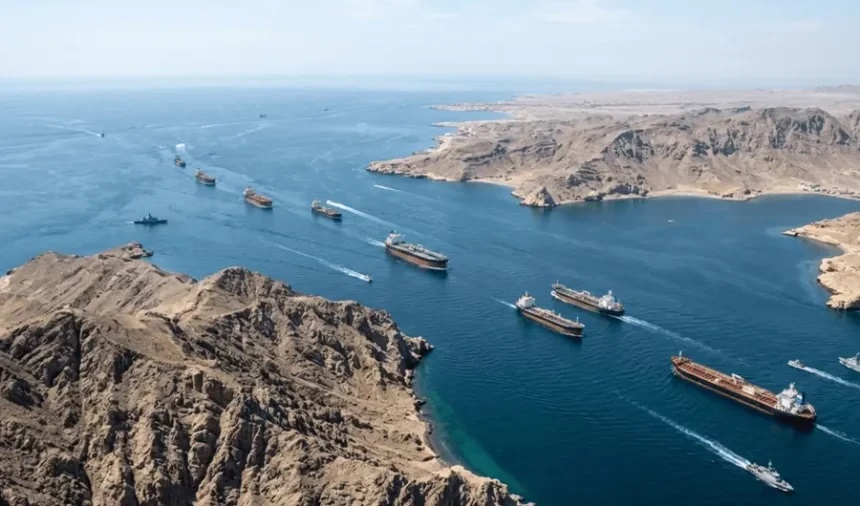

Kathmandu. Insurance companies are tightening restrictions on travel through the Strait of Hormuz (shipping route). They are increasingly determining whether ships can travel, imposing stricter sanctions and war risk requirements.
In a conversation with Insurance Asia, Oliver Milosevsky, head of shipping for Asia at Aon Plc, said: “What has changed? That’s not a demand in itself. But how risk is valued, managed, and managed to meet that demand? The Iran war has become a permanent operating condition for shipping companies, insurance companies and cargo owners, rather than a temporary disruption. ’



In the Asia-Pacific region, demand for crude, liquefied natural gas (LNG) and dry bulk commodities remains strong. However, the shipping situation has changed significantly.
Traffic through Hormuz is still well below pre-crisis levels and insurance companies continue to evaluate trips individually. “The recent return of ships and the limited resumption of transit should not be interpreted as a return to market confidence,” Milosevsky said. ’
According to law firm K&L Gates, traffic is significantly less than the hundreds of ships that used to transit the Straits every day before war. “The markets are pragmatic. Many mainstream shipowners are still far from this path,” the firm said. ’
Japan and South Korea are among the most vulnerable economies in Asia. That’s because they depend on Gulf energy imports. K&L Gates said, “South Korea and Japan are particularly at risk. This risk is reflected in how energy majors and government buyers are structuring charter arrangements and creating pathways. ‘
South Korean buyers are exploring other energy sources, including U.S. LNG and Australian supplies. However, such changes take time. Shipping companies are also optimizing their operations. Ship owners are taking a more deliberate approach to aircraft deployment. However, charters are demanding more flexible agreements and pathways.
According to K&L Gates, the chartering structure and shorter charter period have also increased significantly. “This is because both owners and charterers seek to reduce further risk in unpredictable markets,” the firm said.
Travel planning now includes greater route flexibility to adapt to changing insurance conditions. The blockade in Hormuz is also exacerbating major geopolitical pressures across Asia.
According to K&L Gates, tensions related to Taiwan remain the biggest medium-term risk. “This growth could disrupt the semiconductor supply chain and container trade in the Pacific,” the firm warned.
Japan-China tensions are also slowly changing trade flows. This is because Japanese companies are diversifying their sourcing to Southeast Asia and India. “The current shipping market is no longer reacting to isolated geopolitical events,” the firm said. — Insurance Asia