




Kathmandu. With the implementation of federalism, Gandaki Province has been further strengthening its economic identity. This state, endowed with geographical diversity and abundant natural resources, is emerging as an important pillar of the national economy.
According to the latest report of Nepal Rastra Bank, the share of Gandaki Province in the national Gross Domestic Product (GDP) is estimated to be around 8.97 percent. Current fiscal year 2082. The economic growth rate of Gandaki is estimated to be 5.51 percent in 1983. This is higher than the national average of 4.61 per cent.



The province is also ahead in terms of per capita GDP. The per capita income of Gandaki has reached USD 1,619. The national average is $1,496.
The contribution of the service sector (tertiary sector) to the national economy is 55.8 percent. This reflects the dependence and potential of the province on tourism and trade.
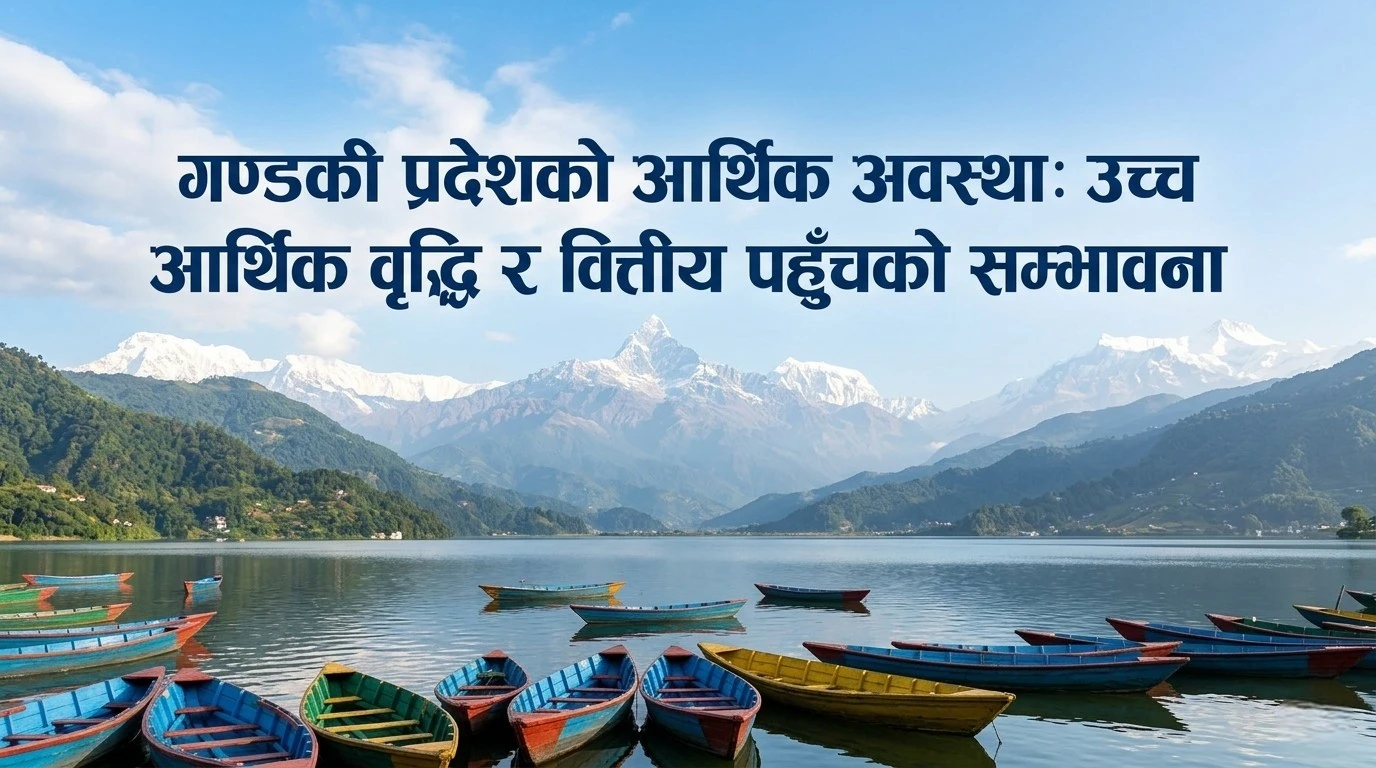
Similarly, the primary sector including agriculture and mines accounted for 27.8 percent of the total contribution while the secondary sector such as industry and construction accounted for 16.4 percent. Mountain ranges like Annapurna, Machhapuchhre and lakes like Fewa and Tilicho have strengthened the tourism sector here.
Financial literacy rate in Gandaki Province is 81.7 per cent. This is well above the national average (76.2 percent).
There are 1,392 branches of banks and financial institutions in the province as of mid-January 2082. The total deposit and loan flow has reached Rs 661.90 billion and Rs 362.82 billion. The use of digital banking is also increasing. More than 31.5 million people are using mobile banking.
FY 2082. The province government has allocated a budget of Rs 31.97 billion for the province. Of the total budget, 59.70 per cent has been allocated for capital expenditure and 39.50 per cent for recurrent expenditure. This makes it clear that the province’s priority is physical infrastructure development and productive sector. Revenue share is 56.27 per cent and grants is 38.25 per cent.
The province’s income inequality (Gini coefficient 0.37) is slightly higher than the national average (0.31). This points to the need for improvement in the distribution of economic benefits in Gandaki Province. All three tiers of government need to invest more to bridge the income inequality gap by implementing income generation programs for disadvantaged geography and communities. The population growth rate of districts like Manang and Mustang of Gandaki Province has become negative due to increasing migration of people in search of easy migration. This situation is another demographic challenge for the state.
Overall, high economic growth rate, rising per capita income and financial activism show that Gandaki Province is moving ahead on the path of prosperity. Gandaki is sure to play a leading role in the country’s economic development if the commercialization of tourism, energy and agriculture is further accelerated.