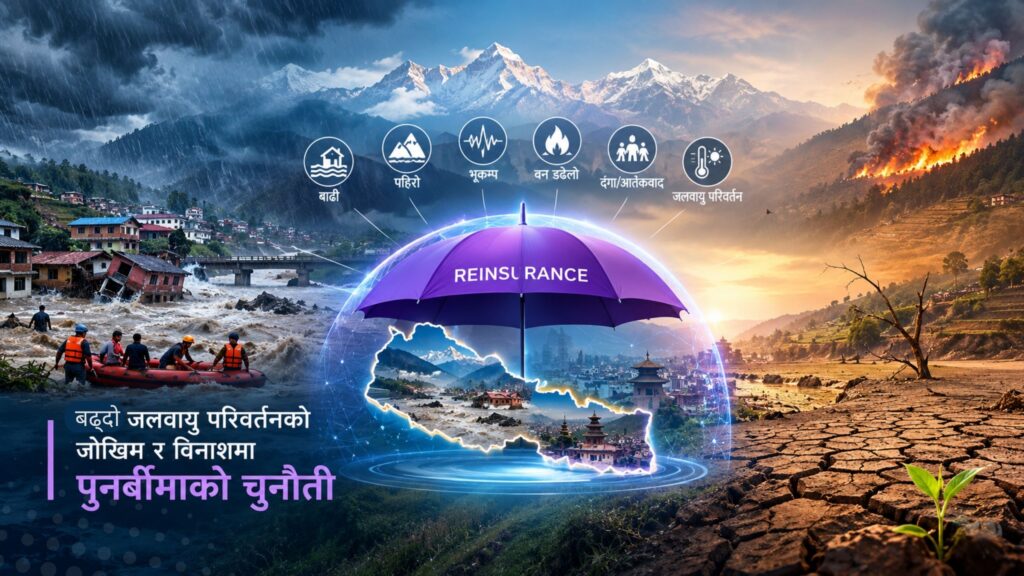





Kathmandu. Governments around the world are increasingly burdened with losses as insurance companies withdraw climate change-related insurance coverage.
According to a new report by Inside Track, a UK-based non-profit organization, insurance companies in major markets are quietly reluctant to insure properties most vulnerable to climate risk. As a result, governments and individual homeowners are bearing a disproportionate share of financial losses.



The report noted that the insurance industry is changing its commitment to floods, wildfires and extreme weather risks. “This was once the basis of standard property insurance policies,” the report said.
According to the report, insurance companies are not only raising premiums or adding stricter exclusions, they are refusing to renew insurance in some cases in high-risk areas. Losses that were previously shared through traditional insurance mechanisms are now increasingly falling into government accounts or directly to households who are forced to self-insure or rely on limited government disaster funds.
The change has drawn sharp criticism from senior industry figures. Last month, Aviva CEO Amanda Blank warned that homes under construction in the UK today could become uninsured as the risk of flooding increases. Allianz director Günther Thalinger has gone even further and suggested that as climate change accelerates, entire sectors could soon be out of reach of private insurance markets.
What makes Inside Track’s analysis particularly worrisome is its emphasis on cumulative impacts. Each withdrawn insurance coverage or limited coverage period widens the safety gap. This increases the likelihood that taxpayers will bear recovery costs after another major hurricane or heat wave. Homeowners in the affected areas face higher pocket costs, a drop in property values, and in the most severe cases, lenders asking for proof of adequate insurance.
Regulators and policymakers are faced with the same dilemma: how to streamline markets without creating permanent public liabilities or completely excluding ordinary households from insurance coverage.
Bloomberg said these concerns are no longer limited to academic forecasts or isolated coastal communities. “They have entered the mainstream industry discourse and are shaping the insurance strategies of some of the world’s largest insurers,” Bloomberg noted.
The uncertain question remains whether this response will include public-private risk sharing, expanded parametric production, or additional regulatory intervention. It is already clear that the traditional model of private insurance to absorb climate volatility is under pressure, and its costs are falling on external sectors. – Agency