



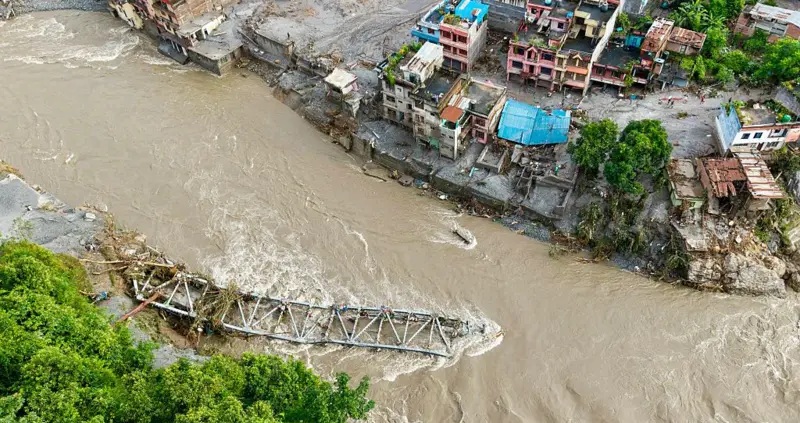

Kathmandu. The United Nations Development Agency (UNDP) has released a preliminary estimate that 84,000 people have been affected due to the devastation caused by the devastating floods in Bhotekoshi of Rasuwa on September 26.
According to a preliminary report published by UNDP, 84,270 people in 17 municipalities of Rasuwa, Nuwakot, Dhading, Gorkha, Chitwan and Tanahun districts have been affected.



According to the preliminary damage estimates made on the basis of satellite systems, preliminary data from the local level, national census data and projections, the highest number of affected people is concentrated in a limited number of municipalities. The most affected population is from Bidur (Nuwakot). Of the total affected, there are 25,354 (30.1%) people, followed by Benighat Rorang (Dhading) 11,313 (13.4%) and Gajuri (Dhading) 7,991 (9.5%). These three municipalities alone have 44,658 affected people, which is about 53% of the total affected population. Other significantly affected municipalities include Ichchha Kamana (Chitwan) with 6,560 and Galchi (Dhading) with 6,537 people.
The largest concentration of the effects of the disaster is in Nuwakot and Dhading. It covers about one-third of the total affected people within Bidur Municipality alone.
According to the Multidimensional Risk Index calculated from the 2078 National Population and Housing Census of Nepal, about 76% of the affected municipalities live in high-risk municipalities based on the pre-flood risk above average.
According to the current preliminary assessment, out of the total 2.2 million metric tons of mud, mud, debris swept away by the floods, personal property, vegetation, rocks, frozen soil and solid objects, 556,200 metric tons of debris are associated with the building.
Of the 2,359 buildings assessed, 1,890 are demolished, 187 are damaged and 282 are classified as potentially damaged. Bidur in Nuwakot has about 4,56,400 tonnes of sludge waste, followed by Gosainkunda with 88,200 tonnes of sludge. The rest of the municipalities account for about 2 per cent of the estimated building-related waste.
Preliminary modeling has estimated a potential damage of about US$170 million to residential and commercial buildings, with a modeling range of US$118.6 million to US$220.3 million. Almost all of the estimated building damage is concentrated in the Bagmati province, especially in settlements along the river in Rasuwa and Nuwakot. This estimate only covers the potential direct damage to buildings from floods and inundations, according to the UNDP report. According to the report, it does not cover the full economic impact of the disaster.