





Kathmandu. On July 24, 2001, real estate developer Larry Silverstein and his partners signed a 99-year lease for the World Trade Center complex from the Port Authority of New York and New Jersey. The $3.2 billion deal included Towers 1 and 2, the iconic Twin Towers, as well as buildings 4 and 5 and associated retail and subgrade space. Under the terms of the lease, Silverstein Properties was required to obtain significant insurance coverage for the properties. This was a common requirement between lenders and renters.
Working through insurance broker Willis Group Holdings, Silverstein created a complex multilevel property insurance program with more than 20 insurance companies and reinsurance companies. Total coverage per program was approximately $3.55 billion. This made it one of the largest commercial property insurance placements of its time. Because the rent had just been paid. It wasn’t until after September 11 that formal policies were issued to most participants. Instead, coverage was bundled through a series of insurance binders and slips. Which became a source of legal disputes.



The program included a primary layer of about $10 billion. There were a lot of extra layers on top of the small retention. Many of these additional layers were accumulated in the full $3.55 billion range. The participants were drawn from both domestic and international markets.
Swiss REA emerged as the largest single participant through its unit, SR International Business Insurance Company. About 22 percent of the program, or about $742 million, depending on the level count, was insured.
Other large or well-known insurance companies included Travelers Property Casualty Corporation. Which provided the primary layer. In addition, Lexington Insurance (a unit of AIG), Liberty Mutual, Allianz, Royal Indemnity and Houston Casualty were also included. Some carriers filled in more layers and created syndicated placements for high-value risks. Which no single insurance company could insure alone.
At that time, insurance policies were written on an “all-risk” basis. Terrorism was automatically included as a covered threat. Before the attacks, terrorism exclusion did not become the norm in the U.S. commercial property market.
Silverstein has issued a report saying it has pushed for property insurance at the full replacement price demanded by lenders. However, some appraisers underrated the old towers. It faced significant asbestos removal challenges and was not fully filled.
It was reported that the premium paid for this insurance coverage was sufficient in various accounts. However, accurate data for the entire program is not uniformly available in the public record. According to insurance industry experts, the costs reflect the larger range and unique nature of the risks. Silverstein’s team was negotiating hard to secure the best terms.
This placement took place a few weeks before the attacks. That time later fueled public speculation and conspiracy theories. However, a report released at the time stressed the need for an insurance contract. That was directly linked to lease signing and financing requirements.
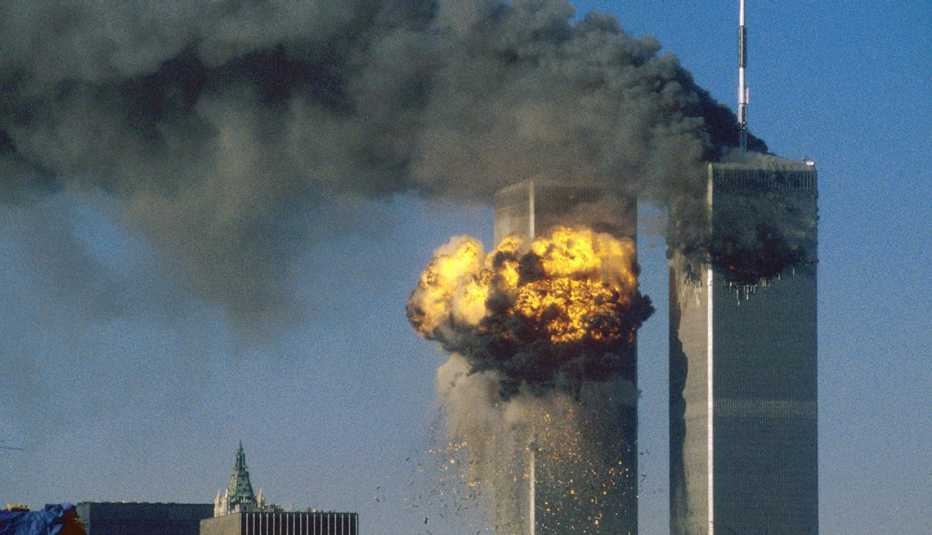
American Airlines Flight 11 crashed into the North Tower at 8:46 a.m. on September 11, 2001, and United Airlines Flight 175 crashed into the South Tower 17 minutes later. The disaster known as the terrorist attacks of 9/11 gave rise to one of the toughest insurance claims in history.
Silverstein immediately filed an insurance claim. He argued that the collision of two separate planes was two separate “incidents” under the terms of the insurance policy. If this interpretation were accepted, leaseholders would have been able to double the limit — about $7.1 billion. Insurance companies, led by Swiss Rico, responded that the coordinated terrorist attack was a single incident. This limited their collective liability to $3.55 billion.
The lack of a fully issued insurance policy made matters more complicated by the various forms of binders. Some Wilprops, including Swiss Rie, relied on the 2000 form. Which clearly defined the meaning of this ‘event’ as a single event. Others argued that the passenger would follow the form. It lacked a clear definition. This allowed the damage to the towers to be considered separately in New York’s ‘unfortunate event’ test or major construction. The dispute reached federal court in the Southern District of New York. This resulted in numerous lawsuits, appeals, and partial summary judgments.
In the first phase, a jury determined that some insurance companies, including other companies tied to Swiss Re and Will Prop Form, were responsible for only one incident. A subsequent lawsuit, involving nine other insurance companies, ruled that those carriers’ coverage was subject to permitting conditions for two incidents. That effectively doubled their stake (about $2.2 billion).
After further lawsuits, appeals and negotiations, some were facilitated by New York State officials, including then-Attorney General Eliot Spitzer and Insurance Superintendent Erie.
The two sides signed a global agreement in 2007. The insurance companies eventually paid $4.55 billion to Silverstein Properties. That’s about $1 billion more than the limit for a single event. But it was significantly less than the $7.1 billion initially sought.
This payment included property damage to demolished and heavily damaged buildings, as well as business disruption elements. However, separate claims cases extended the resolution timeline. The 9/11 insurance losses (property, business interruption, liability, life and aviation) across all lines ranged from about $32 billion to $40 billion. Which made it the most expensive insured event in history at the time. –Agency