



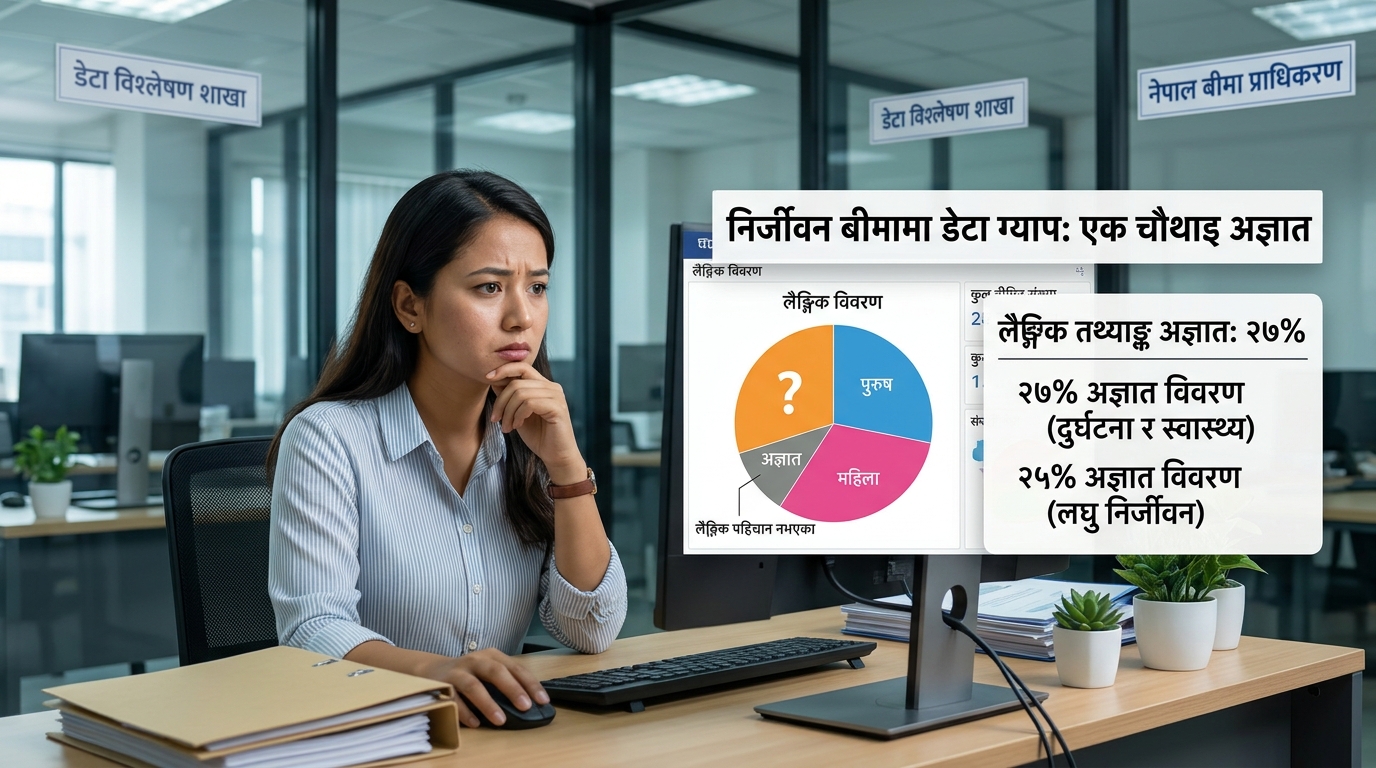

{{TAG_OPEN_p_10} Kathmandu. According to a recent study published by the Insurance Authority of Nepal on the status of men and women in the insurance sector on the basis of gender identity, it has been found that the gender identity of 27 percent of the total insured in accident and health insurance is not mentioned.


The recently released TAG_OPEN_em_9 report “Insurance through a Gender Lens: A Fema Meter Assessment in Nepal” has revealed that the gender data of customers in the non-life insurance sector in Nepal is very weak and messy. According to the report, due to lack of data management, it has become impossible to draw clear conclusions by analyzing the gender of non-life and non-life insurance.
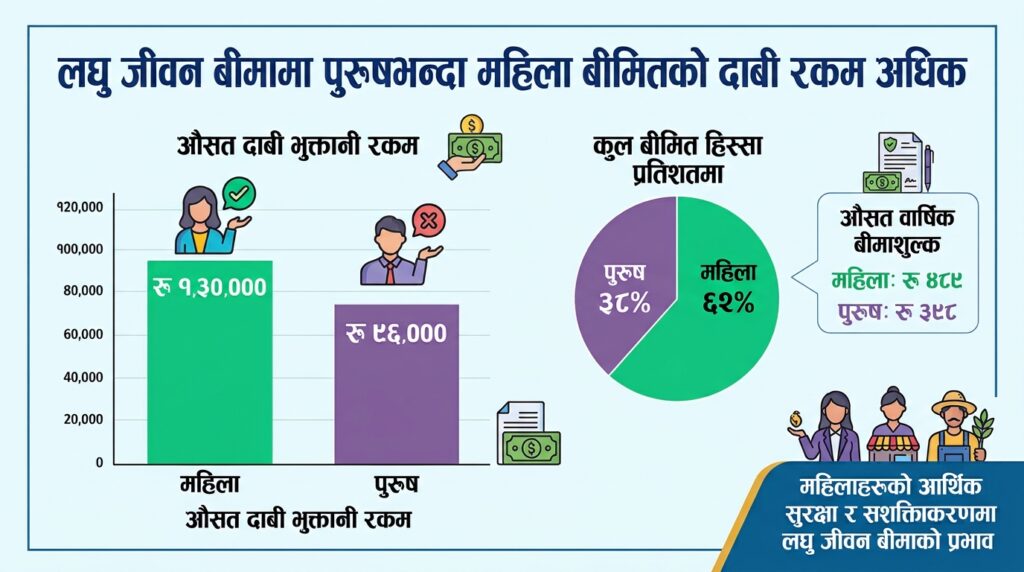
If we look at the statistics of accident and health insurance, the gender details of 27 percent of the total insurers are not mentioned. Among the customers who have no details, 40 percent are women and 34 percent are men. However, in terms of the number of insured, 53 percent of the insured are male, 38 percent are female and 10 percent are uninsured.
Similarly, in small business-targeted micro non-life insurance, men account for 59 per cent of the insured and 66 per cent of the insured. In this sector, the share of women is only 16 per cent in the insured and 17 per cent in the number of insured. However, the gender identity of 25 per cent of the insured is unknown.
The data on the total insurance premium, claim amount received and paid and claims cancelled is so limited that it cannot be analysed, according to the NRA. In environmental and agricultural insurance, gender data is available for non-living and zero for micro non-life.
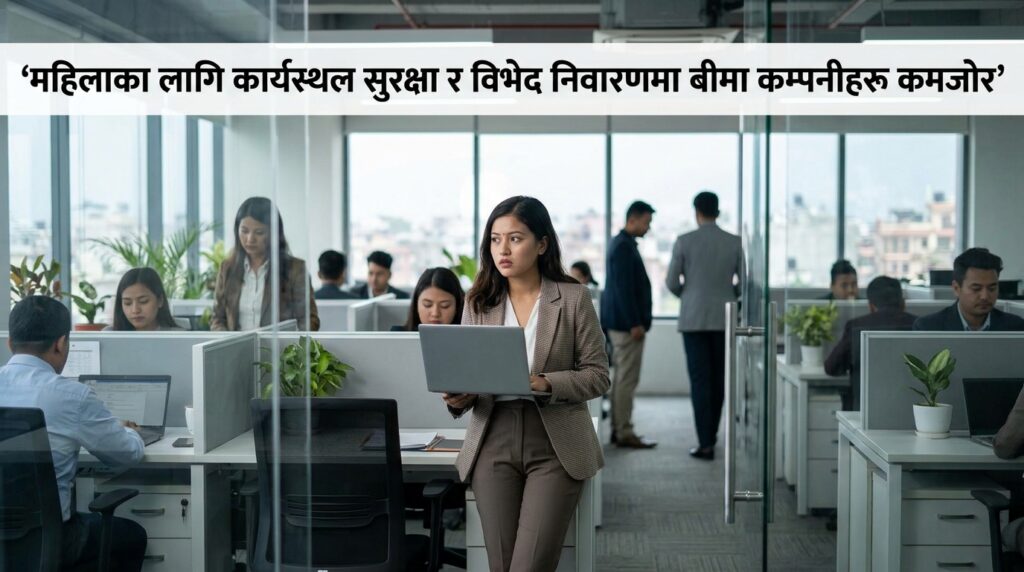
Although it indicates that the participation of women in non-life insurance is much lower than that of life insurance, concrete conclusions have not been drawn due to weak data. The authority has now adopted a strategy to make it mandatory for all insurance companies to keep gender details and reduce the rate of anonymized information.