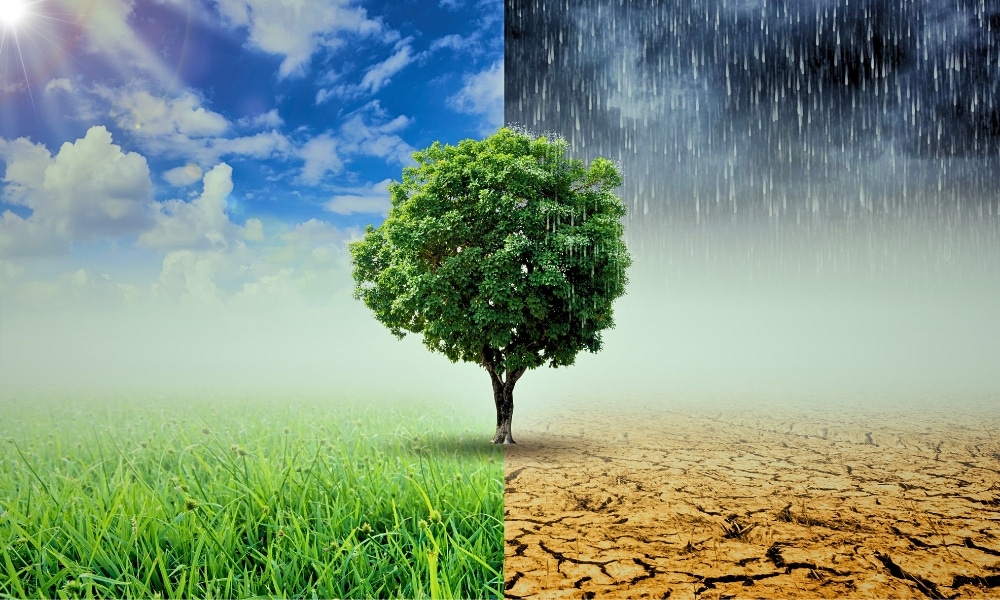






Janakpurdham. Economic Status of Madhes Province 2082 published by Nepal Rastra Bank. The annual study report on 83 shows a serious challenge to the agriculture sector of the province due to climate change and the impact of floods. The report points out that the uncertainty of rainfall and inundation caused by floods have caused a contraction in the agricultural area.
Due to drought and drought, the irrigation facilities that provide water to the farmers’ fields have shrunk as the underground water sources have dried up and the flow of local rivers has also decreased. Irrigation through traditional canals and canals has decreased. As the irrigated area decreases, it has increased the cost of production and reduced productivity.



Although the cultivable area is more than 6 lakh hectares, only 40 percent of the land in Madhes has irrigation facilities. In this, due to human reasons and the impact of climate change, the irrigated area is shrinking, which has increased the problems of the farmers.
According to the report, in the fiscal year 2082. In 83, the total irrigated area of Madhesh Province decreased by 4.34 percent to 2,44,725 hectares. Of this, the area irrigated by canals decreased by 17.34 percent to 68,825 hectares, the area irrigated by canals decreased by 15.84 percent to 144,145 hectares and the area irrigated by borewells decreased by 1.60 percent to 28,739 hectares.
The overall irrigated area had increased by 5 percent in the same period last year. The area irrigated by canals had increased by 11.92 percent during the same period.
On the production side, the total production of the overall agricultural crop in the province decreased by 3.49 per cent to 6,354,493 metric tonnes. While the production of wheat, potato and oilseeds increased, the production of crops like paddy, maize, millet, pulses and other crops decreased. On the livestock side, milk production decreased by 2.67 per cent to 65,68,13,000 mt. Meat production increased by 10.19 per cent to 1,56,100 metric tonnes. Fish production increased by 5.05 per cent to 50,718 metric tonnes.
Agricultural credit from banks and financial institutions has also declined by 4.95 percent to Rs 59.86 billion. This is only 12.10 percent of the total credit disbursed.
Despite its geographical ease and fertile land, the agriculture sector suffers from middle-oriented market system, adverse effects of climate change, lack of irrigation, increase in the price of improved seeds and chemical fertilizers, and lack of access to finance. Immediate attention should be paid to the promotion of agricultural insurance and expansion of access to agriculture to overcome these problems.
In particular, since the agriculture of Madhesh is highly dependent on the weather and the risk of floods and droughts is high, there is a need to effectively implement weather-based agricultural insurance and micro agricultural insurance programs so that small farmers can be accessed. In addition, the report concludes that Madhesh Province can be made a strong base for economic transformation if climate-smart agriculture system, modern irrigation, easy availability of subsidized agricultural credit and market arrangement can be made.