



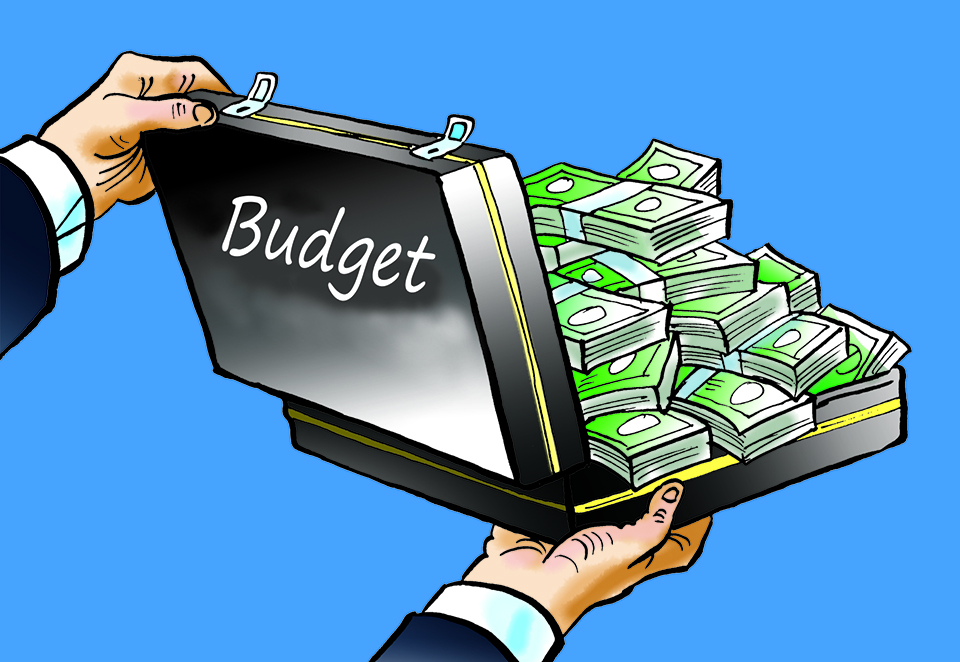

Kathmandu. The single government of the Rastriya Swatantra Party (RSP), formed after the Jenji movement, today is the fiscal year 2083. It is bringing a budget of 84 rupees.
Finance Minister Dr Swarnim Wagle will present the budget in the joint session of both houses of the Federal Parliament at 4 pm today. The government is preparing to bring a budget of more than Rs 20 trillion. However, the National Planning Commission (NPC) had set a ceiling of Rs 1.89 trillion.


What is the budget?
A budget is a financial plan. It determines the income and expenditure of the country. Budgeting helps to manage finances, control expenses, and achieve savings goals. This usually applies to budgeting to personal finances, business operations or national government.
The word ‘budget’ comes from the Latin bulga. Which means a leather bag. Over the centuries it evolved into the Old French word baget. This meant a small leather bag used by ancient merchants and kings to carry financial documents and cash.
Beginning of the World Budget
}
The modern 18th-century modern national budget in Britain was first developed in Great Britain around 1760. The chancellor began to present the annual financial plan to Parliament. It was designed as a tax control measure to curb the arbitrary power of the king to levy heavy taxes and to give the legislature control over public spending.
The British Reform Act of 1837 further institutionalized the process. During the 19th and 20th centuries, this process of legislative budget approval spread to Western countries and eventually to the world, similar to the development of modern democracies.
Beginning of Budget in Nepal
}
After the end of the Rana regime in Nepal, the formal national budget process started. The first budget. In 2008, the then Finance Minister Subarna Shumsher had laid the foundation of modern financial planning of the country by broadcasting Radio Nepal. He presented a budget of Rs 5,25,29,000 in the parliament. Out of this, the revenue was Rs 3.06 crore. Nepali Congress leader Matrika Prasad Koirala was the prime minister at the time.
Experts say that the budgets of 2008, 2015, 2048 and 2051 are people-oriented on the basis of the policies, programs and impact adopted by the budget in the context of Nepal. The first budget of the Nepali budget had given priority to agriculture and trade. Although there were not many programs, this budget was the gateway to Nepal’s economic development and revolution.
Similarly, the budget presented by the first democratically elected government led by BP Koirala in 2015 BS had focused on agriculture, drinking water, rural development and trade development.
Similarly, the budget brought by the government led by Krishna Prasad Bhattarai in 2048 BS was the most private sector-friendly. Mahesh Acharya was the finance minister at that time.
The budget presented by Finance Minister Bharat Mohan Adhikari in 2051 BS was focused on social security.