




Kathmandu. U.S. President Donald Trump has announced that he will halt any possible attacks on Iran.
According to a report by Axios, Trump had earlier spoken to Saudi Arabia’s Crown Prince Mohammed bin Salman by phone. The United States and Saudi Arabia launched the first publicly announced strike against Iran-backed groups in Iraq.



After this, it was believed that Trump could launch another major attack against Iran. However, this fear has gone away for now. According to some media reports, Iran is planning an attack. Which could plunge the whole world into a serious oil crisis again.
According to these reports, if attacked, Iran will launch a major attack on the oil wells of the Gulf countries.
Iran Warning
Iranian Foreign Minister Abbas Araghchi said in separate phone calls with senior officials from Turkey, Pakistan and Saudi Arabia on Saturday that his country would strike decisively if the US attacked. The talks came hours after the Kuwaiti military claimed it had shot down Iranian-launched drones against key targets.
Arghchi told Pakistan’s army chief, Field Marshal Asim Munir and Turkish Foreign Minister Hakan Fidan that any “aggressive action” against Iran would be met with a decisive response. Arghchi later told Saudi Arabia’s Foreign Minister Prince Faisal bin Farhan that Iran would respond accordingly if the US and Israel or any other country in the region engaged in such an action.
According to Axios, Saudi Crown Prince Mohammed bin Salman spoke to President Trump on the phone on Saturday.
Which locations are likely to be targeted?
Noor News, a media outlet affiliated with Iran’s Supreme National Security Council, said on Saturday that if the US attacked Iran’s energy infrastructure, Iran would target oil fields in Saudi Arabia and the United Arab Emirates, as well as oil and gas fields in Qatar and Israel. The IRGC-affiliated Tasnim news agency said Iran had prepared the list. It details that oil and gas facilities in various Gulf countries will be targeted.
While the list is not accurate, it is expected to target major oil and gas facilities in Saudi Arabia, the United Arab Emirates and Qatar.
Saudi Arabia: The list includes the world’s largest conventional oil field, the Ghawar, Abqaiq oil refinery and the Khurais oil field. These three are the main centers of Saudi Arabia’s oil production.
In the United Arab Emirates (UAE), Iran is said to have targeted the Zakum oil field and the Ruwais refinery as potential targets.TAG_CLOSE_span_39 TAG_OPEN_span_39
The northern region of Qatar is the largest natural gas field in the world.TAG_CLOSE_span_38 TAG_OPEN_span_38 The Ras Lafan industrial complex, a major global LNG export hub, is also reportedly on the list.
Ongoing tensions over Hormuz
Ross Harrison, a senior fellow at the Middle East Institute, says the US still lacks a clear strategy for war with Iran. This is because President Donald Trump has repeatedly hinted at major military action, but he has backtracked.
Harrison told Al Jazeera that it was too early to say why Trump postponed the proposed strike on Iran. It is unclear what assurances Iran might have given to the US during Foreign Minister Abbas Araghchi’s talks with senior officials from Turkey, Saudi Arabia and Pakistan. “From Iran’s point of view, I think Donald Trump is going to feel like he’s backing away in the face of a potentially big conflict,” he said. ’
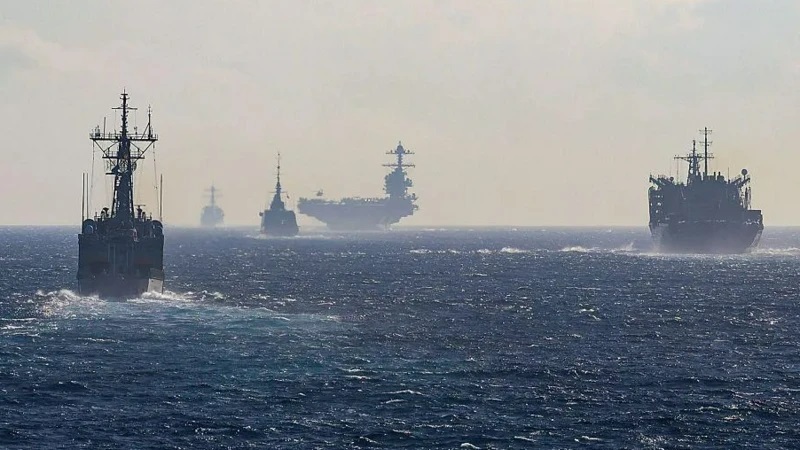
Harrison said that unless the US and Iran reach a clear agreement on the full reopening of the Strait of Hormuz, this cannot be considered a real reduction of tensions. “The conflict has escalated in recent weeks due to ambiguity between the two sides regarding the interpretation of the MoU signed in June,” he said. I believe that after the agreement, Iran will interpret Article 5 to control the movement of ships through Hormuz and decide when the route will be opened. The U.S., in cooperation with Oman, arranged for ships to cross the southern coast, keeping them out of Iran’s reach. This is where the tension started to rise again. ’
“So this situation is not going to last until there is a clear agreement on reopening the sea route and lifting the blockade,” Harrison said. The current announcement is only a temporary pause in tensions. ‘ –from BBC