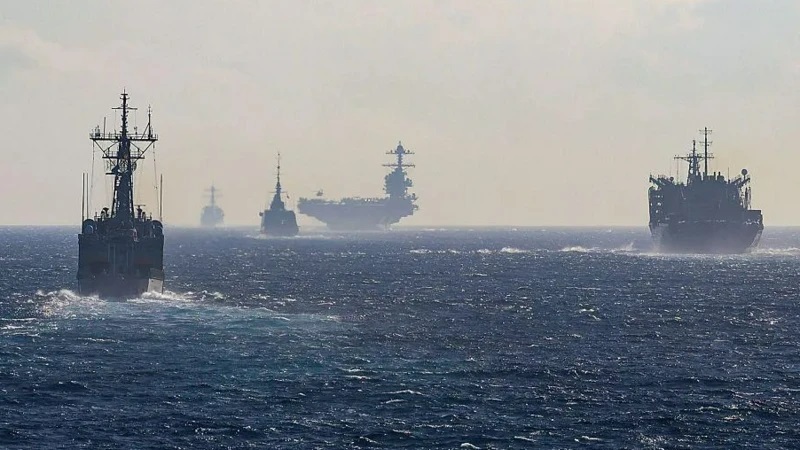




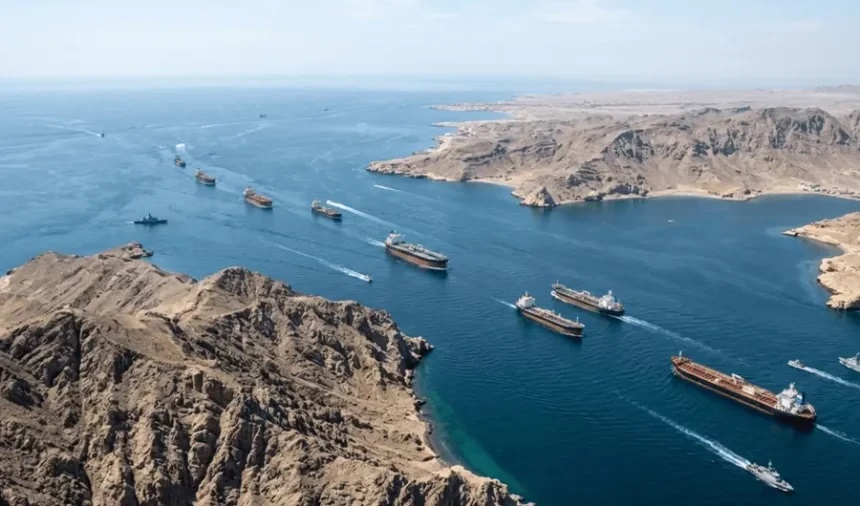

Kathmandu. The Strait of Hormuz was opened after an agreement between Iran and the United States. However, recent tensions have shut it down again.
Tankers crossing this sea route have been attacked. As a result, there has been a significant decrease in traffic. This has heightened tensions around the world, especially in Gulf countries worried about oil and gas exports.



As a result, oil-rich Gulf countries are looking for alternatives to this route. They are preparing to deal with any future disruptions through new pipelines and new ports.
According to ABC reports, experts believe Iran can use Hormuz for a few months, but not forever. Their war has forced the world to adapt to the conditions and reduce its heavy reliance on a single narrow channel for energy. However, opinions are divided on how effective these alternatives will be in the long run.
The Strait of Hormuz accounted for more than a fifth of the world’s oil and gas trade before the conflict began when Iran was attacked on February 28. It supplied 20 million barrels of oil a day to the rest of the world. Experts claim that even if hostilities resume, there is less panic in the global oil market due to contingency planning.
Now Saudi Arabia has moved a large part of its exports from Hormuz to its pipeline. Which now passes through the Red Sea through its own country.
The East-West Pipeline was built in the early 1980s. It carries crude oil through a 1,200-kilometer-long network in Saudi Arabia. It connects the Abqaiq oil refinery facility in the east with the Red Sea port in the west.
From there, Saudi oil is loaded onto tankers and transported to Europe via the Red Sea via the Suez Canal or the Bab al-Mandeb Sea route to the Gulf of Aden. The pipeline has the capacity to process 70 million barrels of oil per day.
Saudi Arabia is now looking to expand its capacity to transport more oil without passing through Hormuz.
The UAE has done the same. It has diverted some of its exports from Hormuz to another pipeline outside the Hormuz region. It carries its oil exports.
The UAE is working on the crude oil pipeline (Habshan-Fujairah pipeline). It can transport up to 18 million barrels of oil per day from oil fields in the southwest of Abu Dhabi to the Emirates terminal. It is located on the eastern side of the seaway, bypassing the chokepoint.
The UAE is also looking to build a new port to further reduce its dependence on Hormuz. A Dubai-based supply chain company is in talks to build a new port and container terminal off the coast of Fujairah. This is where the Habshan-Fujairah pipeline ends.
While new projects are considered, two major projects are already underway. Which will help these countries avoid Hormuz. The UAE has started the construction of another West-East Pipeline. That has been happening at a rapid pace since the war began. It is expected to be completed by 2027.
The Basra-Haditha pipeline in Iraq has been approved for completion by 2024. It is part of a larger plan to connect the oil fields around the southern Iraqi city of Basra to Jordan’s Red Sea port city of Aqaba and projects that pass through Syria and Turkey.
Some analysts suggest alternative routes could reduce the world’s dependence on the Strait. But others are not ready to accept it.
According to Simon Henderson, an energy policy analyst at the Washington Institute, people are thinking too far ahead in a hurry. The main purpose of some of these pipeline proposals is to transport oil to the Mediterranean coast. That’s where it’s most needed.
Experts have warned that Iran could close another important sea route, Baal al-Mandeb. This narrow corridor between Yemen and Africa serves as a conduit between the Red Sea and Asia. About 5% of the world’s oil production passes through this route.
A few years ago, the capacity of Bab al-Mandeb doubled. Since the start of the Israel-Hamas war in 2023, Yemen’s Houthi fighters have repeatedly attacked commercial ships. The Houthis are disrupting shipping. So the Saudi pipeline is a partial solution. But it’s not entirely reliable.
Henderson, director of the Gulf and Energy Policy Program at the Washington Institute, said the UAE’s new plans are also not a very reliable solution. Iran has already attacked the Fujairah port. So building another pipeline in Fujairah is not necessarily the solution. –Agency