




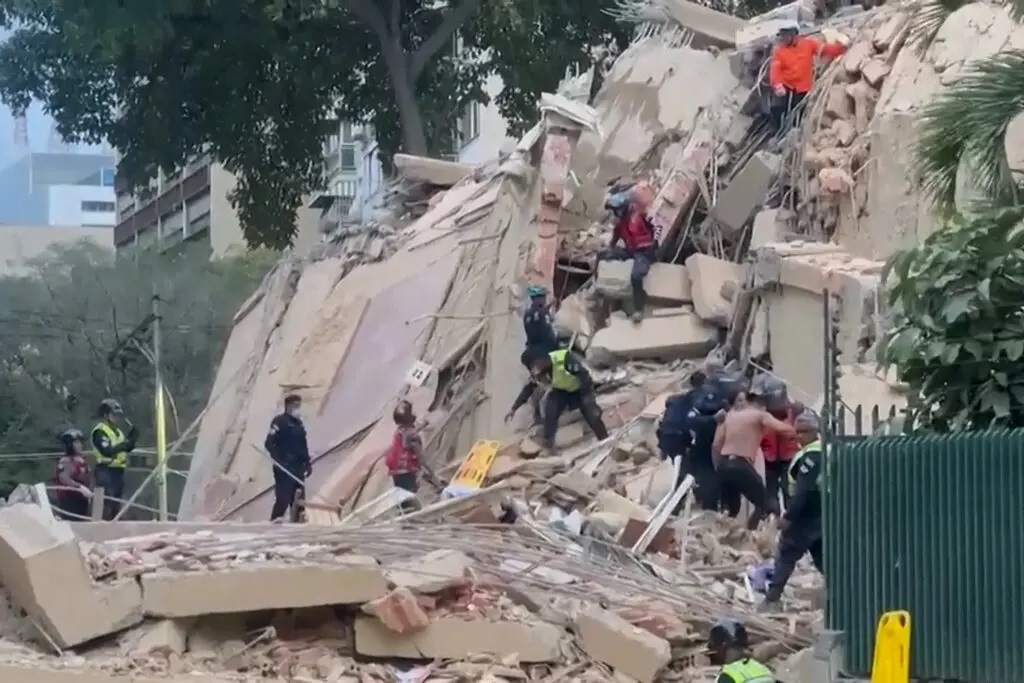

Kathmandu. Two powerful earthquakes measuring 7.2 and 7.5 on the Richter scale struck Venezuela on Wednesday, seconds apart. The quakes dealt a severe blow to Venezuela’s already weak insurance industry. It brought a flood of property, casualty and life insurance claims and exposed deep gaps in risk coverage and financial resilience.
Acting President Delcy Rodriguez declared a state of emergency as rescue teams pulled people out of the rubble in coastal areas such as Caracas and La Guerra. Dozens of buildings collapsed and infrastructure was severely damaged. This has exacerbated a humanitarian crisis in a country still grappling with political changes and long-term economic challenges.



Initial confirmed reports indicate at least 32 people have been killed and more than 700 injured. However, officials and the United States Geological Survey have warned that the final death toll could reach thousands or tens of thousands, given the “red alert” issued for the event.
It is the biggest disaster to strike the country in more than a century. Most of the deaths occurred in residential and urban areas. Where there are old or weak buildings. This has a direct impact on life insurance payments.
Insurance companies that offer personal accident and life policies are bracing for an increase in death benefit claims. This can put a strain on liquidity in the market. Where life insurance is less accessible. But it does play a big role for middle-class families and businesses that rely on key person coverage.
The number of human deaths goes beyond just immediate death; Hundreds of people are hospitalized, and potential long-term disability claims are adding to the strain on health and accident insurance lines. The earthquake has exposed huge coverage gaps in terms of property and casualty coverage.
The total economic damage is expected to be in the billions of dollars. These include collapsed homes, damaged commercial property, infrastructure disruptions such as the closure of Simon Bolívar International Airport, power cuts and widespread structural failures in northern and central Venezuela.
However, insured losses due to low insurance penetration are estimated to represent only a small portion of this total. Many of the affected low-income households and public buildings had little or no earthquake protection. As a result, a large part of the reconstruction cost was borne by individuals, the government, or international aid.
Commercial and industrial enterprises, especially those in sectors such as oil and manufacturing, typically carry more comprehensive earthquake insurance. That can lead to larger claims from businesses that experience property damage, business disruptions and supply chain disruptions. Both domestic and international reinsurers will play a major role in absorbing these losses. But the scale of the event could also lead to a repricing of Venezuela’s risk, higher premiums or lower capacity for future renewals.
Venezuela’s insurance sector is already operating in a difficult regulatory environment. Challenges such as compliance with sanctions and economic instability can withstand dilution testing if claims exceed reserves. Previous examples of earthquakes in the region show that insured damages in less-penetrated markets often represent less than 10-20 percent of total losses. But the total could run into the millions and force companies to use reinsurance treaties or seek government support.
Apart from the immediate claims, this disaster will have a major impact on the development of the region. This underscores the need for increasing promotion of earthquake support and parametric insurance products. Which can provide faster payments based on seismic data instead of long assessments.
Post-earthquake insurance companies can speed up digital claim processing and partner with international adjusters to better handle incoming claims. However, regulators may consider increasing incentives or mandatory coverage to address safety gaps.
For life insurance providers, rising mortality rates are likely to affect actuarial modeling and pricing. Especially when aftershocks persist and secondary hazards such as landslides or infrastructure failures also increase deaths.
As rescue operations continue in the coming days and weeks and full damage assessments emerge, Venezuela’s insurance industry is at a crossroads. Payment for confirmed damages will provide a huge relief to policyholders. It will help in reconstruction and economic stability. But the unequal burden of the uninsured will deepen inequality and threaten a delayed recovery.
For Venezuelan insurance companies, the disaster is a stark reminder of the interplay between natural disasters, socio-economic factors and market preparedness. That could shape underwriting practices, product proposals, and regulatory discussions for years to come. –Agency