



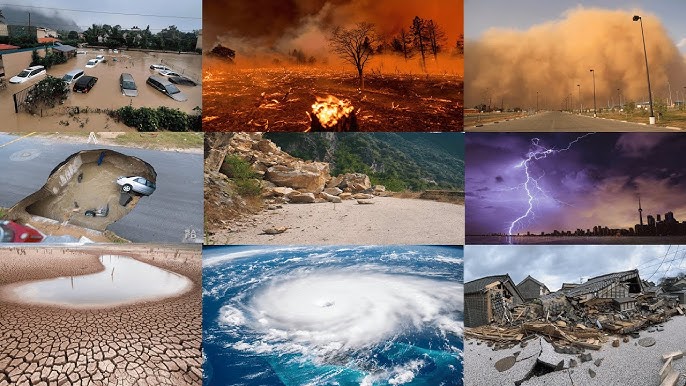

Kathmandu. The global insurance coverage gap for natural disasters has widened to $424 billion. This reflects continued low insurance. As a result, insurance coverage is vulnerable to growing threats from the economy, businesses and household fires, hurricanes, floods and other extreme weather events.
According to a new analysis by the Swiss Re Institute, this figure estimates that uninsured losses will increase by 2025. This represents an increase of more than 7 percent compared to the previous year and reveals a worrying trend. “While insured losses have reached record levels in some well-covered markets, the total amount of uninsured economic damage, combined with rising property values and climate risks, is increasing,” Swiss Reilly said.



In 2025, natural disasters caused massive economic damage worldwide. “Approximately 190 incidents resulted in total losses of $220 billion,” the Swiss Rico report said. Of this, the insured loss was about $107 billion. That’s an all-time high for coverage admissions. ’
Still, this clear progress overshadows significant regional differences. North America was the worst-hit region. It is bearing the brunt of high-value insured and uninsured damages from events such as severe storms and wildfires. In contrast, emerging markets and developing economies face an 80 to 90 per cent security gap. Most of the damages fall directly on the government, communities and people who are not prepared to bear the loss.
This gap has far-reaching implications. In parts of the Asia-Pacific, Latin America and Africa, underinsurance exacerbates humanitarian crises and slows recovery. In Myanmar, for example, the 2025 earthquake caused nearly $11 billion in economic damage and killed thousands. But the insured barely received $200 million. That added to the heavy burden of rebuilding already strained government resources.
Historical patterns also reflect this reality: since 1980, global natural disasters have totaled trillions. Overall, only a third of people are insured, and this is even lower in developing countries. In the Asia-Pacific region alone, the security gap is about 88 percent. That’s much higher than the global average.
There are many reasons behind this growing gap. Affordability remains a major barrier in low-income countries. Where insurance access is low and premiums are often prohibitive for high-risk coverage.
Misconceptions about risk also play a role. Many homeowners and businesses underestimate the likelihood of disasters in their area. As a result, fewer people adopt the products even when they are available.
In advanced economies, access is further complicated by coverage waivers, rising premiums due to the increasing frequency and severity of incidents, and regulatory barriers. Climate change exacerbates these changes by increasing other risks, such as wildfires and storms. It accounted for a record 92 percent of insured damages in 2025.
Projections suggest that the global insured deficit could reach $186 billion by 2030. But unless systemic changes are made, the uninsured share is likely to increase.
Experts stress that bridging this gap will require a variety of strategies. Strong building codes, nature-based solutions and adaptation and risk mitigation through infrastructure investments are essential complements to insurance. Public-private partnerships, such as those promoted in the G20 and IAIS discussions, can help design cost-effective parametric products and sovereign risk bridges tailored to emerging markets.
Innovations such as parametric insurance that pay based on predefined triggers rather than assessing the damage, provide faster relief and greater access. It also urged insurers and reinsurers to increase data-driven underwriting, leverage technology for better risk modeling, and work together on resilience building initiatives that make coverage more viable and sustainable. –Agency