



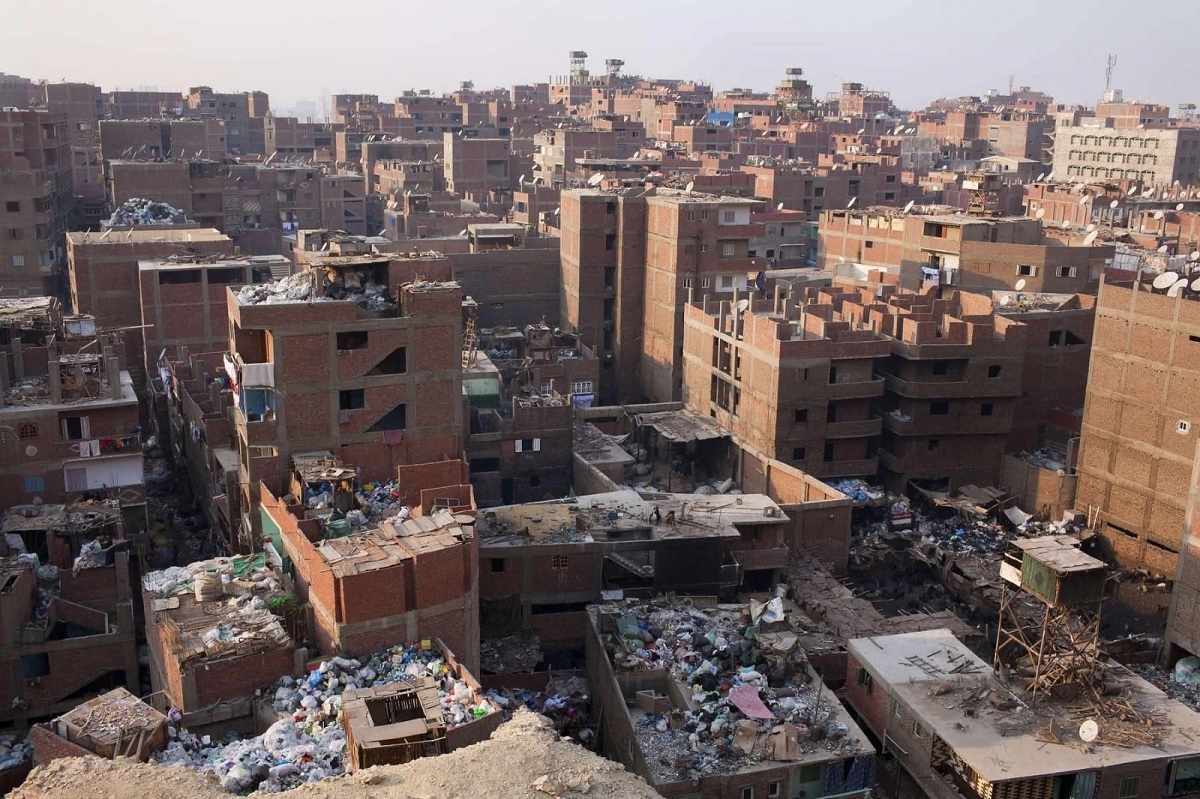

Kathmandu. Egypt is one of the oldest civilizations in the world. Situated at the foot of the Mukkatam Mountains, away from the charming noise and hustle and bustle of the country’s capital, Cairo, lies the city known to the world as the ‘Garbage City’. Its official name is Mansiyat Nasser. The roofs, streets and exterior of the houses are not filled with furniture, but with plastic bottles, tin cans and piles of paper.
But to understand the lifestyle there, you have to remove the clutter from your eyes and wear the glasses of hard work and skill. If you’ve been there for the first time you might think you’ve come to a huge dumping yard but in reality it’s the largest and most efficient recycling hub in the world.


Of the approximately 250,000 people living there, 70,000 are involved in waste-related work. They are called ‘Jabalin’. Which means collecting garbage. Their mornings begin not with mechanical alarms, but with the sound of garbage trucks hauling garbage from Cairo. When it comes to the way of life there, every home is a small factory. What we throw away as garbage is turned into money by these people and sold in factories.
The women and children of the house spend hours segregating the garbage. They have faster eyes than any machine. They classify everything according to its class. The plastic is turned into granules, the iron melts, and the paper is pulped.
Interestingly, the city is not just cleaning up Egypt. From there, the recycled raw material reaches markets in China and Europe. The people there can be considered illiterate. But their supply chain management will surprise even MBA professionals.
The industry is so huge that major countries recycle only 30 percent of their waste, while people in Mansiat recycle 80 percent to 90 percent of their waste. When the Egyptian government contracted foreign companies to clean up the city, the machines failed because they could not be meticulously sorted by hand, which people had been doing for centuries. Eventually, the government had to resort to these people again.
However, life is not easy there. There is a constant smell of dust and dirt in the air. This leads to common health problems. In 2009, when the government killed thousands of pigs in fear of swine flu, the economy collapsed. The pigs were part of the city’s “organic immersion system”, eating leftover food and cleaning up garbage. However, the people there did not give up and started standing on their feet again.
The population is predominantly Christian. In the midst of all this filth and decay, there is a place to soothe the soul. The Church of St. Simon the Tanner, carved from the side of a mountain, is the largest church in the Middle East. Which is located inside a huge natural cave. It can accommodate more than 2,000 people. The paintings on its walls attract tourists from all over the world.
The city is called the Kidney of Cairo. When the world sees waste as a problem, Manshiyat Nasser sees it as a solution. This city that sits on a garbage dump teaches us that nothing is worthless until our thinking recognizes it. These people are like the kidneys in Cairo. If they don’t work for a day, the whole of Egypt will be buried under the rubbish.
The social structure of this city is also stuck in this garbage. After school, young children join their parents in searching for precious metals in the garbage dumps. For them, it’s not dirty, it’s their future. The city has more recycling machines and compressors than toy stores. Whether it’s marriage expenses or children’s education, everything comes from the ‘garbage’ that the world rejects. –Agency