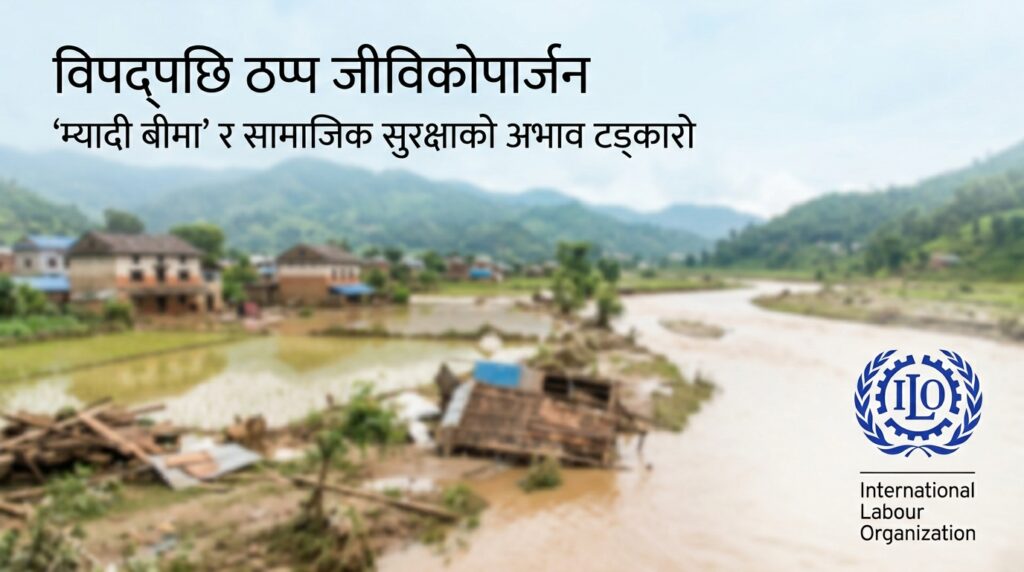




The lamentation of the victims due to the unimaginable floods in the Bhotekoshi. Oh! Disaster does not come by playing musical instruments. I was ruined. On the one hand, there was a loan, on the other hand, there was no full insurance of the motor, neither the business nor the motor was compensated. It was ruined.
Background: No one can disagree that a motor is a means of connecting various parts, including two or more wheels, with the help of a battery or engine through any fuel. Motor insurance is the means by which a claim is paid for damages in case of any kind of damage in the course of using this vehicle. At present, the Government of Nepal has made third-party insurance mandatory for the renewal of a vehicle, and only after the accident, the amount is paid as compensation under the condition that the insurance policy is covered by a certain insurance policy. Apart from this, there is a provision for comprehensive motor insurance and other risk charges to cover the risk of motor damage. The cost is less. Many vehicle owners are less willing to take this service considering the insurance premium as an expense, thinking that the cost of comprehensive motor insurance is higher than the mandatory through a vehicle loan. Therefore, insurance has not been accepted as a relatively risk-transferable option.



The ownership of the motor is counted as the fixed property of the person or the institution. However, even if the insurance is compulsory for the loan period, only a few people have renewed the comprehensive insurance after that. This is the crux of the matter.
The basis for the growth of the motor insurance business is the prompt claim payment. The sooner and the more the actual claim is paid, the basis for the business to grow. Various studies have also concluded that the correlation between claim payment and insurance sales is positive.
Simple and speedy payment of claims improves business relations as well as provides recommendations to other businesses. This is called internal marketing. After receiving the necessary information, coordinating the collection of details, providing the necessary information, collecting the required documents and collecting evidence helps in improving the service delivery and the simplification of the claim and strengthening the base. For this, not only the institution receiving the compensation but also the insured and the concerned agencies should play the role of facilitator. The insured has to gather various processes and documents to claim compensation. It is certainly not easy. It seems that the service delivery should be done by not asking for more documents except the essentials, the documents that are symbolic and the service delivery without physical presence.
A reference with an example seems appropriate as it is necessary to give practical knowledge while simplifying the claim level. If two vehicles in the name of the individual and the organization are damaged due to an accident, the information of the damage is reported to the insured office through some means.
The traffic office near the accident site takes the documents of the damaged vehicle and makes a suitable settlement as per the need. However, the accident is not proved. After the reconciliation is not reached, the office makes a recommendation to the authorized office (Baggikhana) to prove the accident within 7 days. The recommendation letter will be given within 3 days as per the requirement. This will open the way for the insurance claim process.
Are all the traffic offices not authorized to prove the accident or has the process been lengthened? Or is it that the authority is not delegated to the officers working there? The anger of the victims can be heard at different times.
This may delay the process of receiving compensation, but it will help to be procedurally strong. If there is a need to assess the damage by hiring a surveyor, it may be delayed by up to 3 months.
This process applies not only to comprehensive insurance claims but also to third-party claims. However, the payment period is shorter depending on the damages.
In the context of the Rasuwagadhi floods, only the third party insured vehicles are of some concern and the situation of not being compensated. Would the tenants or those who have taken up the business have taken comprehensive insurance with risks? Thousands of containers and various vehicles were swept away. The vehicles in the customs yard and the way of the rich people doing various businesses were destroyed in an instant. What a horrible scene!
Will the owners of imported vehicles also get the loss through insurance? It is not confirmed. Are those vehicles also insured? However, it can be estimated that the workers or businessmen have suffered a complete loss. In such a situation, there is no solution other than crying and shouting. Since the financial condition of the victims will be further weakened, the focus is on what kind of help will be provided from the government.
The damage has been done, but in order to provide relief and to provide relief, the Insurance Authority has issued a separate directive by amending the previous guidelines to simplify the claim process. It is commendable to give partial payment and facilitation even though various documents are lost, destroyed and washed away in the floods. It seems that the Ministry of Finances has also given consent.
However, the extent to which the guidelines will be followed during the claim settlement and how the facilitation is being done will be known through the victims.
What about future expectations?
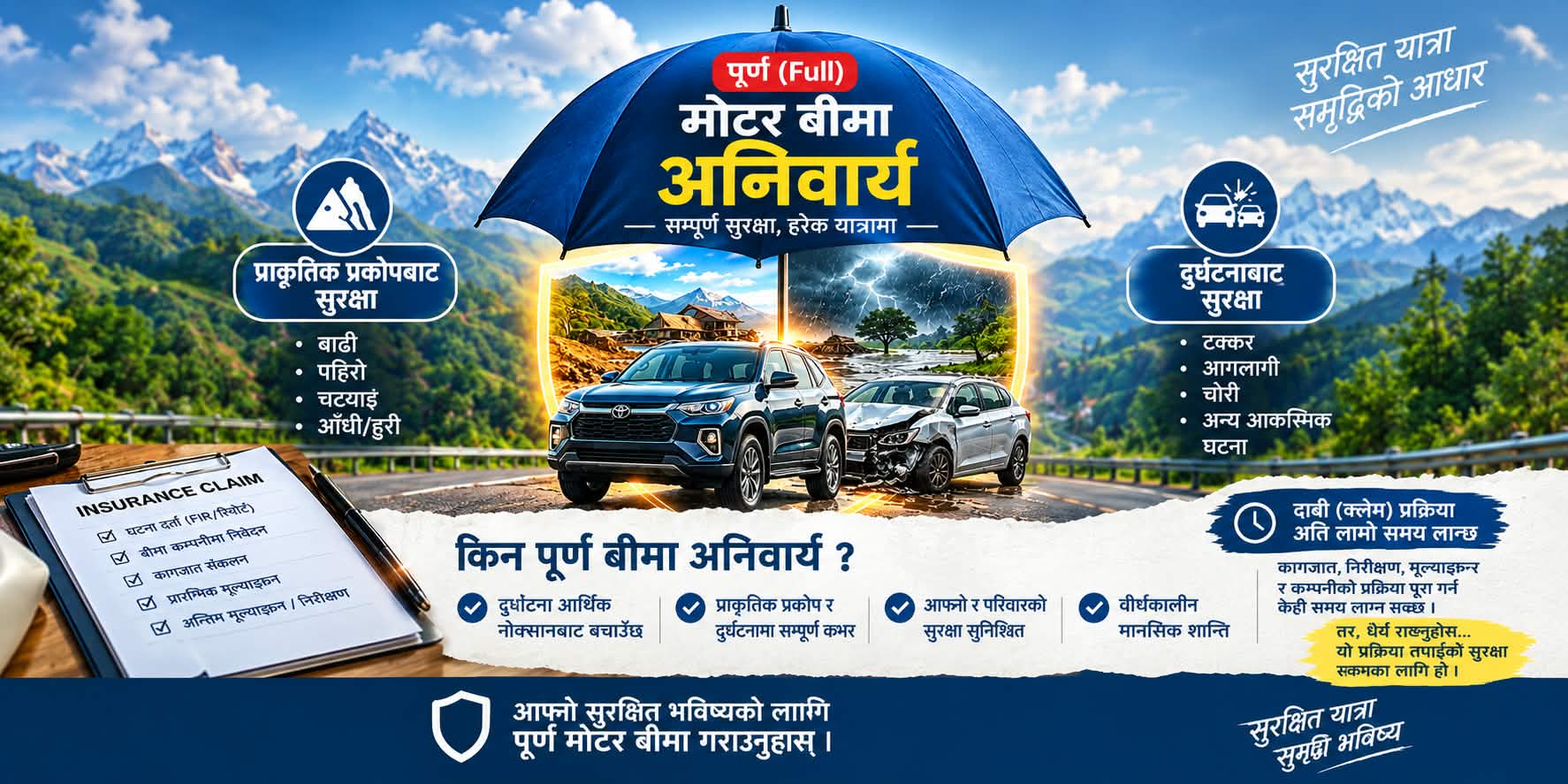
Will anyone hesitate to justify the efforts made by the then government to implement it compulsorily to solve various obstacles, protests, etc. in the past, towards third party insurance? Learning from this, it is necessary to bring a provision to make comprehensive insurance mandatory at the time of renewal or transfer. This will help in expanding the insurance sector in a big way on the one hand, and on the other hand, the compensation received after the damage will help in revitalizing it, so there is a need to make comprehensive insurance with this risk mandatory in the coming days as well. Instead of bearing the risk of the third party by paying a small price before paying a high price to return to the business after the loss, who will suggest comprehensive insurance with risk to live a safe life in the future and to keep the business running? Who will agree? Who would disagree that encouraging comprehensive insurance with risk will not only increase the scope of business but also help in running a risk-free business?
Corrector Path
a) It is necessary to move forward by presenting a proposal in an institutional manner to discuss and conclude with various parties on the necessity of comprehensive motor insurance through the Insurance Authority.
b) It is necessary for the Ministry of Taluk to study various aspects of the proposals submitted and approve them with necessary decision.
c) The scope of risk-free insurance can be increased even if the property tax is calculated at 10 percent of the premium paid on the comprehensive motor insurance premium. This can be done only by amending the law.
d) Since property tax can be reduced, its implementation level is local bodies, so coordination seems to be indispensable.
e) If comprehensive insurance can be done in the course of registering vehicles, it will further support the obligation of the state towards insurance. If the concerned transport offices can include a comprehensive insurance policy as a minimum required document at the time of renewal or renaming, then the claim of any loss can be returned to business. This will make it clear how essential the need for comprehensive motor insurance is.
Will the various companies, insurance authorities and concerned ministries think about this?
(The author is a former executive director of Nepal Management Association and an insurance expert) )