



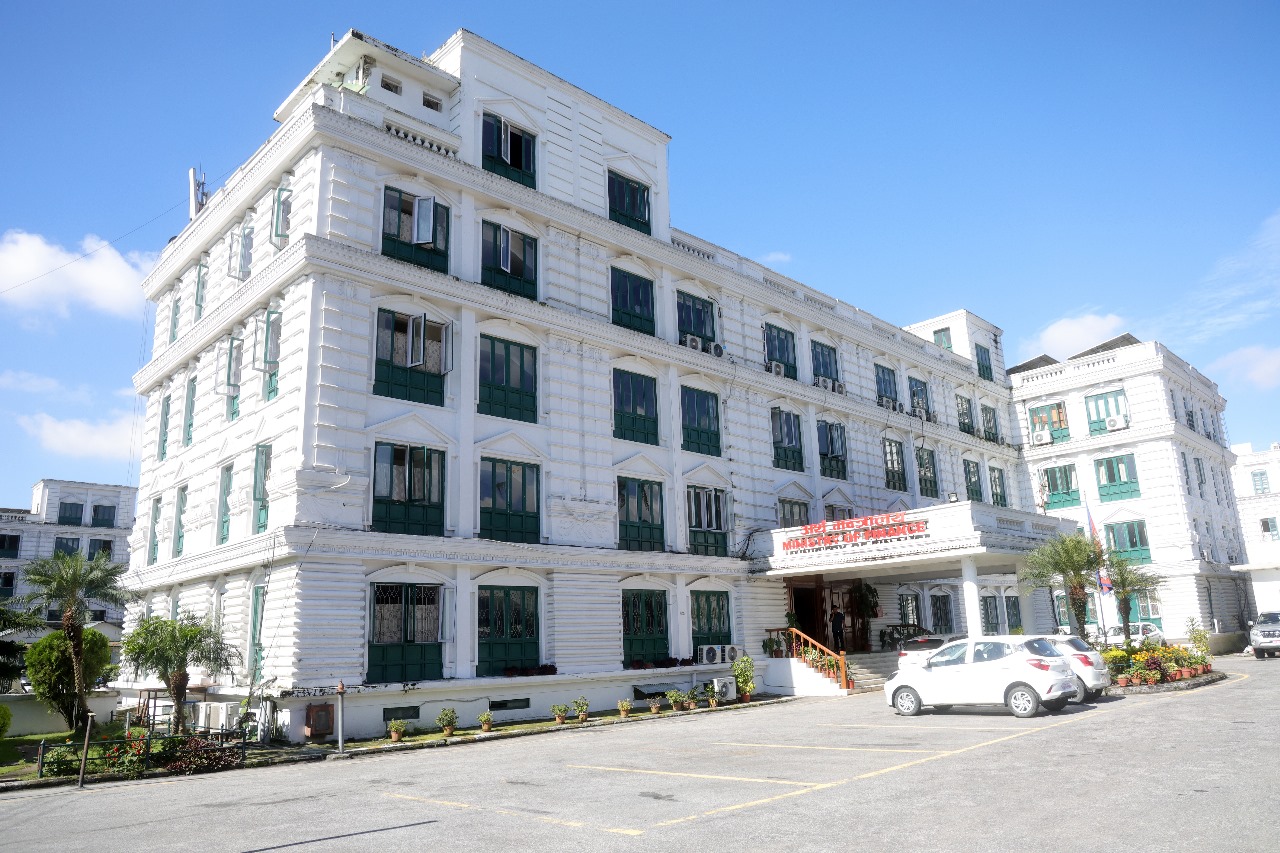

Kathmandu. The government has pointed out the opportunities for economic transformation. Releasing the current economic status of Nepal today, the Ministry of Finance has pointed out the opportunities for economic transformation.
The government has said that the confidence of the private sector can be increased on the foundation of a stable government. The confidence of the private sector can be increased through an investment-friendly policy environment by maintaining good governance on the foundation of a stable government,” the letter reads, “This is likely to expand the productive sector and create employment by bringing domestic and foreign capital and technology into the economy.”



The ministry is of the view that stable foreign income can be created through industrialization, expansion of service sector and energy export by harnessing the huge potential of hydropower as cheap and reliable energy. “The expansion of regional electricity trade will strengthen Nepal’s position in the green energy market,” the position paper states.
The letter states that the natural and cultural heritage provides a strong foundation for the development of high-value tourism. “Employment and income generation can be expanded in rural areas through the integrated development of mountainous, cultural and community-based tourism,” the letter states, adding that improvement in tourism infrastructure, service quality and destination management will help enhance international competitiveness.
Similarly, with the use of artificial intelligence and robotics and the expansion of digital technology, the opportunities for service exports and the development of a knowledge-based economy are increasing. The government has also pointed out that there is a possibility of connecting young people and small enterprises to the global market by expanding economic activities that add high value to the capital through information technology services, business process outsourcing and digital entrepreneurship.
The Status Paper states that there is a possibility of expanding production, income and exports through modernization of the agriculture sector. It is mentioned that through investment in high value crops, animal husbandry, horticulture and agro-processing industries, productivity can be increased and import substitution can be achieved, and the use of geographical diversity can support the development of region-specific production and rural industries. “There is a possibility of expanding export-oriented production through industrial development and strengthening of supply chains,” the letter said, adding that competitive capacity can be increased by reducing the cost of production through special economic zones, industrial clusters and trade facilitation measures. There is also a possibility of becoming a regional transit trade hub by taking advantage of the geographical location. ’
The government. Systematic urbanization and infrastructure development can make a positive contribution to attracting investment and creating jobs. “The expansion of transport, energy, irrigation and digital infrastructure will increase the productivity of the manufacturing and service sectors,” the paper said, adding that there is also a strong opportunity to implement large projects through public-private partnerships. ’
The letter states that there is a possibility of converting remittances into productive sectors. “Qualitative changes can be brought in the domestic economy if foreign income is diverted towards entrepreneurship, skill development and investment,” the letter states, adding that the skills and experience of overseas Nepalis and migrant workers can be utilized in domestic production and service sector. ’
Similarly, strengthening the financial sector can support investment expansion and economic diversification. Financial inclusion, digital financial services and the use of long-term investment tools can help mobilize the available savings into productive sectors, and create opportunities to increase income, production and employment through the abundant utilization of minerals, water, land, forests and herbs available in the country while maintaining biological and ecological balance.