




Kathmandu. There was a time when the idea that humans could run a computer or machine with their brains was limited to scientific imagination. But today, this fantasy has become a reality.
The development of Brain-Computer Interface (BCI) technology has ushered in an era where brainwaves can be converted directly into digital commands. And at the forefront of this revolution is tech entrepreneur Elon Musk and his company Neurolink.



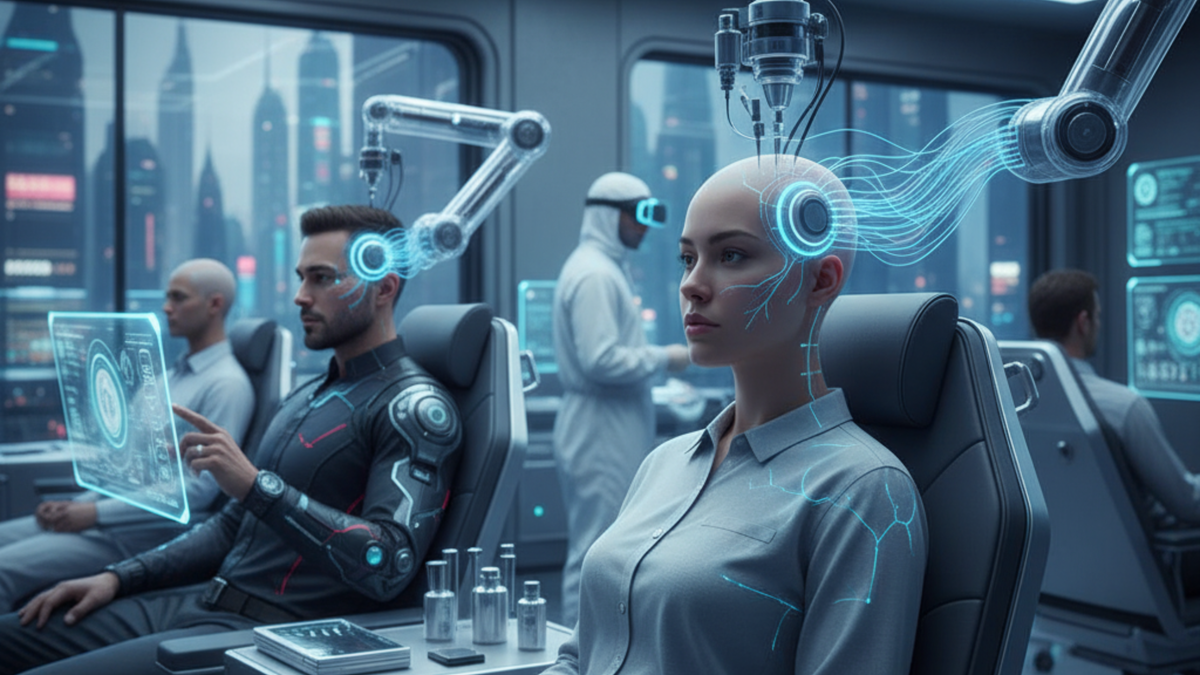
Neuralink has developed a chip with thousands of very small electrodes. It is implanted in the human brain. This chip records the signals emitted from the neurons of the brain and translates them into language understood by the computer. The technology is expected to have profound implications for medicine, communication, and human-AI interactions.
Revolution in Medicine: Thoughtful Treatment
}
The biggest and immediate benefit of BCI technology is seen in the medical field. It has brought a new ray of hope to those suffering from diseases such as paralysis, spinal cord injury or ALS. Neurolink’s chip-implanted patients have been able to use computer cursors, robotic hands, and speech devices based on their thinking. It has also given people who cannot speak or walk the opportunity to connect with the world. It has shown encouraging results in clinical trials conducted around the world.
Beyond Restoration: Expanding Human Capacity
}
Neurolink’s vision for the future is not limited to medicine alone. It aims to increase people’s cognitive abilities. According to the company’s plan, this chip will be implanted in healthy people within the next few years. This will help them improve their memory and maintain emotional stability.
This technology will make human-AI interaction possible “at the speed of thinking”. This means that when people think about something, they will be able to implement it in a digital environment. It has the potential to take distance learning, collaboration and gaming to a whole new frontier.
Challenges and Risks: The Clash of Technology and Ethics
Along with this revolutionary technology, some serious ethical and legal questions have also arisen. The biggest concern is related to the data of people’s private brains. There is concern about how to protect the most personal information, such as people’s thoughts, opinions, and feelings. There is still no clear legal framework on how to protect it from unauthorized access or abuse. Experts have called for stricter regulation and transparency in the use of this technology. So that human rights can be protected.
Along with Neurolink, companies like Precision Neuroscience and Synchron are also competitors in this field. This has further accelerated the development of this technology.
Future Path and Conclusion
}
The development of brain-computer interfaces could completely change the human experience. This technology has the potential to connect us not only with digital devices but also with each other in new ways.
Neurolink’s recent clinical advances indicate that consumer-grade brain implants are no longer a distant dream, but a near-future reality. This technology has the potential to limit human potential. However, its success will depend on its proper and responsible management.