



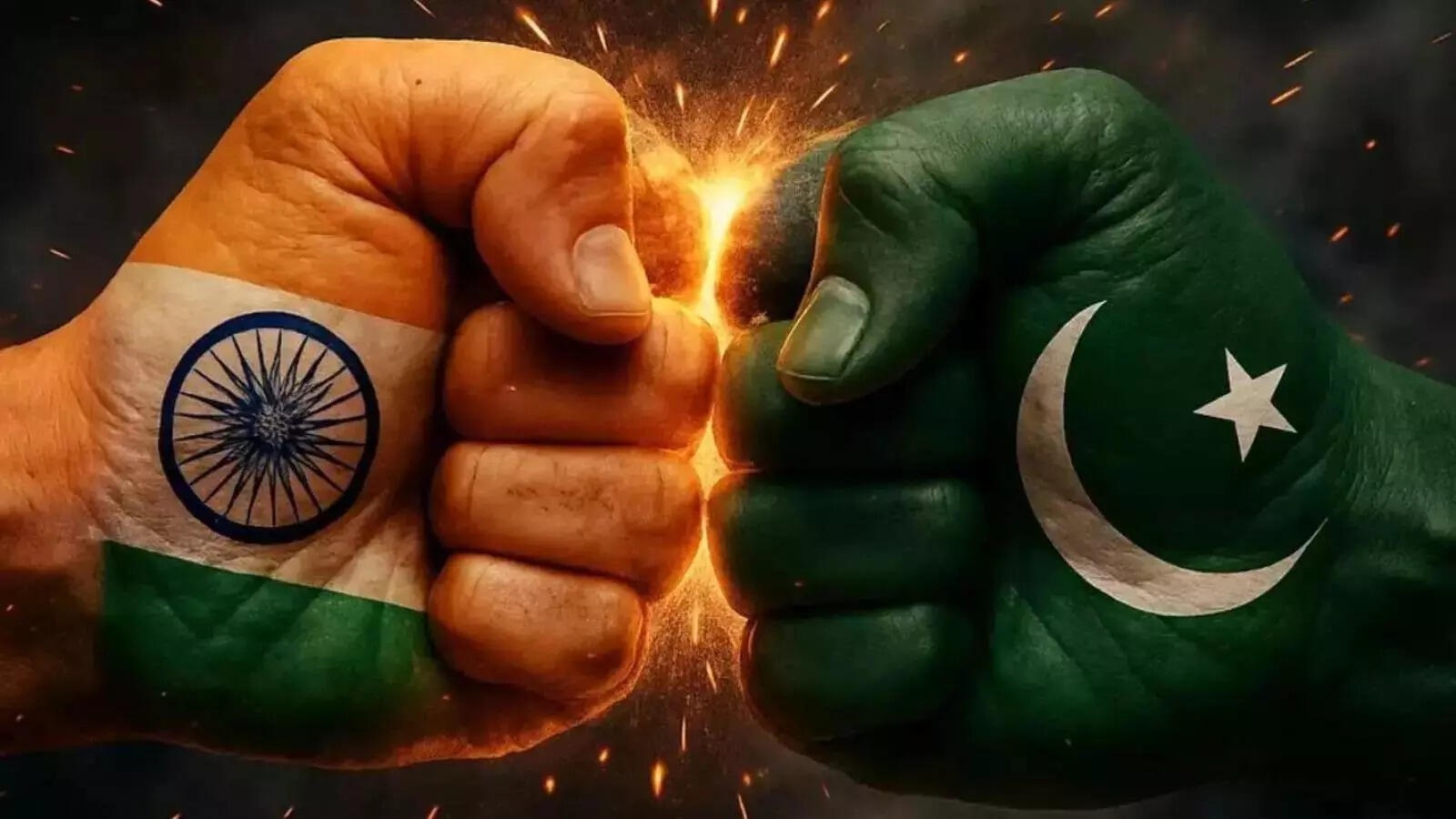

Kathmandu. This month, new tensions arose between India and Pakistan. Its diplomatic, military and political impact has created a kind of earthquake not only within South Asia but all over the world. There is no immediate sign that this tremor will stop soon.
In April, 26 people, including a Nepali youth, were killed in a gun attack at the pahalgam tourist destination in the world-famous Indian tourist city of Kashmir. While the identity of the attackers was not clear, India immediately blamed Pakistan, which Pakistan immediately formally retaliated against.



After this incident, mutual air strikes and shelling started on the border. The situation became so hot that at one point the border area between India and Pakistan seemed to be on the verge of a full-fledged war. Amidst various apprehensions and concerns, an atmosphere of consensus was created between the two countries in a dramatic short time and a fragile peace has finally returned. But there is still a possibility that it can collapse at any time.
Fear of Chinese warplanes:
According to Reuters, two Indian fighter jets have been shot down by Chinese fighter jets under Pakistani control. One of them was Rafale. India has not commented on this. Pakistan claims to have shot down only five Indian fighter jets, although India has reported only some unspecified damage.
After China’s J-10 defeated the Western fighter aircraft Rafale, the incident raised global questions about the balance of modern warfare technology. Its market impact was also evident. Following this incident, the share price of the J-10 manufacturer rose and the share price of the Rafale manufacturer, Dassault Aviation}, declined.
The conflict lasted until May 10. Meanwhile, Pakistan attacked several military installations within India (including artillery bases and missile stations). The fact that Pakistani missiles can easily penetrate India’s air defence system is a matter of serious concern for India.
The Rafale jet, which is considered to be very successful for safe air strikes on the battlefield, was shot down by chinese-made fighter aircraft, causing a sensation all over Europe. Western countries were shocked. Pakistan’s aggression has left the UNITED States, Israel, Europe’s France, Belgium, and other arms-producing countries, which have long ruled the arms trade around the world, into serious concern. With the failure of the Rafale aircraft, they are worried that the world war arms market will now be focused on China. And, perhaps because of this, the power state, the United States, was immediately forced to take decisive steps to end the war between the two countries.
While India was facing its losses, a sudden ceasefire was announced within hours of the Pakistani attack. Although the United States claims to be the main architect of this peace process, there is still disagreement about the real reasons for the ceasefire.
The number of casualties on both sides in this conflict was relatively low. This is a place of some hope. However, the biggest loss for India has fallen on the credibility of the government and the military.
Observers have concluded that the so-called Operation Sindoor, which ran from May 7 to 10, was actually a failure. They believed that Pakistan was fully prepared for it and there was a big flaw in Indian preparedness and plan of attack.
2019 boundary strain:
This tension brings back memories of 2019. That year, after a suicide bombing in Kashmir that killed 40 Indian paramilitary personnel, India launched air strikes in Balakot, Pakistan. In response, Pakistan shot down an Indian fighter jet and captured the pilot. He was later released.
After 2019, India began to increase its military strength significantly. Weapons worth billions of dollars were purchased from the US, Rafale fighter jets were brought from France and drones were purchased from Israel. Pakistan was not far behind. In 2021, they purchased 25 J-10 fighter jets from China.
Another important event in 2019 was the abrogation of Article 370 of the Indian Constitution, which gave Special Autonomous Status to Kashmir. Following this decision, restrictions were imposed, curfews were imposed in Kashmir, and almost all forms of communication were shut down. In this context, new tensions arose between the two countries.
The root cause of conflict between traditional enemies is not at all new.
According to the 1948 UN Security Council resolution, Pakistan has always sought a solution through a plebiscite. But India claims Kashmir as an integral part of it and has ruled out the possibility of any third party mediation or talks.
There has been an insurgency in Indian-controlled Kashmir since 1989. Many people have been arrested, tortured or killed by the Indian side during this period. Although India blames Pakistan for this, it cannot be denied that state repression also played a major role.
How did India enhance the image of the Pakistan Army by attacking?
The number of casualties on both sides in the conflict was relatively low. This is a place of hope for a ceasefire. However, the biggest loss for India has fallen on the credibility of the government and the military. Observers have concluded that the so-called Operation Sindoor, which ran from May 7 to 10, was actually a failure. They believed that Pakistan was fully prepared for it and there was a big flaw in the Indian plan.
Indian dock media is even weaker:
Nevertheless, India’s mainstream media portrays the conflict as a ‘victory’. They have also published baseless news such as the karachi attack and the arrest of the Pakistani army chief. This raises the question whether people will trust these media outlets in the future.
India is also somewhat frustrated from a diplomatic point of view. Israel has stood by India even though it has taken a stand in favour of human rights violations in Gaza. However, Turkey openly supports Pakistan and most countries remain neutral.
What is most embarrassing for the Modi government is that the United States (with whom it sought to form a close alliance) has clearly not sided with any country.
Pakistan, on the other hand, sees the incident as its victory. Despite being much smaller than India’s in geography, population and size of the economy, the Pakistani military has sent a message globally that it has been able to successfully resist. The military leadership under political pressure also gained some popularity from this military success.
But the biggest question remains, are the events of May just another new chapter in the India-Pakistan conflict, or will the two countries finally understand that there is no military solution to the Kashmir crisis, and now the time has come to pursue honest diplomacy?
Dead SAARC Organization:
As the chair of the South Asian Association for Regional Cooperation (SAARC), Nepal did not take any initiative to end the conflict between the two neighbours. It remained silent. Under US pressure, the two countries reached an understanding for the time being. Hours after the U.S. government announced a ceasefire, the two countries finally formally declared a ceasefire. After the formal announcement of both the countries, Prime Minister KP Sharma Oli claimed that he had taken the initiative to stop the war. Neither he nor the Ministry of Foreign Affairs gave any information about how and through what means the initiative was taken. In this way, oli’s light comments on serious diplomatic issues surprised the common people.
It is Pakistan’s turn to host and chair the SAARC summit, which also has Pakistan as a member state. For this reason, India does not want any activities and activities of SAARC.
Source: South Asia analyst and international lawyer published in The Middle East Eye. Based on Farooq Bajwa’s article