



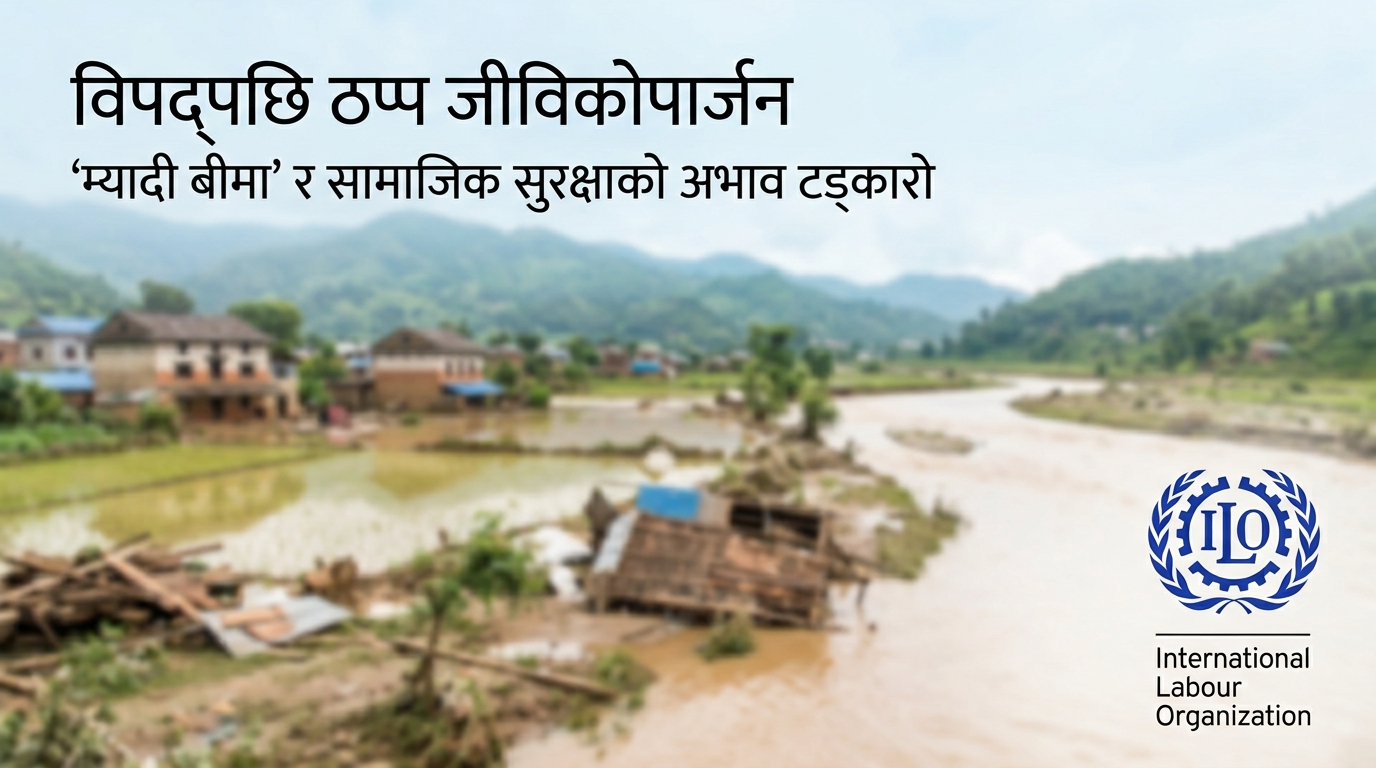

Kathmandu. According to a recent report released by the International Labour Organization, apart from the direct physical damage caused by the flood of the Bhotekoshi River in Rasuwa on August 10, its economic impact is even more far-reaching.
According to the report, some 21,400 people live within a four-kilometer radius of the floods and they have not been able to return to work due to the closure of roads and markets.



According to Numan Ozkan, director of the organization in Nepal, the impact of the disaster will not be limited to the flood-affected areas. “The damage to transportation, electricity and trade routes has affected the supply chain and the market itself, which is also having a direct impact on workers and industries and businesses living far away,” Ozcan said.
Workers in tourism, agriculture, transport and small industries, in particular, are in serious trouble. Guides, porters, hotel and restaurant workers, drivers and agricultural workers have lost their incomes and their access to goods and markets has been cut off.TAG_OPEN_p_20
The number of people working in the unorganized or informal sector in Nepal is large, due to which they have neither adequate savings nor any social security. Wage workers, small and home-based businesses are now at the greatest financial risk.
The report of the TAG_OPEN_p_18 organization has warned that women workers are facing the double whammy of losing their jobs on the one hand and unpaid care at home on the other. The report also warns that the risk of pushing children into child labor increases due to the sharp decline in family income.
According to the organization’s study, the impact on the Nepal-China trade corridor has put industries and businesses across the country in difficulty. Rasuwagadhi and Tatopani border points, which account for about 22 percent of Nepal’s total imports from China, have been badly affected by the floods. In particular, due to the damage to the transport infrastructure of the Rasuwa border point, both exports and imports have come to a standstill.TAG_OPEN_p_17
This will not only affect transport and customs work in the border area, but also workers working in wholesale and retail trade, construction, manufacturing and processing industries.TAG_OPEN_p_16
The massive floods and landslides caused by the bursting of glacial lakes in the northern border have caused unimaginable damage in many parts of the country. Families who have lost their relatives are in mourning, while many settlements and infrastructure have been damaged. In such a difficult time, experts in the financial and insurance sector have drawn attention to the huge gap in risk management. Even if there was at least a provision of ‘temporary insurance’ for the residents, farmers and workers of the areas at high risk of flooding, they would have received some financial relief during this disaster and it would have been much easier to resume their livelihoods.
TAG_OPEN_p_15 According to government data, more than 1,450 people have lost their lives and 5,786 people are still missing due to this natural disaster. Normal life has been disrupted due to the destruction of houses, agricultural land, roads, bridges and electricity infrastructure.
This tragedy has once again exposed the bitter reality of how poor access to insurance is to the poor, farmers and workers in the informal sector who are at risk of disasters in Nepal. If accessible and accessible term insurance or microinsurance had already been provided in the vulnerable areas, the affected families could have started their revival with the money received through insurance claims instead of falling into the quagmire of debt.
In its report, the organization recommends the government and stakeholders to provide direct financial assistance to the affected families and small businesses, to advance reconstruction work to create jobs, and to focus on new employment opportunities and skill development.TAG_OPEN_p_13