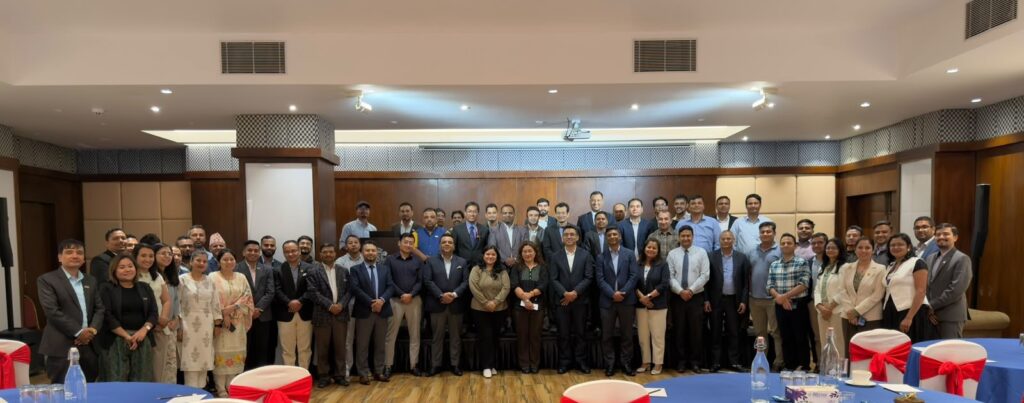






Kathmandu. The 63 MW Chujung Khola Half Reservoir (PROD) Hydropower Project under construction in Bhotkhola Rural Municipality-2 of Sankhuwasabha district has received investment. Half a dozen banks and financial institutions have signed a consortium loan agreement under the leadership of Machhapuchchhre Bank for the project started by Shangrila Energy Limited.
As per the agreement, banks and financial institutions will invest a total of Rs 9 billion for the project. The remaining Rs 3 billion will be invested in equity by Ghalemli Hydro Limited and other promoters. Machhapuchchhre Bank is the lead bank in the co-financing while Prabhu Bank and Lumbini Bikas Bank are the co-lead banks.



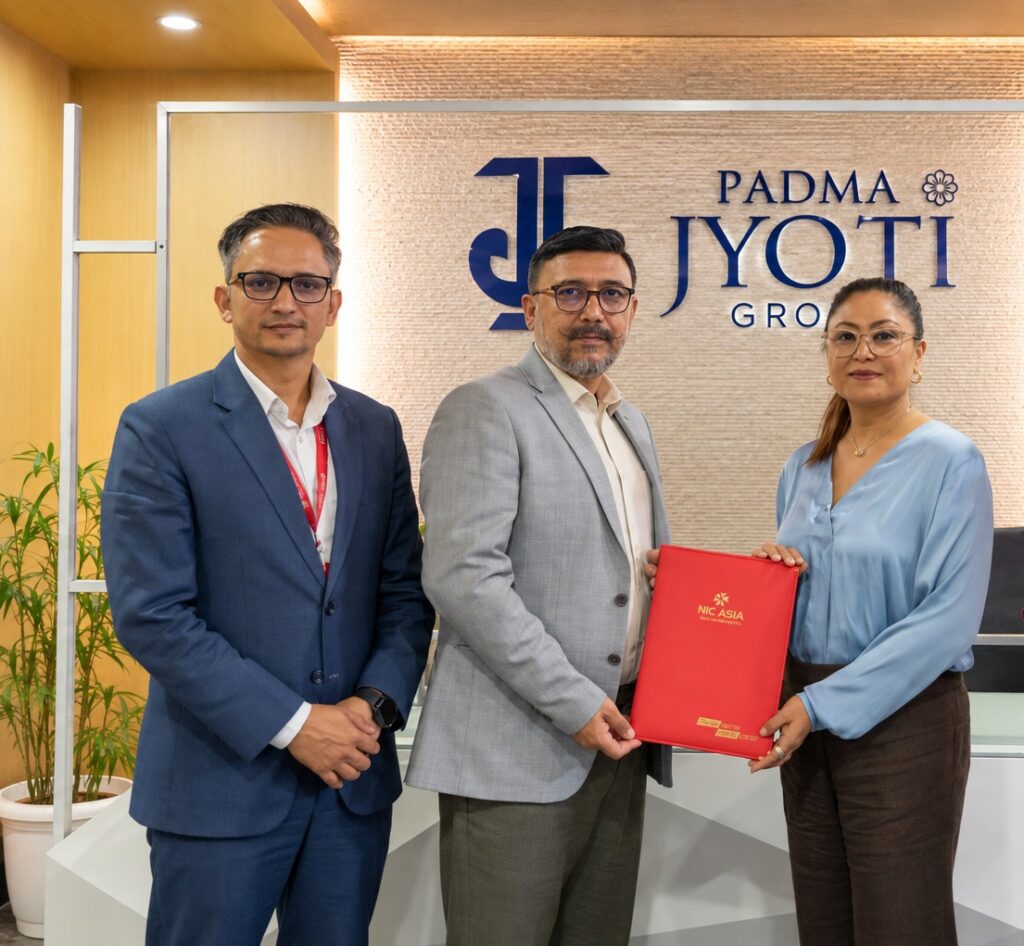
Muktinath Bikas Bank, NIC Asia Bank and Shangrila Development Bank are the member banks. Chhujung is probably the first hydropower project to be financed after the Bhotekoshi catastrophe on August 10.
9 Arb Debt R }3 Arb Equity{
The total estimated cost of the project is Rs 12 billion. Out of this, Rs 9 billion has been raised through loans from banks and financial institutions and the remaining Rs 3 billion has been raised from the equity of the founders.
The cost of the project is estimated to be Rs 19 crore per megawatt. In terms of cost per megawatt, the project is found to be cheap. The project will be semi-reservoir for 4 hours. With the completion of the financial management, the necessary financial resources for the construction of the project have been ensured.
The Power Purchase Agreement (PPA) has been signed with the Nepal Electricity Authority. According to the feasibility study conducted by the company, the project will generate 37.18 crore units of electricity annually. The construction materials are being transported by helicopter to the project site Yak Kharka. It has been proposed that the power house of the project will be underground.
The project is projected to earn Rs 2.27 billion in the first year after starting power generation. Similarly, the annual income is expected to increase to Rs 2.84 billion by the time it reaches its ninth year of operation. The project will get 8 per cent tariff hike from the NEA at the rate of 3 per cent per annum.
According to the financial analysis of the project, the return on equity (ROE) will be 25.67 per cent and the internal rate of return (IRR) will be 15.47 per cent. ROE and IRR are the two financial indicators that make the project look attractive financially and give good returns to the investors.
Similarly, the project has a benefit-cost ratio of 1.58 and a net present value (NPV) of Rs 5.33 billion. The normal payback period is projected to be around 5.73 years.
Ghalemdi hydroco 1 billion }10 crore} }
}
Ghalemdi Hydro Limited has an investment of about Rs 1.10 billion as the main shareholder in the project. Ghalemdi is operating the 5 MW Ghalemdi Khola Hydropower Project in Annapurna Narchyang of Myagdi. With the huge loan investment from banks and financial institutions in the project to be promoted by Shangri-La Energy, the necessary financial base has been prepared to proceed with the construction.
The Chhujung Khola Hydropower Project is to be constructed in the Bhotkhola area of Sankhuwasabha and after the operation of the project, it is expected to contribute to the production of electricity in the area and to the national transmission system.
The power will be supplied to the Electricity Authority’s Shitalpati 220 KV substation, which is 55 km away from the project’s powerhouse. The project will have to construct a 55-kilometer-long, 220 kV double-circuit transmission line.
Shangri-La Energy has signed an agreement to build the transmission line in partnership with half a dozen hydropower projects that are going to be built in the river corridor. The company said that the cost will be further reduced as other projects will also be added to the corridor.
Similarly, the felling of trees required for the project has been completed. According to the policy of planting 10 trees after cutting one tree, the project has provided Rs 3.63 crore to the Department of Forest and Soil Conservation for planting and conserving trees. Currently, the project has completed a 14-km long access road. It has also constructed the necessary camp for the project.
After signing the agreement, Chief Executive Officer (CEO) of Machhapuchchhre Bank Santosh Koirala said that the bank and the participating banks are committed to complete the project on time and connect it to the national grid.
“This project should be started on time and without any hindrance. There will be no shortage of investment from the bank. The promoter should also pay special attention to safety and quality and complete the work on time,” Koirala said.
Similarly, Mohan Kumar Dangi, president of the Independent Power Producers’ Association, Nepal (IPPAN), said that the promoter of the project has got a consortium of experienced and supportive banks. Recalling that Machhapuchchhre Bank had invested in his first hydropower project, he said that the project was completed ahead of schedule due to the support of the bank.
“My first hydropower project was 7.5 MW. Machhapuchchhre Bank had invested in it. We had set a target to complete the project in three years. But due to the support of the bank, we were able to complete it in 22 months,” said Dangi.
He expressed confidence that the project will be completed on time as the promoters of the Chhujung Khola project are experienced. “You are an experienced team that has already successfully constructed the project. You have already worked in a remote geography. Therefore, IPPAN is confident that the 63 MW Chhujung Khola will be completed on time,” Dangi said.
Stating that time is of special importance in the construction of a project, he said that any delay in the construction period would increase interest during the construction period and affect the financial condition of the project.
“How good and profitable the project will be is linked to the time of completion of the project. If the construction is not completed on time, the interest of the construction period will increase and the project will be weak. I believe that experienced leaders like you will contribute to the energy security of the country by completing the project on time,” Dangi said.
According to Kishor Subedi, executive chairman of Shangri-La Energy, the project could be completed in a short time and at comparatively low cost due to geographical and technical condition.
According to him, there is no need to construct very large structures on the basis of capacity as the head of the project is more than 900 meters. “Since the head of the project is more than 900 meters, there is no need to build big structures according to the capacity. Therefore, the project can be completed at a low cost and in a short time,” Subedi said.
He claimed that more than 59 per cent of the project’s catchment is above 3,000 metres, adding that the water flow would increase with the rise in temperature even in winter, which would reduce the hydrological risk.
“We will fully maintain the trust of all the banks and investors including Machhapuchchhre Bank who have trusted us,” he said.
Pushkar Poudel, managing director of Shangri-La, said that the semi-reservoir project will generate 63 MW of electricity daily for four hours even during the dry season. He said that the project has been designed to run at full capacity for four hours daily even in dry season, keeping in mind the energy security of the country.
Poudel clarified that there is no risk of damage to the project as the project is 45 meters above the river. Poudel said that there is very little sediment in the river and there is no risk of avalanche.
171 MW Reservoir Project }
Shangrilal Energy is going to start the 171 MW storage hydropower project. The company is going to construct the Chhimdi Kawadi Khola Hydropower Project in Bichhaya, Bajura district. Poudel informed that the feasibility study of the project is currently underway. He said that the project is in the process of study.