




Kathmandu. The eighth International Agricultural Mechanization Exhibition–2083 has begun at Bhrikuti Mandap in Kathmandu. Stakeholders participating in the opening ceremony of the three-day exhibition, which began on Friday, emphasized the need to prioritize agricultural mechanization for increasing production and productivity in the agricultural sector, reducing production costs, and substituting agricultural produce imports.



They emphasized the need to expand the development and use of agricultural machinery and technology according to Nepal’s geographical conditions and farmers’ needs, emphasizing the necessity of cooperation between the government and the private sector to encourage industries producing agricultural equipment domestically.
Minister of Industry, Commerce, and Supply, Deepak Kumar Sah, said that imports can be replaced by increasing indigenous production and productivity of agricultural produce. According to customs department data, imports of food and agricultural products in the fiscal year 2082/83 reached approximately four hundred and forty-one billion rupees, and he clarified that this could include not only food grains but also raw cooking oil, animal feed, and processed materials.
He stated that farmers need more technology and means to increase production than just speeches and assurances. He stated that agricultural mechanization is a crucial foundation for transforming traditional farming systems into modern, commercial, and technology-friendly agriculture.
Minister Sah urged agricultural machinery operators not to limit themselves to importing and selling equipment but to develop industries that produce agricultural tools, machines, parts, and technical materials domestically. He emphasized that priority should be given to producing small, affordable, and easily maintainable agricultural equipment according to Nepal’s geography and the economic capacity of farmers.
Expressing the government’s commitment to policies promoting indigenous agricultural machinery production, an investment-friendly environment, and facilitating technology transfer, he stressed the need to develop agricultural mechanization as an important economic sector linking agriculture and industry.
TAG_OPEN_p_81 Krishna Sharma, president of the Nepal Agricultural Machinery Entrepreneurs Association (NAMIA), said that the agricultural mechanization exhibition in Nepal began in 2070 B.S. Recalling the mini tiller exhibition in 2070 B.S., the exhibition is now becoming more organized and modern. He informed that this year’s exhibition features participation from various companies and organizations related to agriculture, from seed seed to animal husbandry, fertilizers, grain, beekeeping, and more.
Thanking the government and non-governmental organizations that helped make the exhibition successful, Chairman Sharma emphasized that agricultural mechanization should be a national priority. He highlighted the need to build a modern and multi-purpose agricultural mechanization exhibition hall at the central level and improve the physical condition of the exhibition space currently in use.
Customs exemption on agricultural machinery imports, easy loans for farmers to purchase equipment, training for agricultural equipment maintenance, and skill development were his demands.
Global IME Bank’s Executive Director Surendraraj Regmi thanked the organizers for connecting farmers and technology on a single platform. He said that in the agricultural sector, where expected production and productivity have not been achieved, the use of modern mechanization needs to be expanded. He stated that considering Nepal’s geographical situation and farming system, the bank is playing the role of a financial partner in the agricultural sector.
Program Manager at the Food and Agriculture Organization (FAO), Deepak Tuladhar, stated that the need for agricultural mechanization is increasing due to climate change, labor shortages, and declining youth attraction to the agricultural sector. However, he emphasized that more than mechanization without necessity, appropriate technology should be used according to farmers’ needs and farming systems.
While informing that FAO is working in production, storage, and processing, Tuladhar said that since small farmers cannot afford to purchase expensive equipment, it is necessary to provide them with mechanization facilities as well.
Sudhir Shrestha, Secretary of the Ministry of Agriculture, Livestock, Forest, and Environment of the Bagmati Province Government, said that cooperation will continue in the coming days to promote agricultural mechanization. He expressed the view that when distributing agricultural equipment, needs and utilities should be prioritized over grants. Noting that due to grants, some places have received more equipment than needed and remain unused, and he emphasized the need to make the subsidy system more effective.
Anjan Kumar Shrestha, President of the Federation of Nepalese Chambers of Commerce and Industry, stated that the excessive use of subsidies in agricultural mechanization could affect the importance and quality of equipment. Emphasizing that business owners should pay special attention to the quality of agricultural equipment, he expressed the view that the reputation and quality of the entire sector should not be affected because of a few entrepreneurs.
Devendra Gauchan, member of the National Planning Commission, said that agricultural mechanization should be advanced by linking the transformation of the agricultural sector, increased production, and cost reduction. He stated that alongside the use of technology, policy clarity, investment, and collaboration with the private sector are necessary for the development of the agricultural sector.
Representatives of the Nepal Agricultural Research Council noted that positive work has been done recently in the field of agricultural mechanization and emphasized the need to expand the use of sustainable agricultural mechanization to increase production and productivity.
Secretary of the Ministry of Agriculture, Forests, and Environment, Rajendra Prasad Mishra, said that recently, the reach of agricultural mechanization has been expanding to villages, making farming easier for farmers. Noting that the government is also making significant investments in this sector, he expressed the view that it is time to review the agricultural mechanization policy.
Grant distribution should be made effective and priority should also be given to the maintenance of agricultural equipment. He urged businessmen to arrange the necessary manpower and services for their operation and maintenance, saying that providing equipment alone is not enough.
Sunita Nimafuki, Vice President of Namia, said that cooperation between businesspeople, the government, and farmers is essential for the development of agricultural mechanization. She emphasized the need to ensure access to agricultural equipment in villages, inform farmers about modern technology, and develop skills related to equipment use and maintenance.TAG_OPEN_p_69
Special priority for indigenous production
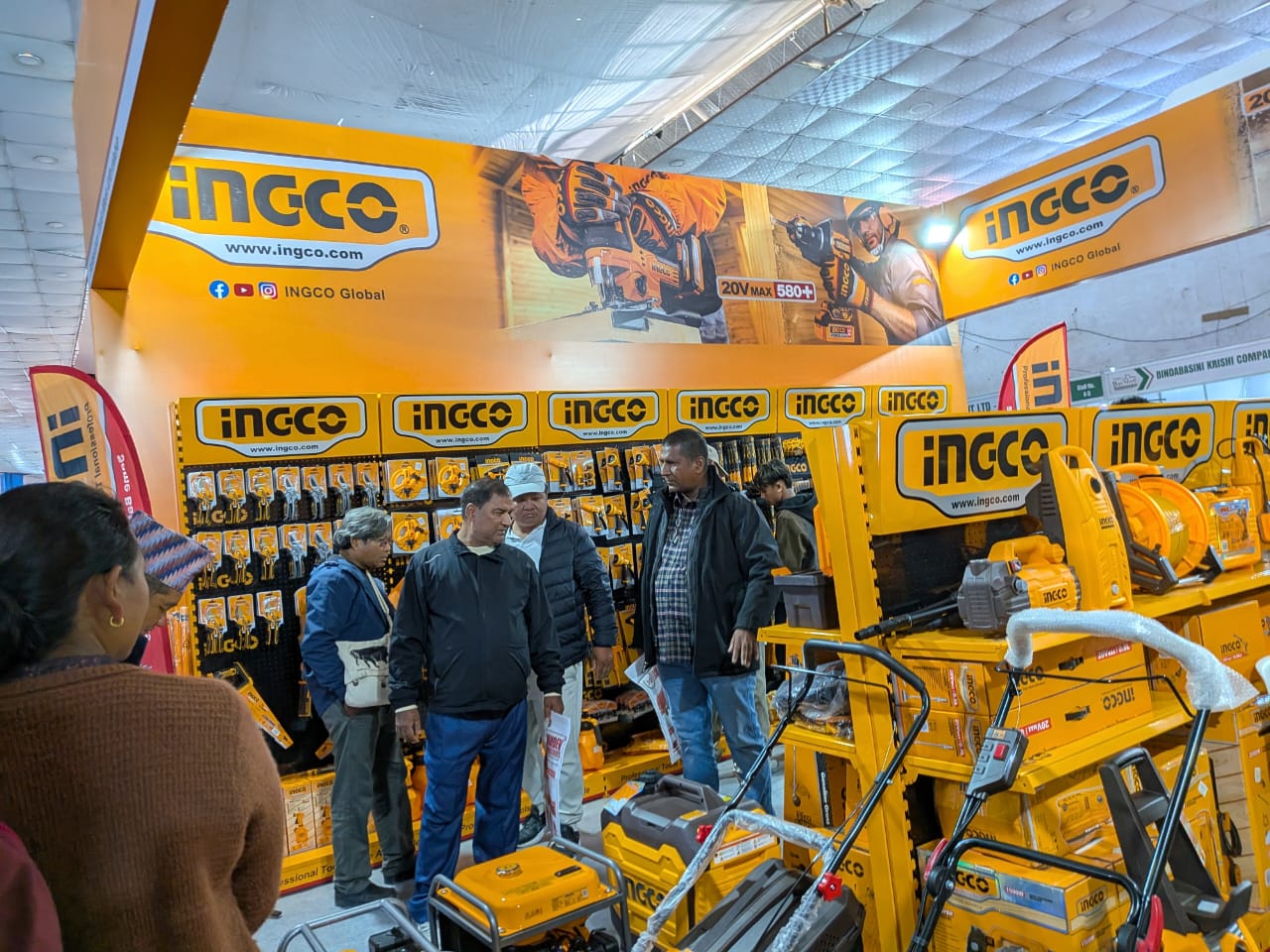
According to the Nepal Agricultural Machinery Entrepreneurs Association, the exhibition, held from Mangsir 4 to 6, features participation from Nepal, India, China, and other European countries. There are 144 stalls at the exhibition, both small and large, with 92 exhibitors participating.
{{TAG_OPEN_p_66}To promote indigenous production, companies under ‘Make in Nepal’ and ‘Made in Nepal’ have been provided with a 60 percent discount on stall rent, according to the organizers. Free stalls have been provided to 17 indigenous producer companies, including the National Invention Center. Similarly, member companies of the Nepal Agricultural Machinery Entrepreneurs Association have been given a 50 percent discount.
The exhibition displays agricultural machinery and equipment, greenhouses, drip irrigation, mulching, foggers, agricultural drones, artificial intelligence (AI), seed seeds, agricultural processing, automation, livestock and fisheries, beekeeping, coffee cultivation, fertilizers, and feed-related technologies and equipment. Tractors, planting and crop management equipment, irrigation technology, and cold storage technologies are also highlights of the exhibition.
Need for policy reform in agricultural mechanization
According to Chairman Sharma of Namia, over the past decade, the agricultural mechanization exhibition has made a significant contribution to expanding the use of agricultural equipment and technology in Nepal. With programs and grants from all three levels of government, private sector participation, development partners, and research institutions, the use of machinery and technology in agriculture has been increasing.
However, although mechanization has been used more in tilling fields and bringing in crops, its use in planting, threshing, and other specialized agricultural activities is relatively low, according to Chairman Sharma. It has been pointed out that additional incentives and grants are needed to increase the use of less-used equipment like rice transplanters and seed drills.
The organizer suggested finalizing the first amendment process to the Agricultural Act and the Agricultural Mechanization Promotion Policy, constructing a modern and multi-purpose exhibition hall at the central level, and recognizing agricultural mechanization technology as an important agricultural input.
Similarly, the need to introduce policies to promote indigenous agricultural machinery production, grant full customs exemptions on agricultural products not produced in Nepal, maintain uniformity in the quality and standards of agricultural machinery and equipment, and provide for certification.
Emphasis is also placed on allowing farmers to choose their own purchasing equipment and technology through cost-sharing, easy insurance and financial facilities for agricultural machinery, development of women- and climate-friendly technologies, and expanding custom hiring centers across the country.
There will be discussions and presentations on various topics over three days
On all three days of the exhibition, programs related to knowledge exchange, professional facilitation, technology development, and policy dialogue will be conducted in collaboration with the Nepal Society of Agricultural Engineers.
On the first day, six subject experts from India and abroad will present presentations on agricultural mechanization. On the second day, there will be consultations on the purchase and use of agricultural machinery and technology, knowledge exchange related to food processing and exports, and a panel discussion on Nepal’s geographically adapted agricultural mechanization policy.
On the third day, three subject experts will give presentations on agricultural mechanization. There will also be discussions on youth-centered agricultural technology, transformation, and innovation.
{{TAG_OPEN_p_54}To attract visitors, prizes will be distributed through a lucky draw on all three days, according to the organizers. Each day, 50 people will receive prizes, and on the final day, one person will be given a mini tiller as a bumper prize.
Exhibition in collaboration with the government and private sector
The main organizers of the exhibition are the Department of Agriculture under the Ministry of Agriculture, Forestry and Environment of the Government of Nepal, the National Agricultural Engineering and Mechanization Promotion Center, and the Nepal Agricultural Machinery Professionals Association. The Ministry of Agriculture, Livestock, Forests and Environment of the Bagmati Province Government and the United Nations Food and Agriculture Organization (FAO) Nepal are co-organizers.
SKT Nepal Pvt. Ltd. is the main sponsor of the exhibition, featuring a partnership of a project implemented by GIZ with financial support from the European Union and the German Federal Ministry for Economic Cooperation and Development. The National Agricultural Modernization Project promoted the exhibition.
The agricultural mechanization exhibition in Nepal began in 2070 BS from the banks of the Narayani River in Chitwan. The then Directorate of Agricultural Engineering organized the first national agricultural mechanization exhibition. Then, in 2072 BS, the second national agricultural mechanization exhibition was organized in Kohalpur, Banke.
In 2017, the first international agritech exhibition was held at Bhrikuti Mandap in Kathmandu. Similarly, exhibitions were held in Dharan of Sunsari in 2074, Bharatpur in Chitwan in 2076 and 2078, and Pokhara in 2080.
{{TAG_OPEN_p_48}This time, the International Agricultural Mechanization Exhibition is being held as the eighth edition. The exhibition is expected to provide farmers, agricultural entrepreneurs, and entrepreneurs with information about new technologies and equipment, as well as assist in the production of indigenous agricultural machinery, technology transfer, and expansion of commercial cooperation.
The exhibition, held with the main slogan ‘Machinery and Technology in Agriculture: Prosperity of Farmers and the Nation,’ is expected to feature over 100 exhibitors, over two thousand agricultural machinery and equipment, and more than 200 stalls. The exhibition is expected to support the expansion of modern agricultural mechanization, innovative technology, and the use of agricultural equipment.
TAG_OPEN_p_46 The exhibition, which runs for three days from 10 a.m. to 5 p.m., is estimated to attract over 50,000 visitors.