




Kathmandu. An earthquake measuring 7.2 on the Richter scale struck Venezuela’s capital Caracas just after 6 p.m. local time on Wednesday. Thirty-nine seconds later, another massive 7.5-magnitude major tremor occurred.
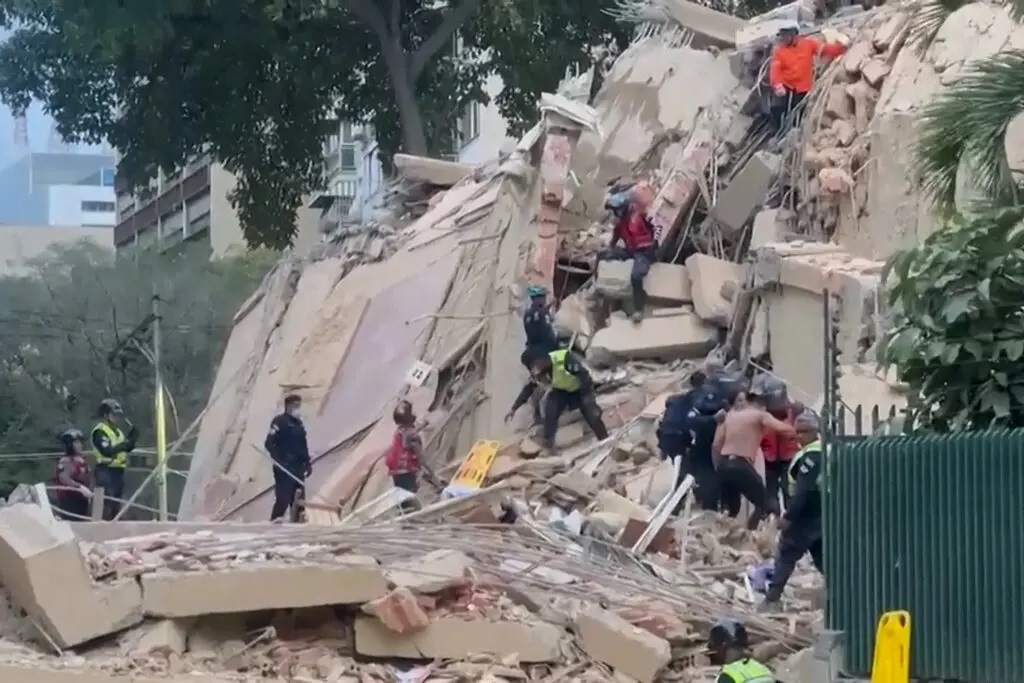
The U.S. Geological Survey (USGS) estimates that there is a 45 percent chance that more than 10,000 people could be killed and the economic damage could exceed $10 billion. According to several mainstream media reports, the quake has destroyed buildings in the capital Caracas.



The office of Venezuela’s interim President Delcy Rodríguez reported that 32 people had been killed and nearly 700 injured. However, the USGS estimates a 12 percent chance of more than 100 deaths, a 44 percent chance of more than 10,000 deaths, and a 30 percent chance of more than 100,000 deaths.
While the economic damage is expected to be high, it is too early to estimate the damage insured from these earthquakes. However, it is reasonable to assume that this could be one of the largest insured property damage incidents in the history of the country.
It is unclear whether Venezuela has any parametric earthquake coverage, public or private. However, it can be assumed that any parametric earthquake contracts are probably set to be triggered around 7 magnitude or higher. So if there are any, they may be at risk or triggered.
According to the USGS, the first quake struck at 6:04 p.m. local time in the Montalban region at a depth of 13.2 kilometers. The agency also reported that the quake was felt as far away as the Colombian capital, Bogotá.
More than 20 earthquakes have hit Venezuela since Wednesday’s first quake, according to the president’s office. The extent of the damage is unclear, as Venezuelan authorities are assessing the worst-hit areas. Acting President Rodriguez has declared a state of emergency.
It is also at high risk of soil erosion and liquefaction, according to the USGS. This phenomenon affects the soil that has been eroded by the earthquake and causes landslides.
Venezuela is located in a seismically active zone. This is where the Caribbean and South American tectonic plates meet. According to the USGS, the second and largest of the 2 earthquakes was caused by “shallow strike-slip faulting” near the boundary of these plates.
Venezuelan Interior Minister Diosdado Cabello told state television that the quake had affected several states. The Palos Grandes and Altamira regions of the capital Caracas were among the worst affected, he said. –Agency