



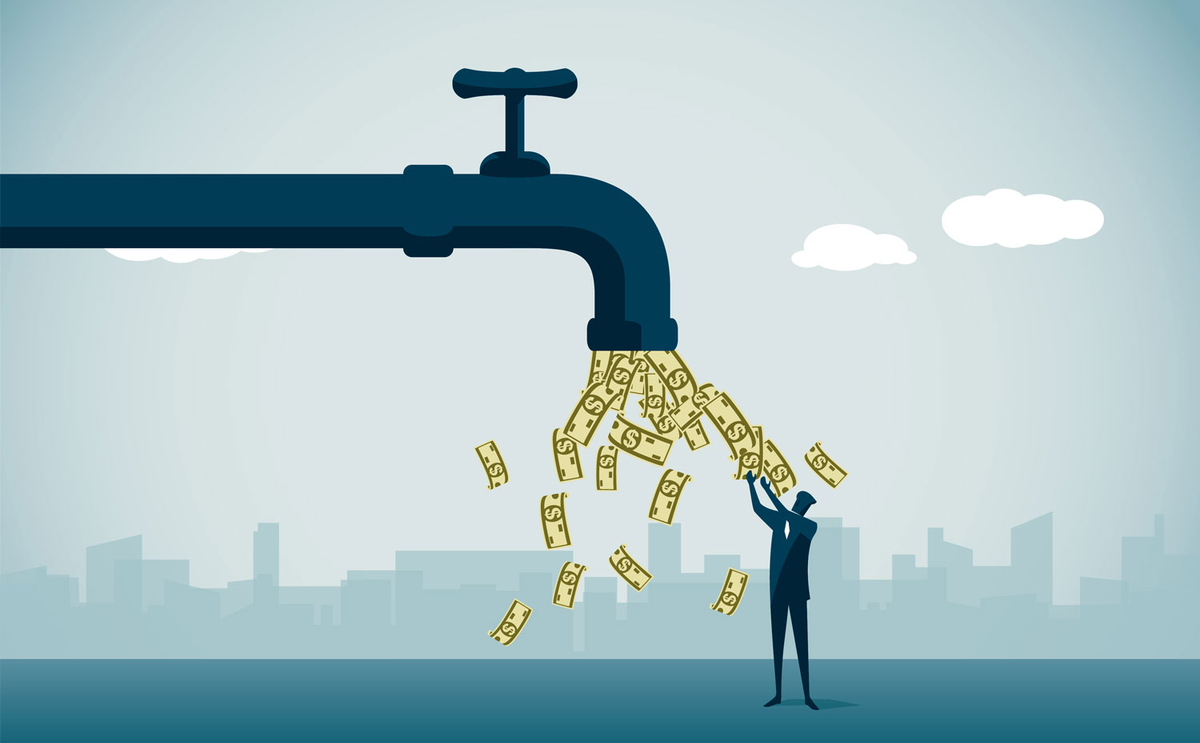

Kathmandu. Nepal Rastra Bank (NRB) has been collecting money from banks since last year due to excessive liquidity in the banking system.
The money collected from the banks is kept in a separate fund under the Open Market Trading Procedure (OMS) and has to be returned to the banks after a certain period of time with interest. However, in the last five years, the central bank has to pay more than Rs 15 billion in interest in the name of liquidity management due to the regular exploitation of excess money in the market. The main source of this expenditure is the income from foreign currency investment of the Rastra Bank. The central bank is not allowed to invest this money anywhere.



According to the procedures related to open market transactions, the Rastra Bank draws more money than required in the banking system through various monetary instruments and distributes it if there is a shortage. Now, there is a lot of liquidity in the system due to the lack of continuous demand for loans.
According to experts, excess liquidity in the banking system after Covid-19 is the root cause of the current problem. Imports have not increased as expected, remittances have increased and private sector investment has been relatively weak, which has reduced real demand for credit. When the demand for credit decreases, the banks are flooded with money. This causes the interbank rate to fall to the lower boundary, and eventually force the central bank to pull money continuously. This is the current situation.
As of the first week of November of the current fiscal year, the Nepal Rastra Bank (NRB) has released a whopping Rs 22.377 trillion into the banking system. According to NRB sources, more than Rs 5 billion has been spent in interest. Last year, the NRB spent Rs 9.13 billion and Rs 2.18 billion in the previous year.
When there is a lot of money in the banks, they can also invest in risky areas. This can lead to financial instability in the future. Experts say that this could lead to an asset price bubble, bad loan growth and an impact on overall financial discipline.
On the contrary, it is considered healthy for the economy when there is less money with the bank and demand is high. Economic activity remains active when demand increases. Investment increases and credit expansion accelerates the economy. But now the economy is in a very slow state due to weak demand.
Despite the continuous pull of money by the central bank, the demand for loans has not increased significantly. According to experts, overall demand has weakened due to cooperative problems, uncertainty in private sector investment, reduced cash flow in the hands of citizens, political risk and reduced consumption.
Therefore, traditional measures of monetary policy alone do not keep the economy moving. This is evident from the fact that credit has not expanded even when interest rates are almost low.
Experts say that the government should take responsibility to solve such problems. They stressed on the need for the government to rapidly increase capital expenditure, expand autonomous investment, increase resources in big infrastructure projects, production-oriented industries and public service sector.
At the same time, the private sector has been saying that policies and stability are necessary to give confidence to private investment. Experts say that the confidence of private and foreign investors will increase only after the increase in government expenditure and economic activities will be carried out.