



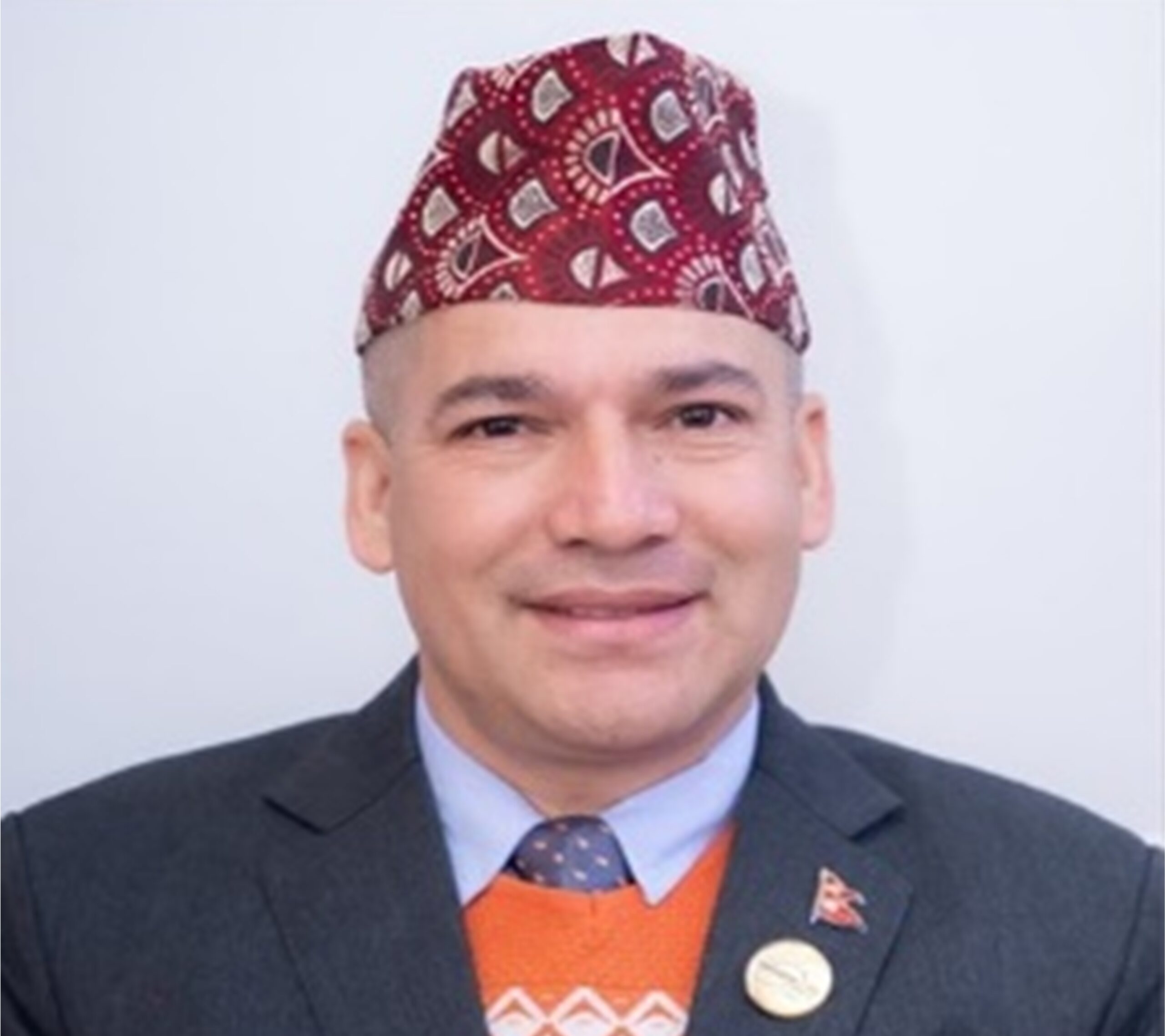

- Surya Suman Thapa
Every human being is a social creature who enjoys his progress and progress. Man is naturally a creature who thinks about the future along with his present. Along with today’s earnings, today’s needs and today’s lifestyle, the question of what will happen tomorrow is also somewhere in his mind. Plans like building a house, educating children, doing business, saving are an attempt to secure the future. Therefore, it is not appropriate to say that most of the activities of human beings are related to meaning in some way or the other, in today’s era of science, technology, and research, man has made life very easy. However, it is also true that despite so many facilities and possibilities, people are lagging behind in some subjects due to their own thinking and behavior.
Whether it is personal life or the development of family, society and nation? Everywhere, there is a need for positive thinking and proper planning for the future. The future is not secure only by looking at today’s income and needs. The biggest feature of the future is its uncertainty. In life where there is no certainty of what will happen tomorrow, it is wise to make some preparations from today for the possible risks that may arise in the future.



Even a healthy and capable person who is engaged in day-to-day work may fall ill tomorrow, there may be an accident, the source of income may be cut off, the main earning member of the family may be lost, or there may be unexpected losses in business, agriculture and animal husbandry. It is not always possible to prevent such risks. However, the financial burden arising from the risk can be reduced by managing it to some extent. Therefore, the concept of the need for insurance is added to the responsibility of every family.
Insurance is not just a means of depositing money or getting money back after a certain time. It is also a precaution against potential financial risk. However, there is still a lot of confusion about insurance in Nepal, and there is a huge gap between the understanding and practice of insurance.
Dilemma for Insurance in Nepal: Distance Between Need and Reality{
}
According to the current statistics, even though the access to insurance is expanding in Nepal, the gap between insurance and the general public remains. It is not enough just to increase the number of people who are insured. It is also necessary to have a clear understanding of why you have taken insurance, for what risk, how much insurance premium you have to pay, under what circumstances you get the benefit, under what circumstances you do not get it, and how to make a claim. Still, some people have the same question in their mind, is there a lot of places to keep if you have money? What do you get by paying money here?
Some people consider the insurance premium they pay as an expense until there is no major risk during the period of insurance. Due to this thinking, the real purpose of insurance is still obscured. If insurance is seen only as a means of paying money every year and seeking an equal return, then its risk management aspect is missed.
In normal circumstances, there may not be much difference in the daily routine between an insured person and an uninsured person. However, the importance of financial security can be especially seen in the event of the death of the main earning member of the family, a serious illness, partial or complete disability due to insurance or an accident, financial loss or other risk suffered due to a long stay in the hospital due to an accident. That is why the price of insurance is felt more when there is a risk.
The problem is that a lot is heard while insuring, but the practice of understanding the terms of the insurance policy and one’s real needs by giving enough time is still not strong. In some cases, people take insurance on the advice of others, relatives, or the advice of an agent. Later, they may feel that the insurance policy does not match with their financial situation, needs, or expectations.
Why do TAG_OPEN_strong_86 you get complaints after insuring?
Often, the only reason for complaints after insurance is the difference between personal expectations and reality. If the customer does not clearly understand the various benefits he will get while buying insurance, then problems can arise at any time. For example, the period of paying the insurance premium can be long. After a few years, family needs may change, income may decrease, or other financial liabilities may be added. In such a situation, it may be difficult to pay the insurance premium continuously.
On the other hand, dissatisfaction can arise if the expected benefit of insurance and the benefit mentioned in the insurance policy are different. Similarly, many people may not understand in the beginning that the entire amount they paid may not be returned in the event of surrendering the insurance policy in the middle. Then the question arises, why did I pay a lot of money, why did I get a little back? Therefore, the habit of asking such questions at the time of buying the insurance policy can lead to advance information about many things. What happens if I have to stop the insurance policy in the middle?, how long should I pay the insurance premium, under what condition can I make a claim, under what circumstances I will not get it? It is better for the customer to ask such questions at the beginning and be informed, so it is not enough to just add a person to the insurance to be effective. It is equally important for him to understand the insurance he has taken.
Tendency to blame only the agent and the company when there is a problem{
}
Most of the time, when the insured is dissatisfied with the insurance, the first question goes to the agent, some customers are found to have put all the responsibility on the agent even if they do not understand the terms of the policy. On the other hand, there is also a tendency to blame only the company if there is a problem related to the claim process, service or insurance policy. In fact, insurance is a three-party relationship, where the customer, the agent and the insurance company have a strong role in their respective responsibilities.
The agent should not only sell the plan to the customer, but also explain its important terms and conditions related to premium, term, benefit, limitation and claim in simple language. If the insurance policy is sold by going beyond the financial capacity and needs of the customer only by prioritizing the sale and its business goals, it can lead to mistrust in the future. Such mistrust harms everyone.
Insurance companies have a very important responsibility. Because the terms of the insurance policy are clear, the service is transparent, there is a system to listen to the customer’s complaints, and the claim process is easy and timely to build trust.
Similarly, the customer also has his own responsibility. It is the responsibility of the customer to read the documents he is going to sign, ask what he does not understand, choose the plan according to his financial capacity, and make a decision by understanding the long-term liability. Only then will the insurance policy achieve perfection and provide long-term benefits.
Therefore, trying to say that the root cause of every problem is the agent or company can miss the real cause and the problem can arise in the future.
Commission: Transparency is more important than debate{
}
Talking about insurance without commission can be bad. Questions are often raised about this commission that comes with insurance. It is natural and part of the business process for an agent to get a commission for his labor, knowledge, time, and professional service, but the question is not only about getting a commission, was the customer chosen the right insurance policy or was the sale only given priority to his business goal? Yes. If there is an attempt to sell the plan in an arbitrary manner without considering the customer’s needs, financial capacity and risk, then it can affect the customer’s trust. Therefore, it is important to have transparency, proper counseling and prioritizing the interest of the customer in the sales process rather than looking at the issue of commission only in a negative way.
Ultimately, the tripartite relationship related to insurance is strengthened when the customer is fully informed about the policy he has taken, only with this understanding the customer can have strong trust in the agent and the company.
Effects of personal and social relationships
Although buying an insurance policy is a financial decision of one person, it is influenced by social relationships. The experience and involvement of friends, relatives, family, neighbors, or acquaintances can also make a difference in the decision of the insurer. For example, if someone narrates a good experience, a positive opinion can be formed about insurance. Similarly, if someone narrates a bad experience, its effect can also be bad. In some cases, insurance is found at the request of relatives or friends. While paying the insurance premium, the same decision may seem like a financial burden as the insurance premium has to be paid for a long time.
Therefore, the insurance should be done not only because of the relationship, but also by understanding one’s needs, financial capacity, risk and terms of the policy. Agents and insurance companies should also help the customer to choose the right plan instead of motivating him to take on more liability than he can afford.
What can be done to increase the effectiveness of insurance in Nepali society?TAG_OPEN_strong_82
The responsibility to increase the access to insurance lies not only with one party but also with the government, regulatory bodies, insurance companies, agents, media, potential agencies, and the citizens themselves. Therefore, it is necessary to pay attention to the following things to increase its effectiveness.
1. The government can add the importance of insurance to its policies and programs and make it mandatory if it wants. It can formulate policies to promote insurance in agriculture, animal husbandry, business, industry and risky occupations or sectors. However, it is necessary to carry out insurance related activities without putting unnecessary financial burden on the citizens.
2. Official and simple information about insurance can be continuously disseminated by bringing various media mediums such as television, radio, newspapers, social media and digital technology into use. Not only what insurance is, but all the information related to its need, importance, role and insurance policy such as insurance premium, term and plan, what to look for while buying an insurance policy, how to make a claim? And what happens when the insurance policy is surrendered? It is necessary to present this topic in a language that the common man can understand.
3. The most important thing is to build trust through claim payment and customer service. When the real customer gets help from insurance in difficult times, it can build trust more effectively than advertising. Therefore, it is necessary to pay attention to this issue as well.
What is insurance for?
Insurance is not something that is bought and sold out of fear or fear. It is a financial preparation done today by being aware of the potential risks. We do not know about the risks that may arise in the future, but by assessing the problems that may arise in the future, we can decide today how to manage and minimize the possible economic impact of the problem. In this sense, insurance is linked to personal security as well as the financial stability of the dependent family and the risk management of the business. In fact, insurance is the means of a bright future of tomorrow.
Not only do many advertisements play a substantial role in increasing the trust of insurance in our society, but the language of the customer, the clear insurance policy, the responsible agent, the transparent terms of the insurance company, the smooth claim process and the experience of the actual service can be enough. We tend to look at insurance only as an expense. So what do you get by paying for insurance? If we look at it only from this question, its importance and significance will be missed, instead the real meaning and understanding of insurance can be understood only through the question of how to protect the impact of my income and the insecurity of the dependent family arising from the financial risks that may arise in the future.
The real basis of insurance is the idea of managing the big financial risk that may come in the future by allocating a small amount today. Therefore, the expansion of insurance is not only by increasing the number of insurance policies, but also by making people understand why they have insurance, believe it and get real financial protection from it when needed. The effectiveness of insurance increases only when this insurance policy is not limited to just a sheet of paper when it becomes a guarantee of financial security in the life of a person.
We are unaware of the various crises in life. The risk of tomorrow in our lives is not in our hands, but in any case, it is in our hands today not to isolate ourselves and our dependent families financially. Perhaps this is the real understanding and real meaning of insurance.
(The writer is the chief of Reliable Nepal Life Insurance’s Pokhara branch.) )