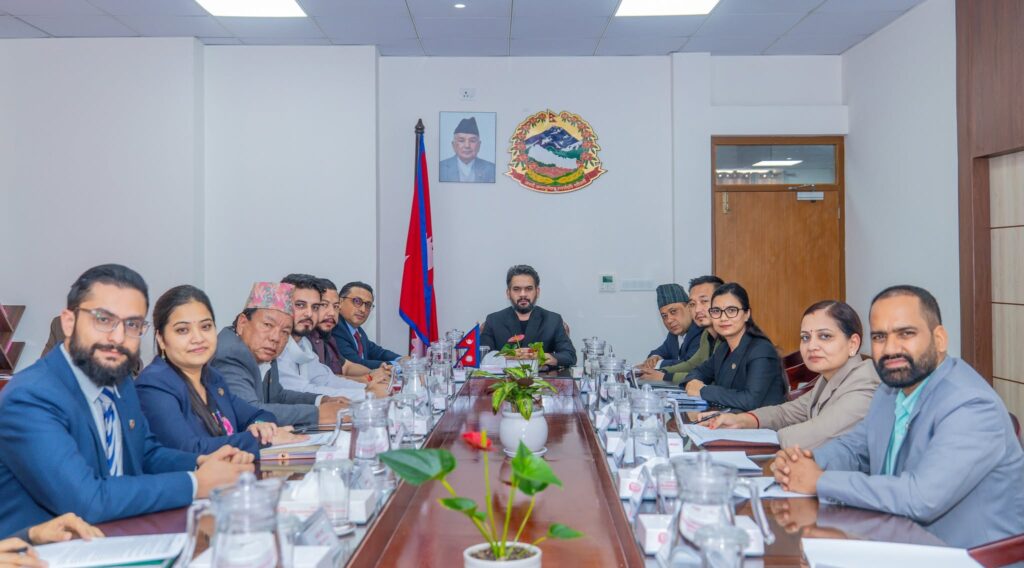






Kathmandu. KATHMANDU: The Ministry of Labour, Employment and Social Security has proposed an amendment to the existing definition of youth in the draft of the National Youth Act-2083. In the draft of the bill, the definition of youth has been included in the age group of 18 to 35 years. Those between the ages of 17 and 18 and above will now be excluded from the definition of youth.
Under the Children Act, those under the age of 18 are considered children, so the age group of 16 and 17 years is no longer in the list of youth. On the other hand, people between the ages of 36 and 40 who have attained the age of 35 have now been removed from the youth category.


The existing National Youth Council Act, 2072 will be automatically repealed if the bill is endorsed by the federal parliament.
The proposed bill has the provision of forming a nine-member State Youth Council in each province and a seven-member local youth committee in each local level. An open competitive system has been added to make the election of the office bearers of the council free from political interference. The structure of the District Youth Committee TAG_CLOSE_b_20 as per Section 11 of the old Act has been abolished.TAG_OPEN_span_19 Instead, it has been proposed to form a youth committee at the local level (municipality level) with rights and budget considerations}.
The fund of the National Youth Council shall be operated and managed as a ‘Youth Self-Employment Fund’}.TAG_OPEN_span_17 TAG_OPEN_span_15TAG_CLOSE_span_16Provision has been made that a recommendation committee will be formed under the coordination of the Secretary of the Ministry for the election of the Vice-Chairman of the Council and the selection TAG_OPEN_span_14 TAG_CLOSE_span_15 will be done through open competition. At least 33 to 50 percent of youth and women representation in the councils and committees has been ensured.
A clear policy has been included to make technology, digital economy and innovation the mainstay of youth employment and facilitate startup entrepreneurship.
The old unitary structures and centrally controlled programs have been scrapped and the provincial and local governments have been given the legal authority to formulate and implement youth-related programs.
If this bill is passed, it will pave the way for youths to become active participants and leaders of development and good governance at all three levels of the country and not just consumers or vote banks.