



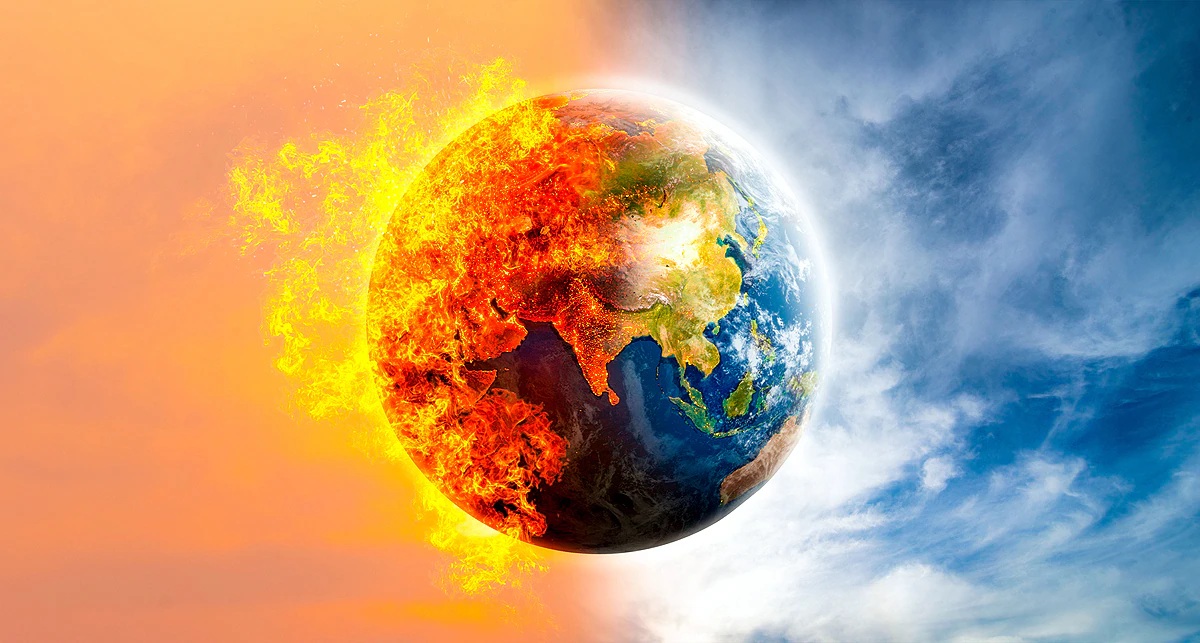

Kathmandu. Global temperatures are projected to rise by 2.3 to 2.5 degrees Celsius this century, even if all countries fully implement their climate action commitments. This figure is slightly lower than last year’s prediction of 2.6-2.8 degrees.
However, current policies are still keeping the Earth on track to 2.8 degrees Celsius. This is less than 3.1 degrees Celsius last year. This is according to the United Nations Environment Programme’s (UNEP) Emissions Gap Report 2025.



The report says the world is still far from the 1.5-degree Paris Agreement target. If countries don’t act fast enough, temperatures could temporarily exceed 1.5 degrees Celsius over the next decade.
According to UNEP Executive Director Inger Andersen, countries have been given three opportunities to fulfill their commitments under the Paris Agreement. But each time, they missed the target. National plans have made some progress, but it’s not fast enough. “That’s why we need to continue to reduce emissions, especially in these difficult geopolitical circumstances,” he said.
The report comes just ahead of the UN climate summit. Where world leaders will gather.
How far are we from the Paris goal?
The 2015 Paris Agreement pledged the world to limit global warming to 1.5 degrees Celsius. However, the report suggests that temperatures will rise by 2.3-2.5 degrees if countries meet their current pledges (NDCs). It’s a little better but still dangerous. Current policies point to a 2.8-degree approach.
The report warns that temperatures will temporarily exceed 1.5 degrees Celsius within the next 10 years. To prevent this, the increase should be limited to just 0.3 degrees. Temperatures should be lowered by 2100. If this is not done, disasters such as floods, droughts and extreme weather will increase.
Countries’ promises: How many have been fulfilled?
This year, only one-third (65 countries) of the 195 Parties to the Paris Agreement submitted new or updated National Pledges (NDCs). These countries account for 63 percent of global emissions. The rest of the countries continued with their old plans.
The G20 countries, which account for 77 percent of global emissions, are also on track to meet their 2030 targets. Deeper cuts are needed by 2035, but they are also lagging behind. The report says that rich countries have promised to help poor countries, but that too has not been fulfilled.
Emissions in 2024: Record levels
In 2024, global greenhouse gas emissions will reach 57.7 gigatonnes of carbon dioxide equivalent (GtCO2e). This is an increase of 2.3 percent compared to the previous year. More than half of this increase is due to deforestation and land-use changes. Emissions from fossil fuels (coal, oil and gas) also increased.
Among the top emitters, India and China recorded the largest increases. The European Union was the only major economy where emissions fell. “Compared to 2019 levels, achieving the 1.5 degree target would require reducing emissions by 26 per cent by 2030 and by 46 per cent by 2035,” the report said. ’
Expert Opinion: Wake Time
}
Climate experts called the report a warning sign. Rachel Klitus, from the Association of Concerned Scientists, said: “These figures are worrying, angry and heartbreaking. The poor actions of rich countries and the constraints of fossil fuel interest are to blame. ’
According to Richard Black of Amber, the national renewable energy plans paint a positive picture of the clean energy transition. Catherine Abreu of the International Climate Policy Hub said: “The Paris Agreement is not failing, but rather that some powerful G20 countries are failing to deliver on their promises. ’
Immediate action needed
}
The report concludes that without rapid and substantial emissions reductions, the world will sink into catastrophic temperatures. This will affect poor and vulnerable countries the most. There is a need to increase the amount of renewable energy, conserve forests and give up fossil fuels.
This report reminds us that time is running out. If we don’t act now, future generations will suffer. Climate change is everyone’s responsibility. But rich countries need to take the lead.