




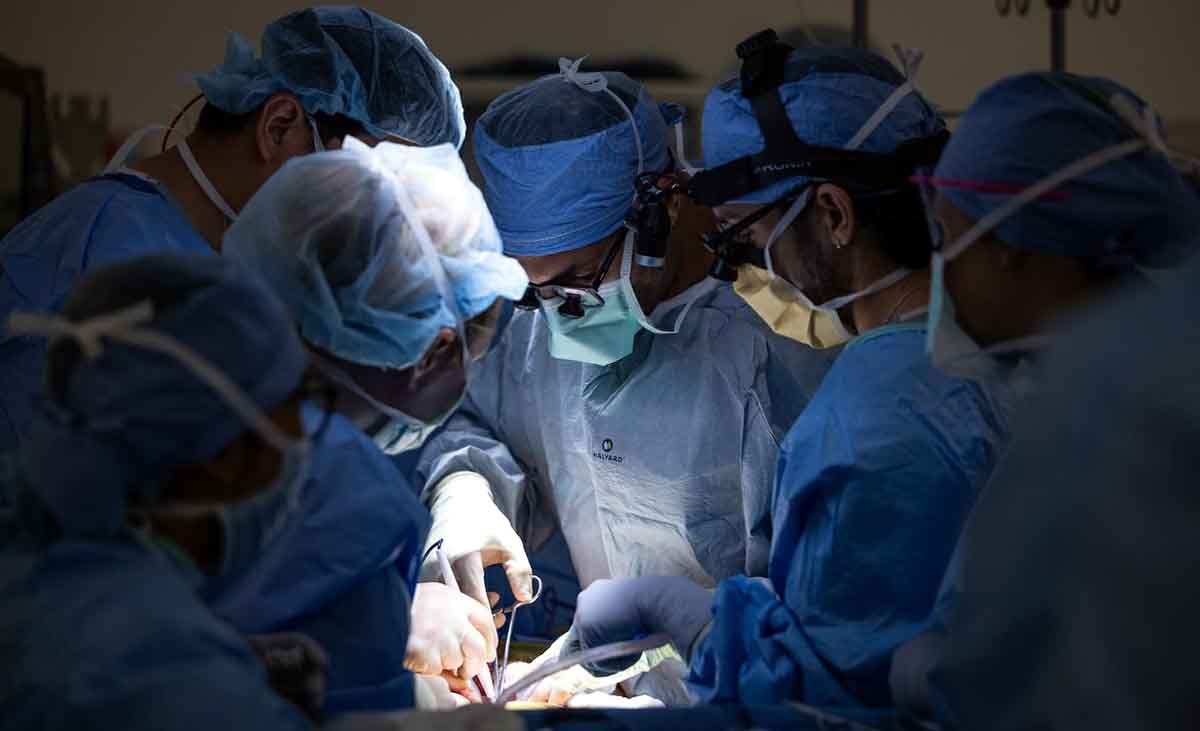


Kathmandu. Doctors in Southern California have made history. This is the first time they have had a bladder transplant in humans.
The surgery took place on May 4 at Ronald Reagan UCLA Medical Center in Los Angeles. This has brought new hope for those whose bladder is not functioning properly.


Oscar Laranezer, a 41-year-old father of four children. He was the first patient of this surgery. Oscar was a rare form of bladder cancer. As a result, most of his bladder had to be removed. Normal urinary tract can contain more than 300 milliliters of urine. But Oscar’s urinary tract could hold only 30 milliliters.
Both of Oscar’s kidneys were also removed due to cancer and serious illness. He was on dialysis for seven years. This made his life difficult. “I couldn’t urinate properly,” Oscar said, “I was a bomb that could explode at any time, but now I hope so.” ’
The surgery was jointly conducted by Dr Neema Nasiri of UCLA and Dr Indrabir Gill of UAC. Both of them had been preparing for this for four years. Initially, they tested pigs and human carcasses. Tests were then conducted on people whose brains had stopped functioning, but their heart was still beating.
A bladder transplant was difficult because the blood vessels had to be carefully connected. The doctors developed a new technique, in which the bladder was placed on ice and its veins were connected. As a result, only two connections had to be made to the patient.
On May 4, doctors implanted a new bladder and a new kidney. The operation lasted for eight hours. First kidney transplant was done. A bladder transplant was then performed. Immediately after surgery, the bladder and kidneys began to function. Oscar’s creatinine levels (which indicate kidney health) immediately began to improve. Oscar also lost 20 pounds of extra fluid.
Doctors usually use a part of the intestine for people who have a bladder removed. It helps to remove urine, but 80 percent of patients develop complications such as infection or kidney failure due to bacteria in the intestine. A new bladder transplant can alleviate these problems. Because it works like a real bladder.
The biggest challenge in bladder transplantation is the body’s refusal to accept the organ. Then the side effects of the drug. Oscar was already on medication for a kidney transplant. So he was the best candidate for surgery. However, it may not be easy for all patients. Dr. Rachel Forbes said that there are other options without medicine. “We have to be careful,” she said.
Doctors didn’t even know if Oscar could feel the urinary tract full. However, after the catheter was removed after surgery, Oscar immediately urinated. Dr. Nassiri called it a miracle and Dr. Gill called and told him that the patient was urinating. Dr. Gill was surprised.
This surgery is part of a clinical trial conducted at UCLA. To understand the results, doctors will perform this transplant on four more patients. If successful, it can be used on a large scale in the future. Dr. “This is a new path for those who have never had any hope before,” Gill said. – Agency