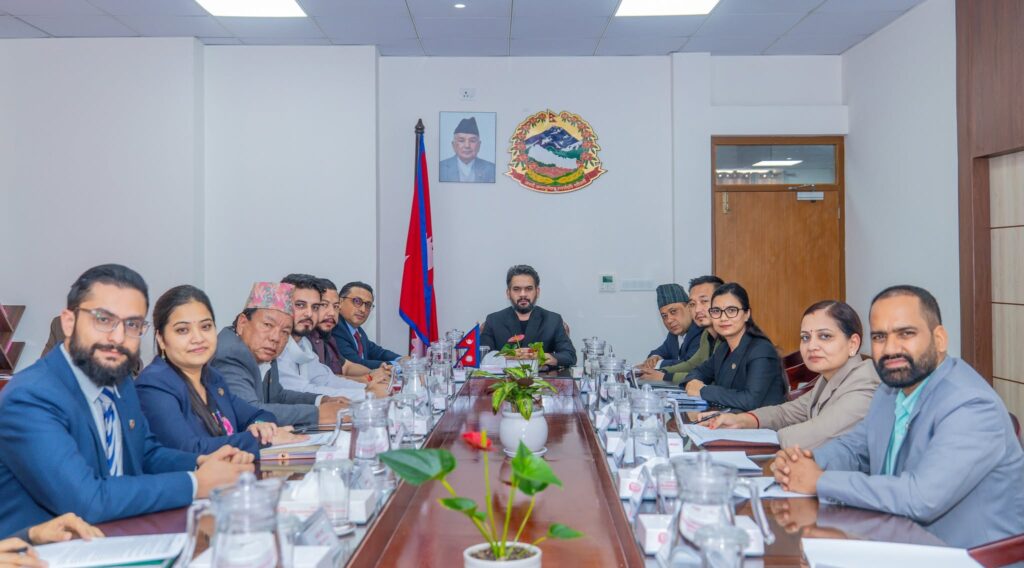






Kathmandu. The three-day interaction program organized by the Insurance Authority of Nepal with consultant actuary Subramanyam Kollimarla in August has highlighted some of the serious structural challenges in the insurance market of Nepal.
While discussions were held on contemporary issues such as actuarial valuation, product design and pricing, it highlighted the huge gap between the traditional product manufacturing practices of the Nepali insurance sector and the real needs of the market.


In Nepal, the design of insurance products often focuses on traditional styles and limited options. This has a direct impact on the accessibility of insurance and the attraction of citizens.
On the other hand, the insurer has to spend at least Rs 10 to 15 lakhs on a product for the labor of the manpower of the insurer, remuneration to be paid to the actuary, publicity materials and printing of documents related to the insurance policy. Moreover, when some insurers introduce insurance plans with great fanfare, such expenses are bound to increase further.
There are many reasons for the widening gap between the needs of the insurance market and the available products in Nepal.
Ignoring demographic diversity
}
On the occasion, consultant actuary Collimarla pointed out the need for diversification of insurance policies to accommodate different age groups to increase the access of insurance in Nepal. This shows that most of the products currently available are targeted at a certain group of people. There is still a shortage of microinsurance products targeted at farmers, the self-employed, students or low-income families.
Lack of production based on purchasing capacity
}
Collimarla stressed the need for insurance policies to be tailored to the financial situation of consumers. For middle and low income citizens, this solution is out of reach as most insurance policies have high premiums and long repayment periods. There are few flexible installments and short-term plans in the market to match their financial capacity.
Lack of skilled manpower and innovative systems
}
Lack of market study, lack of investment and infrastructure required for market research is challenging the companies to bring innovative and market-oriented insurance products by properly assessing the risk.
Lack of education and awareness in insurance
}
Due to the complex language of the insurance policy and limited awareness, it is difficult for the customer to tell which product is right for them. As a result, the trend of buying traditional and unrefined schemes at the insistence of agents continues.
In the current fiscal year 2082. The annual policy and program of 83 years has included a plan to ask every insurer to prepare at least one policy with unique features. The habit of copying the insurance plan in Nepal’s insurance market is doing injustice to the general consumers, even though the authority has to seek originality in the insurance policy and program through the annual policy and program.
The Insurance Act, 2079 has also included the concept of product developer for the specific service provider related to the development of new insurance plans. As the insurance market of Nepal is moving towards maturity, the Act has also provided a suitable opportunity for the manpower who have worked in insurance companies for more than two decades to register their presence in the market with such service business.
Even after retiring from the job, those who want to dedicate their rest of their life to the insurance sector can start this service with a shared spirit. This can be useful in creating a conducive environment for the development of products based on market demand.