



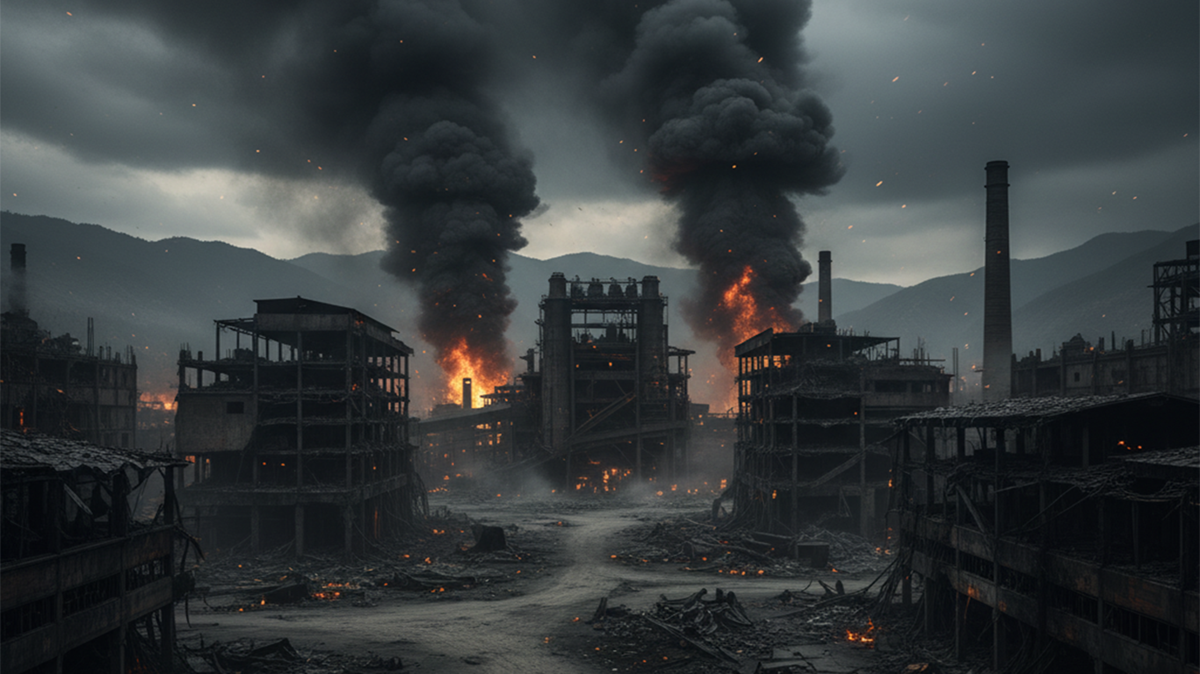

Kathmandu. The destruction of businesses like Bhatbhateni during the Genji movement is not only a physical loss, it is also a symbol of a serious injury to the future of Nepal. The burned-out cars and collapsed buildings on the streets reflect the stories of thousands of people who have lost their jobs and questions about the safety of their investments.
This incident has shown a mirror to the society that we have three big challenges of employment, investment and business confidence.



Serious injury to employment
}
The incidents of arson and looting at big business establishments like Bhatbhateni, CG Digital Park and Hotel Hilton have snatched away thousands of jobs in one fell swoop. These businesses employed thousands of people directly and indirectly. In one night, their source of income has stopped.
This movement has deepened Nepal’s unemployment problem. This will further compel the youth to migrate abroad. The destruction has affected not only the managers, employees and security personnel working in these areas but also the small farmers, producers and service providers who supply goods to these businesses.
Cloud of uncertainty in investment{
}
The agitation has had a serious impact on Nepal’s investment climate. The attack on a prestigious and successful business like Bhatbhateni has deeply worried both domestic and foreign investors. Investors first look for the safety of their capital.
Unless the government can guarantee the safety of private assets, there will be great doubts about the investment climate. As a result, the possibility of opening new industries and businesses will decrease. According to experts, this incident has sent a message to foreign investors that Nepal is an unsafe market. The effects of which can be seen for years.
Challenge of restoring business trust
}
The biggest challenge of this movement is to restore the trust of the businessmen in the government and the security apparatus of the state. Rather than compensating for the protests, the entrepreneurs are trying to ensure that such incidents do not recur in the future. For this, the government needs to come up with a concrete plan for economic recovery and guarantee the rule of law and good governance.
If the cooperation between the government and the private sector is not strong, Nepal’s economy could be weak. The Genji movement is a warning. It has given us an opportunity to reform our society and system. If we don’t learn from this, the future will be even more difficult.