




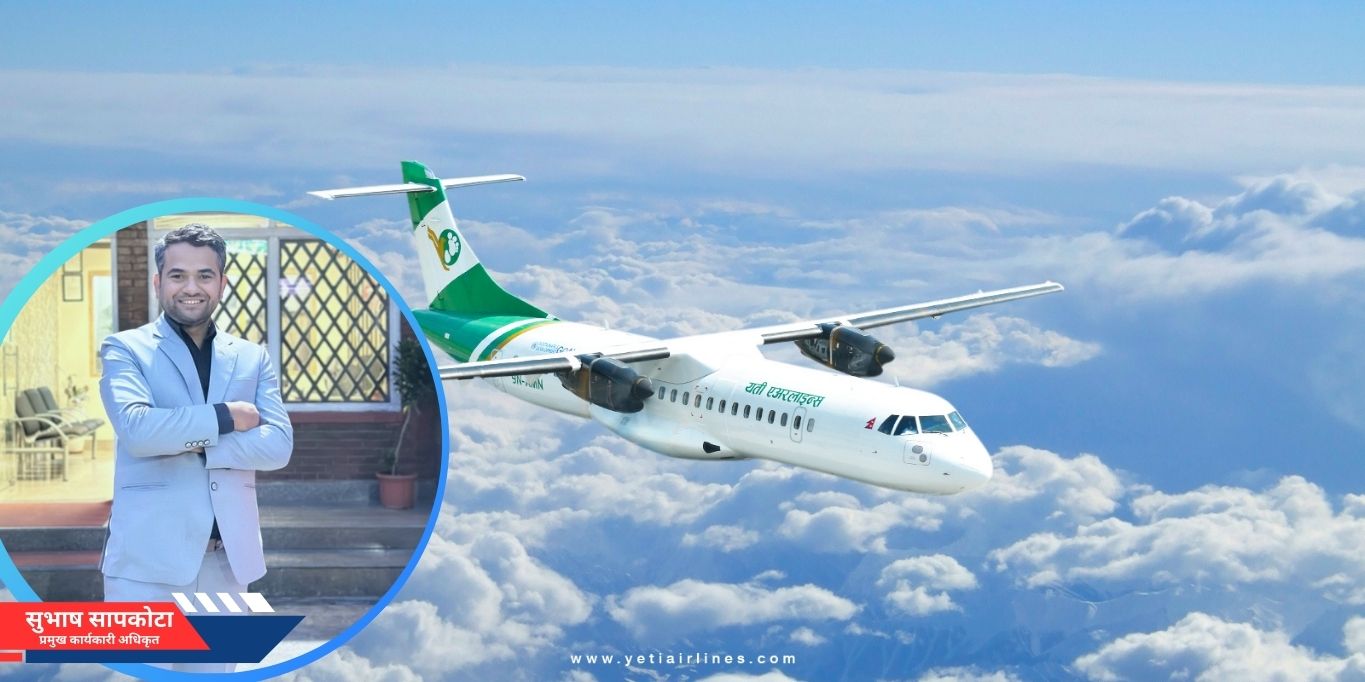

Kathmandu. Yeti Airlines, a private air service company that has given priority to passenger service with aggressive marketing in the domestic market, seems to be gaining popularity among the passengers.
According to a press release issued by credit rating agency Infomerics Nepal, the last fiscal year 2081. In the first nine months of 1982, its passenger load has reached 82 percent. Before the fiscal year 2079. 80 (2023) This ratio was only 78 percent. Competitor Buddha Air has a passenger carrying ratio of 84 to 85 percent.



Yeti Airlines, which has a total of seven aircraft, including one leased aircraft, has a market share of 21 percent. Buddha Air has a market share of 60 per cent of the total 18 aircraft, which is operating domestic flights to Benares in India as well. Ticket sales increased by 13 percent in the third quarter of the last fiscal year. Apart from this, its operating income has also increased by 29 percent in the first nine months of the last fiscal year compared to the previous fiscal year.
According to Infomerics, its credit rating has improved significantly due to growth in turnover and strong financial conditions. It has given ‘Triple Insurance Minus’ rating for long-term loans and ‘A-3’ rating for short-term loans.
Infomerics wrote in a press release, “This assessment is based on the fiscal year 2080. It also reflects on the company’s strong recovery after an air crash in 1981. Fiscal year 2081. The strong increase in scheduled flights, number of passengers and total operating income at 82 is considered as the mainstay of the rating,” it said.
Chief Executive Officer Subash Sapkota, who hails from a chartered accountant background, has seen significant positive progress in all three indicators of passenger number, turnover and profit of Yeti Airlines since taking over the management. Sapkota, who took over the leadership in a challenging situation after the tragic plane crash in Pokhara, has not only increased the popularity of Yeti Airlines strategically but has also been able to significantly improve all financial indicators.
He played a key role in bringing Asian Life Insurance as the main partner. Chief Executive Officer Sapkota said that he has been able to improve the unnecessary expenses of the airlines, high vigilance in flight safety, technical and pilot training, among others.
Yeti Airlines, which added two aircraft after bringing Asian Life as a partner, has seen 26 percent of its profits before taxes and depreciation in the previous fiscal year and the last fiscal year. Similarly, profit margin after tax was 5.47 percent in the third quarter of the last fiscal year. In the previous fiscal year, such margin was only 2 percent.
Asian Life holds a total of 46.82 percent stake in Yeti Airlines in the fiscal year 2080 BS due to a significant increase in profit. It has shown its profit and loss of more than Rs 770 million from its profit in 1981.
Yeti Airlines has a total debt of Rs 6.36 billion. Out of this, long-term loans worth Rs 2.95 billion and USD 27.1 million have been given triple B minus rating. Similarly, Yeti Airlines has received A-3 rating for short-term loan of Rs 757.3 million.