




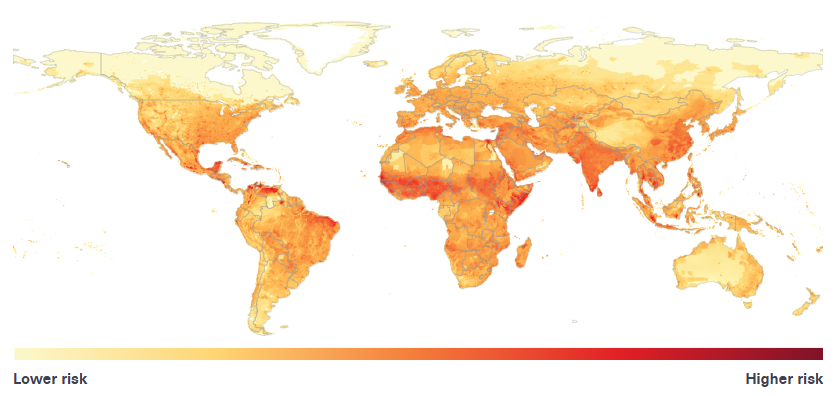

Kathmandu. A research report released by global reinsurer Swiss Re has revealed that more than 500,000 people worldwide are losing their lives every year due to excessive heat.
This number is more than the combined effects of floods, earthquakes and devastating storms. The 2025 Sonor report released by Swiss Re on Thursday said that this increase in extreme heat events is one of the most prominent new risks.



According to the report, not only human losses, but also the rising temperature has directly damaged the industry and business, which has increased the loss pressure of the insurance company. The report pointed out that the incidents of compensation claims have increased due to the direct impact of rising temperature on the infrastructure of the INFORMATION technology company.
This study shows how extreme heat is affecting not only human life but also industries such as energy and telecommunications. Jerome Hegeli, chief economist of the Swiss Rica group, said extreme heat was previously considered an ‘invisible threat’ because its effects were not as obvious as other natural disasters. “
He says that because of the clear trend of long-term heat waves, it is important to shed light on its real costs to human life, our economy, infrastructure, agriculture and healthcare systems.
There is clear evidence that extreme heat events are occurring with increasing intensity, frequency, and duration. July 2024 was the three hottest days on earth.
New data also shows that since the 1960s, heat in the U.S. has now tripled. The ambient temperature has risen by about a degree, and the heat wave lasts longer than a day.
Impact on health:
Extreme heat events can have a major impact on human health. Recent data suggest that about 480,000 deaths each year may be related to extreme heat events. Heat stress can lead to fatigue, heatwaves, and organ failure. Heart and respiratory diseases can increase. The elderly and pregnant women are particularly at risk.
Non-health effects:
Heatwave accompanied by strong winds can also increase the likelihood of fires. According to the Swiss Re Institute, globally insured damage due to wildfires reached $78.5 billion during 2015-2024.
Sonor report reveals that many industries are sensitive to extreme heat events. For example, the telecommunications industry is facing risks such as the breakdown of the haze system in data centers or the breakdown of underground wires.
In a 2021 lawsuit, an American plaintiff demanded $52 billion from fossil fuel companies for damage caused by climate change-induced extreme weather events. So extreme heat is likely to intensify litigation, leading to increased claims for insurance companies.
Extreme heat events may also increase other new risks. It also includes new risks such as toxic fungi, which thrive in warm temperatures and can enter the human body. There are also more known risks, such as workers’ compensation claims from employees who suffer from crop failure and extreme heat conditions.