




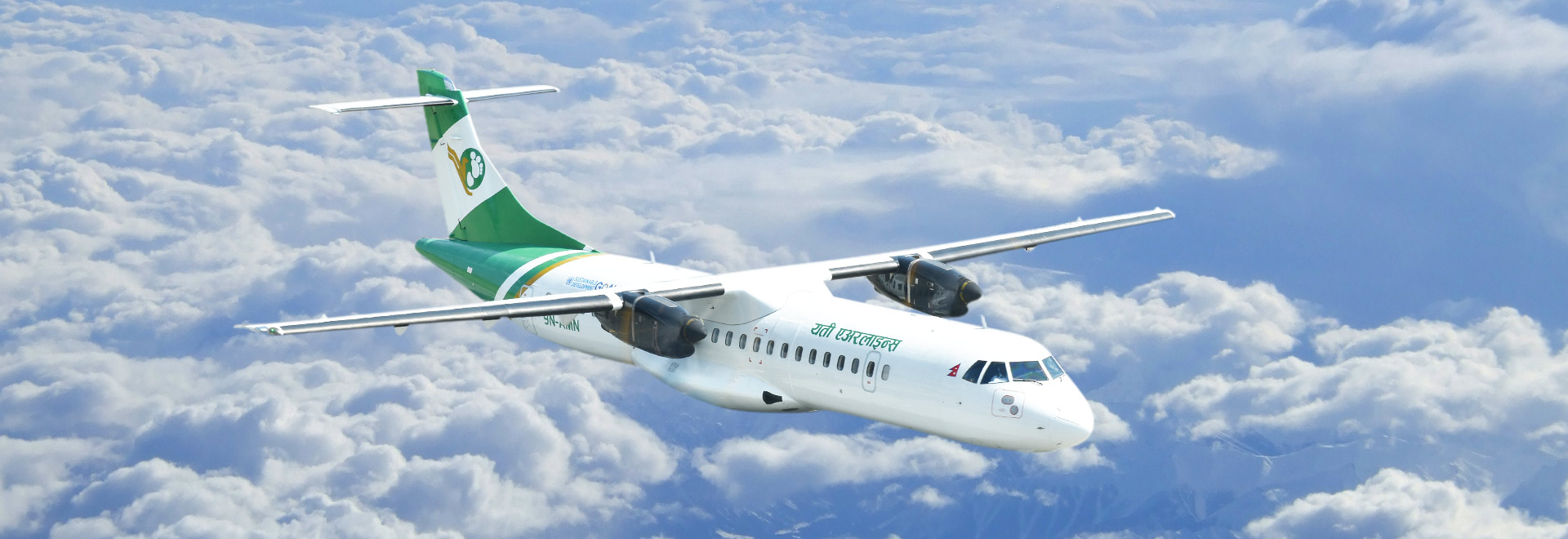


Kathmandu. While competing airlines are expanding the market by increasing the number of aircraft, private sector airline Yeti Airlines is under pressure to add aircraft to expand the market. The airline has not been able to expand the market according to the growing demand of the domestic market due to the limited number of aircraft (7) last year, due to which it could not operate on all the routes.
Yeti Air’s plans to expand aircraft have been pushed back due to non-availability of old ATR 500 and 600 models in the international market despite the announcement of the purchase of two more aircraft last year.


Recently, Chairman of Yeti Airlines Lhakpa Sonam Sherpa informed the media that bombardier’s Q-400 series aircraft will be brought. Earlier, during a media briefing in June 2081, he had said that he would buy two aircraft of the ATR 72-600 series.
Yeti Airlines does not currently have liquidity for capital investment, even though substantial investment is required to buy new aircraft. The decision to add aircraft for Yeti Airlines will not be easy unless additional paid-up capital is raised by issuing shares to the general public.
Not having enough aircraft
Rival Buddha Air is flying to all major destinations of the country through 18 ATR aircraft, while Yeti Airlines, which has only seven aircraft, has not been able to fly on all the current routes. Yeti Airlines does not operate flights from Kathmandu to Simara (Madhes), Bharatpur (Bagmati), Surkhet (Karnali) and Dhangadhi (Sudurpaschim).
Yeti Airlines has not been able to operate adequate and regular flights to Pokhara, the most popular destination outside Kathmandu, compared to Buddha Air. There are only limited flights to Biratnagar, Chandragadhi, Bhairahawa and Nepalgunj. Passengers are upset when all flights of Yeti Airlines are delayed due to chain effects when one flight of the regular schedule is pushed back due to weather problems or air traffic hold.
Yeti Airlines has a total of seven aircraft in its fleet. Buddha Air has the largest fleet with 18 aircraft. Aircraft and manpower used in the air service, which is known as the most sensitive and safe mode of transportation, are all scheduled to work hours. Due to regular check-ups and mandatory maintenance of the aircraft, not all aircraft with the airline provider are always able to fly.
Sometimes after the flight hours of the aircraft are over, everything is fine, but due to security concerns, the aircraft should be rested for mandatory maintenance. Sometimes, even if the flight hours of the aircraft are left, the flight service has to be stopped as the crew members, flight attendants, etc. have to be compulsorily rested even after the completion of the working hours.
After the completion of the scheduled flight hours, there is a compulsion to send the aircraft abroad to India or any other country for sea check (mandatory check and maintenance) of the aircraft.
According to the data published by the Civil Aviation Authority of Nepal (CAAN), Buddha Air remained at the top position in terms of number of flights in 2024 with 59 percent market share. Yeti Airlines’ market share has reached 21 per cent during this period as it has not been able to accommodate enough aircraft to meet the growing market demand. Yeti’s share was 17.27 percent in 2023.
Status of Shree Airlines
Due to the nature of the aircraft, another competitor Shree Airlines has also not been able to fly to short-distance airports to challenge Buddha Air. Shree Airlines has not been able to challenge Buddha Air on all routes despite the sufficient number of aircraft as short-haul flights like Simara, Bharatpur and Janakpur have not been able to make them affordable due to fuel costs. The routes of the flights are Kathmandu, Nepalgunj, Dhangadhi and Surkhet.
Shree Airlines has a market share of 15.52 percent in the domestic airline market in 2024. The previous year in 2023 it was 14.58 percent.