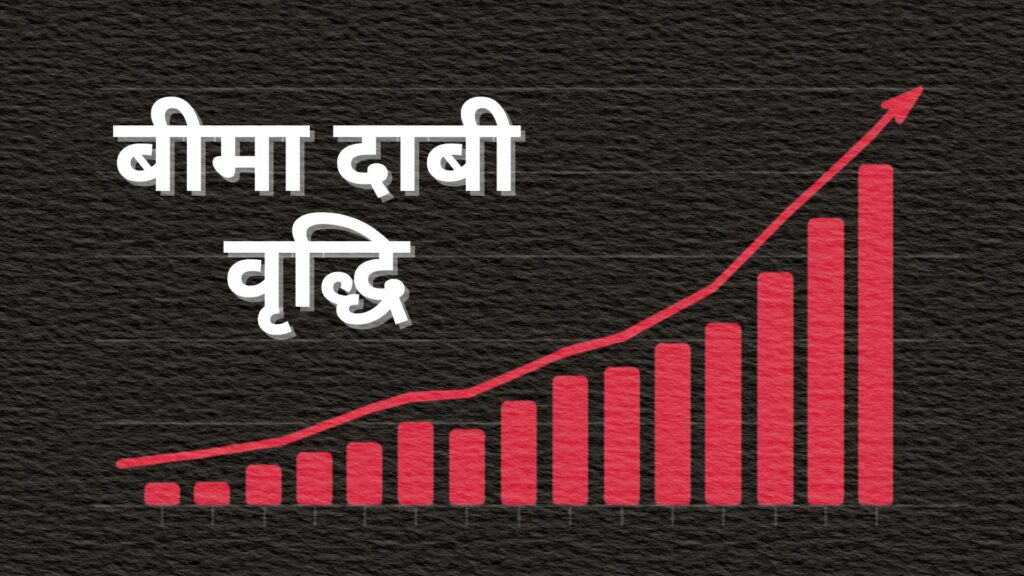







Kathmandu. Share loans disbursed through the banking system have started gaining popularity in the stock market. Current fiscal year 2081. In the 10 months of 1982, the margin nature loan has crossed Rs 125 billion. This is an increase of about 45 percent compared to the previous year. However, such aggressive expansion of credit has not had a direct impact on market growth.
Credit flow to the stock market increased, but why could the market not take advantage of it? Questions are beginning to arise.

The rise in share loans seems to have filled a potential gap in capital mobilisation in banks. However, the market is still unaffected. Many banks have significantly increased share loans, some have increased loans by 200 to 300 percent. But it has not had a direct impact on the secondary market.
Experts say that one of the main reasons for this is the change in the direction of investment flow. Instead of moving to the secondary market, such loans seem to be focusing on primary market instruments such as IPOs. Investors are being attracted by the expectation of making profits in a short time.
Market experts say the second reason is policy ambiguity. Similarly, the psychology of investors has also changed. Recently, investor confidence has decreased due to uncertainty in the market and political instability. It has not shown any direct interest in investment even when loans are disbursed.
Current fiscal year 2081. In the first 10 months of 1982, banks disbursed share loans worth Rs 125.52 billion. In the same period of the previous year, this loan was only Rs 86.18 billion. In comparison, the share loan has increased by 45.64 percent or Rs 39.33 billion.
Commercial banks dominate share loans. Commercial banks alone have disbursed share loans worth Rs 103.13 billion till Mid-April of the current fiscal year. In the same period of the previous year, they had disbursed loans worth Rs 67.34 billion. According to the NRB, this is an increase of 53.14 percent. However, despite such large credit flows, the capital market is still stable, creating confusion among investors.
Nepal SBI Bank has increased its share mortgage loan the most till April 2018. The bank has increased its loan by 388.59 percent to Rs 614.3 million. In the same period last year, the bank’s share loan stood at Rs 125.7 million.
Machhapuchhre Bank has increased by 291.95 percent to Rs 1.89 billion, Agriculture Development Bank by 157.82 percent to Rs 3.39 billion, Kumari Bank by 146.61 percent to Rs 9.57 billion, NMB Bank by 128 percent to Rs 2.02 billion.
According to nrb, Prime Bank has increased by 92.13 percent to Rs 7.82 billion, Laxmi Sunrise Bank by 64.58 percent to Rs 5.45 billion, Global IME Bank by 64.51 percent to Rs 11.59 billion and Nepal Investment Mega Bank by 63.94 percent to Rs 3.27 billion.
Prabhu Bank increased by 58.10 percent to Rs 4.70 billion, Sanima Bank by 53.23 percent to Rs 2.48 billion, Citizens Bank by 49.25 percent to Rs 6.79 billion, Everest Bank by 46.15 percent to Rs 2.90 billion and Siddhartha Bank by 40.90 percent to Rs 7.86 billion.
Rastriya Banijya Bank has increased by 38.27 percent to Rs 5.73 billion, Nepal Bank by 33.75 percent to Rs 7.77 billion, Nabil Bank by 28.42 percent to Rs 14.59 billion, Himalayan Bank by 17.22 percent to Rs 2.44 billion. However, DURING this period, NIC Asia Bank has reduced its share loan. In the 10 months of the current fiscal year, NIC Asia Bank has disbursed only Rs 2.17 billion, down 46.76 percent.