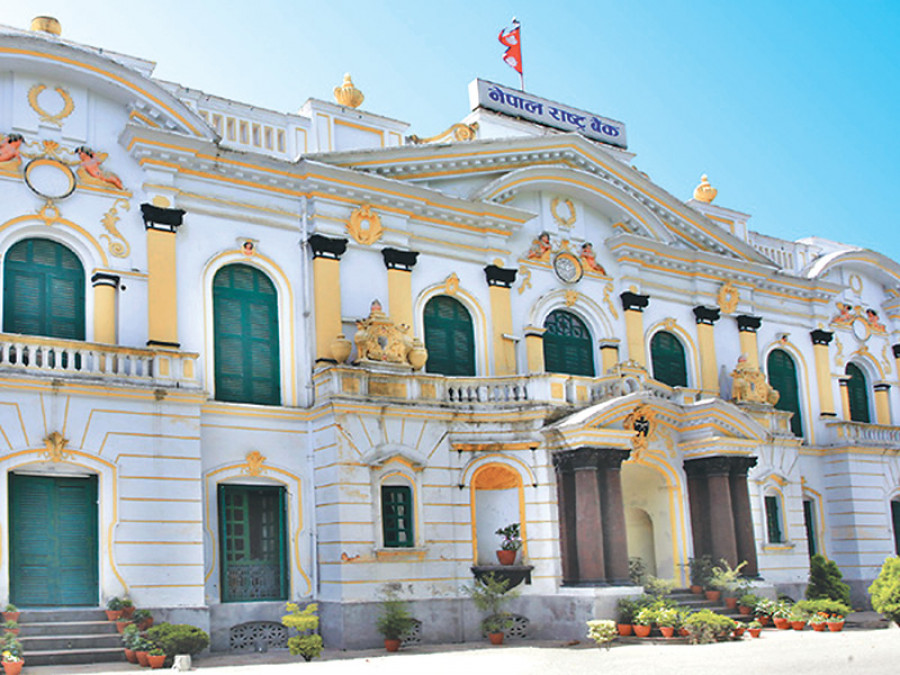







Kathmandu. Nepal Rastra Bank (NRB) The monetary policy making process has started for 83.
Nepal Rastra Bank (NRB) has sought suggestions from all stakeholders, experts and the general public till June 30. This process is the formulation of the first monetary policy during the tenure of the new Governor Bishwanath Poudel. There is concern everywhere about the direction in which he will turn the current slow economy as he understands the economy very poorly and has previously led the Planning Commission.

Issuing a public notice on Monday, the Rastra Bank has called for submission of opinion suggestions to the Department of Economic Research through e-mail. Nepal’s monetary policy is made public every year in accordance with the Rastra Bank Act, 2058. The same policy guides sensitive aspects such as money supply, credit expansion, interest rate policy, and financial stability.
This time monetary policy is particularly important. Because this policy will reflect the first concrete reflection of Governor Poudel’s economic vision and leadership ability since he took office on May 7. How he accelerates the economy is now a matter of concern. Because the economy has been slow for the last two years.
The government has already presented some policy directives with the goal of accelerating the economy through the upcoming fiscal year’s budget. Finance Minister Bishnu Poudel has announced financial policies for expansion of credit, ease of working capital, interest penalty concession and business revival.
The monetary policy will decide whether Governor Poudel will implement these announcements in the budget or amend them. Governor Poudel will take a decision on how to take these policies forward as all these policies have to be implemented from the monetary side. “Rescheduling of loans, working capital flow and interest penalty will be waived off for businessmen who are facing problems due to reduction in overall demand and business contraction. ’
Stakeholders are hoping that Governor Poudel’s monetary policy should be flexible, revival-oriented and private sector-friendly to take this announcement of the budget to the implementation level.
The private sector is currently reeling under a slowdown in the financial system, difficulties in access to credit, and shrinking investment trends in businesses. In such a situation, the monetary policy brought by Governor Poudel should be able to become a link to boost their morale.
In addition, the Rastra Bank should focus on policy implementations such as reducing passive debt through monetary policy, transferring investible capital lying in the banking system to productive sectors and reviving small and medium enterprises.
The government has set a target of 6 percent economic growth and 5.5 percent inflation in the next year. To achieve this goal, monetary policy needs to balance interest rates, availability of credit and market liquidity management. Governor Poudel is under pressure to formulate monetary policy in view of these things.
Everyone believes that the first monetary policy under the leadership of Governor Poudel will guide it amid the slowdown of the economy. The government has also given the same message through the budget.
Nepal Rastra Bank (NRB) has been formulating and making public its monetary policy every year as per the provisions of the Nepal Rastra Bank Act, 2058 BS.
Poudel is under pressure to facilitate the implementation of the issues mentioned in the budget as the joint government of CPN-UML and Nepali Congress has appointed him governor. Governor Poudel will have to bring the first monetary policy of his tenure to boost the morale of the private sector.
From now on, the Rastra Bank has been working to collect suggestions and formulate monetary policy in consultation with the stakeholders. At the same time, the Rastra Bank will announce the monetary policy in the first week of July.