



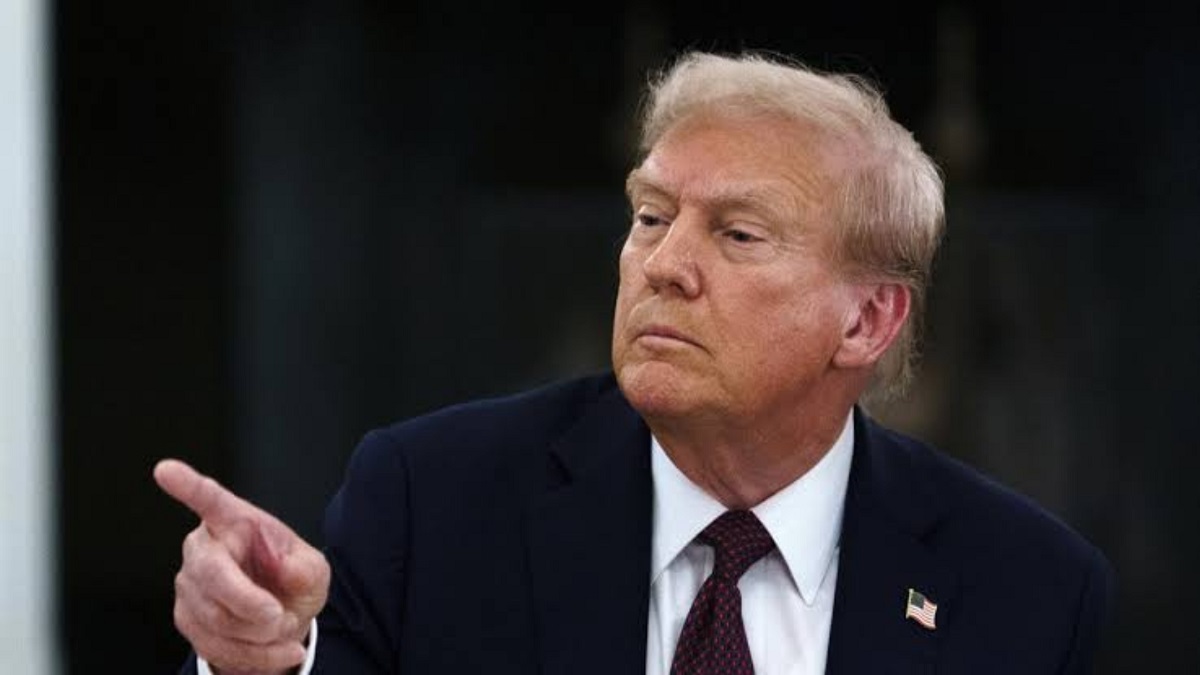


Kathmandu. US President Donald Trump is currently in the race for the Nobel Peace Prize. He has campaigned vigorously for the prestigious award, saying he has played a role in ending the world’s long-standing conflicts.
While Trump’s claims caused a stir in the international media as the winner was announced on Oct. 10, experts are skeptical about his prospects.


In Nepal too, Trump’s race has been closely watched in view of the impact of US policy and interest in the Nobel Prize.
Claim of ‘historic’ success in the conflict
}
On October 4, President Trump announced that a major breakthrough in the Gaza conflict was likely. Trump’s comments came after Hamas, which controls Gaza, partially accepted his 20-point peace plan. Hamas has ordered Israel to “stop bombing Gaza” and said it was ready for “lasting peace” and agreed to release all remaining Israeli hostages. Trump has touted it as the closest ceasefire agreement since the start of the war.
Hamas has rejected key conditions, such as disarmament and a complete withdrawal of a military presence in Gaza. Israeli Prime Minister Benjamin Netanyahu expressed surprise at the public reception of Trump’s Hamas response and said Israel’s terms would remain irrevocable.
Claims and Truth of the ‘Seven Wars’ End
A key pillar of Trump’s Nobel campaign is his claim that he has ended “seven never-ending wars” since taking office in January 2025. These include Cambodia-Thailand, Kosovo-Serbia, Congo-Rwanda, Pakistan-India, Israel-Iran, Egypt-Ethiopia, and Armenia-Azerbaijan.
Fact-checking agencies and regional experts have challenged those claims. Many of the conflicts claimed by Trump were not in a state of passive or active combat at the time they were declared, they said. However, his administration has played a key role in ending decades-long territorial disputes over Nagorno-Karabakh and declaring a historic peace between Armenia and Azerbaijan.
Why are experts skeptical?
Despite Trump’s massive campaigning, peace experts downplay his chances of winning the prize.
Historians such as Ashley Swinney have seen Trump’s open support for Israel and his relationship with Russian President Vladimir Putin as antithetical to the Nobel Peace Ideals.
Nina Grieger, director of the Oslo Peace Research Institute, called Trump’s prospects “unfortunate” because of his long history of backing out of international agreements and starting trade wars with traditional allies.
The Norwegian Nobel Committee sees the unprecedented lobbying campaign by Trump and his administration as an increase in pressure on the committee. The committee’s vice-chairperson, Ashley Toje, said he was concerned that external pressure would often lead to the opposite effect.
Political Introduction to Trump
Donald Trump is a real estate tycoon and media personality. He served as the 45th President of the United States from 2017 to 2021. After returning to the White House after being re-elected in January 2025, he is seeking to expand his global influence and negotiate peace deals in conflict zones. This has now laid the foundation for his Nobel Peace Prize campaign.
Trump’s strategy has drawn a global response. The decision on the upcoming Nobel Peace Prize will be crucial. This will explain how the world community views his peace initiative in the face of geopolitical challenges.
In short, President Trump has portrayed himself as a peacemaker who will shape global conflicts. But the complex reality of his claims and the neutral stance of the Nobel Committee have cast doubt on his candidacy.