




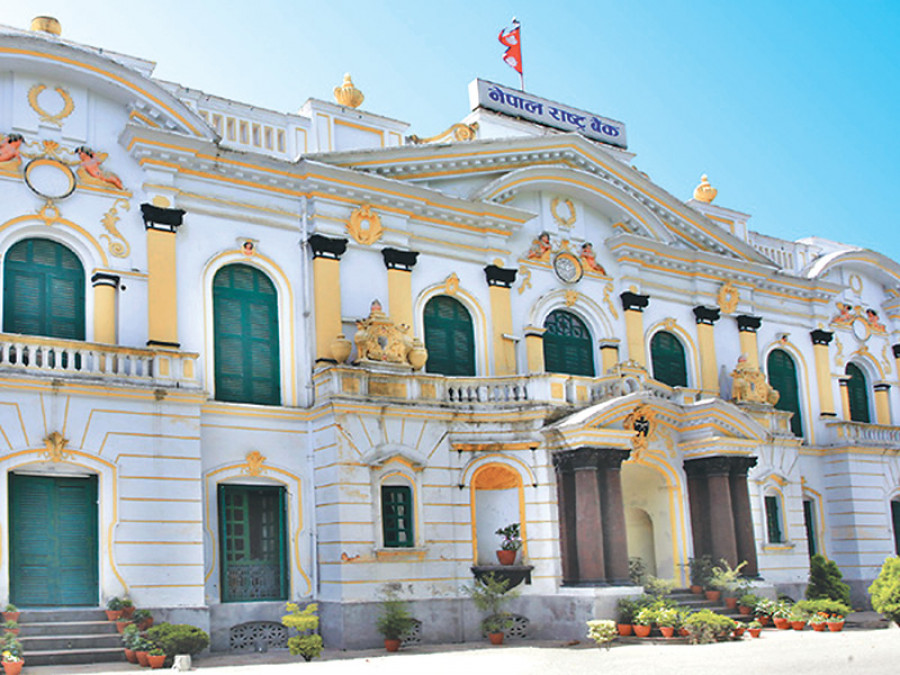


Kathmandu. Kathmandu: Nepal Rastra Bank (NRB) has amended the financial statements of banks and financial institutions and the procedure related to dividend approval.
According to the procedure released by the Rastra Bank through its website on Wednesday, the distribution of dividend of banks and financial institutions that are at financial risk and do not have adequate capital funds has been tightened.


According to the revised procedure, if there is a situation of ownership of shares beyond the prescribed limit of paid-up capital while investing in the founder shares of a bank and financial institution, the proposed cash dividend or bonus share distribution will be banned until the capital is dropped within the prescribed limit.
At present, a maximum of 15 percent can be invested in any bank and financial institution and only up to 15 percent of the paid-up capital can be invested in other banks and financial institutions. And 25 percent and 10 percent can be invested in microfinance institutions respectively. However, the limit of such investment will not be applicable to nepal rastra bank and banks and financial institutions investing as founders in subsidiaries.
In addition, after deducting the amount of cash dividend on the basis of the primary capital fund with supervisory adjustment, the remaining supervisory adjustment will be allowed to declare or distribute cash dividend only if the prescribed minimum primary capital or capital fund or more is maintained with buffer.
Regional level development banks and finance companies will have to maintain capital adequacy ratio 2008 and microfinance at least 0.5 percent of the prescribed capital and at least 1 percent buffer in the capital fund. Similarly, in the case of development banks and finance companies other than the national level, the primary capital fund should be 6.5 percent and the capital fund should be 11 percent or more.
According to the procedure, if the paid-up capital of the institution to be maintained after the merger is insufficient than the total total of the paid-up capital of the institutions involved in the merger or acquisition, then the amount of difference in paid-up capital should be accounted in the capital reserve fund and cash dividend should not be distributed to the shareholders from such amount.