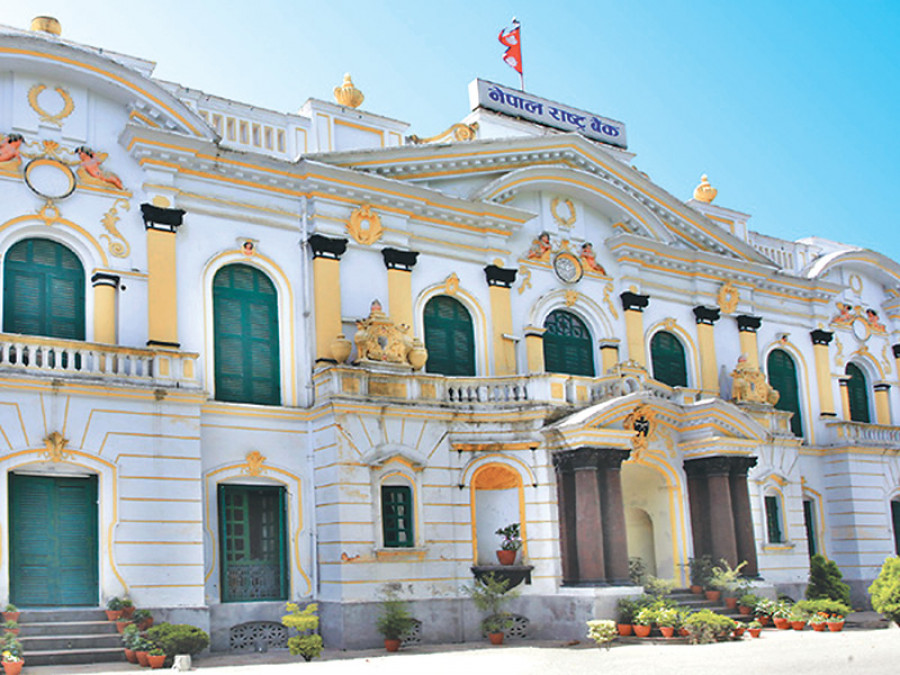







Kathmandu. Nepal Rastra Bank (NRB) and banks have embarked on a strategy to increase the demand for overall credit through share loans.
Governor Bishwanath Poudel is confident that the overall economy can be given direction by making share loans more flexible. According to this, Poudel completely removed a provision of the monetary policy brought by the then Governor Maha Prasad Adhikari in July 2078 BS after four years. The central bank has scrapped the provision related to the limit on share mortgage loans based on the recommendations of the task force formed to reform the stock market after the Genji movement.


Earlier in the year 2079. The limit of Rs 4 crore was removed from Rs 12 crore in Rs 80. In September 2080, the central bank had set a provision for individual investors to borrow up to Rs 150 million and institutional investors up to Rs 200 million.
In 2008, the then Governor Adhikari had removed the institutional limit and kept it at Rs 15 crore for individuals. After this, Governor Bishwa Poudel had increased the limit of individual investors to Rs 250 million in August 2082, but now that too has been removed.
Nepal Rastra Bank (NRB) has been adopting a policy to boost the morale of investors by making the stock market flexible for some time now. Governor Poudel has been consistently flexible in his policies to give a positive message to the market.
There is enough money to invest in the banking sector due to lack of credit investment. The policy is to mobilize the same amount through the stock market.
Although there is plenty of liquidity in the economy at present, the demand for credit to the real sector has not increased as expected. Meanwhile, share loans have been steadily increasing.
In the last fiscal year, banks and financial institutions collected deposits of Rs 7303.53 billion. During the period, loans amounted to Rs 5.581 trillion, according to the NRB. Out of this, Rs 140.70 billion has been issued as collateral. This is about Rs 50.60 billion more than the previous year. In the previous fiscal year, banks had issued only Rs 90.09 billion as collateral loans.
In this way, the expansion of credit in the stock market has created new opportunities for the banking sector. As demand for credit declines in other sectors, banks are beginning to see the stock market as a “credit consumer” zone. This has contributed to the mobilization of deposits collected in the banks and the capital mobilization of the investors.
Now that interest rates are limited to single digits, it has become easier for those who want to invest in the stock market to get loans. The number of people taking loans at cheap interest rates has increased in the market.
The NRB’s latest policy is focused on boosting the morale of investors by becoming more flexible towards the stock market. Governor Poudel has also tried to find a balance between mobilizing liquidity in the banking system and increasing the activism of investors.