




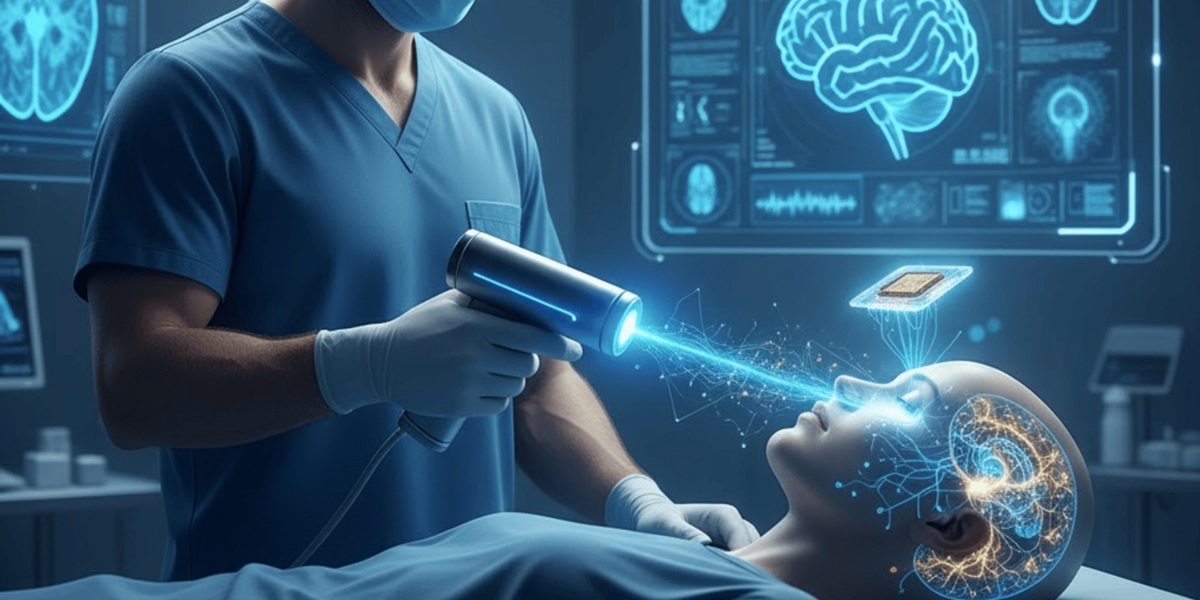


Kathmandu. A team of researchers from the Massachusetts Institute of Technology (MIT) has unveiled a groundbreaking wireless neurotechnology platform called ‘Circularonics’. This system is unlike traditional neural implants and does not require surgery. This is expected to redefine brain therapy.
Key Breakthroughs: Injectable, Cell Merging Electronics{

}
One of the major innovations of the Circulatronics system is injectable electronics. SWED (Sub-Cellular Wireless Electronic Devices) are nanoscale electronic devices smaller than single cells. It can be injected directly into the bloodstream.
After the injection, these devices are naturally absorbed by the body’s own monocytes (a type of white blood cell). Because monocytes are part of the body’s immune system, they naturally go to wherever there is inflammation or injury in the brain. These mergers form ‘cellular cyborgs’. They follow the body’s immune system’s pathway to reach the diseased target area.
Wireless therapy in the target location{
Once the target site is reached, SWED is embedded in the nerve tissue. From there, they emit small, programmed electrical pulses to control problematic brain signals. The entire procedure is wireless and does not require the risk of major cranial surgery. All control and surveillance is handled wirelessly. This enables real-time tuning and long-term health monitoring.
Medical applications and possibilities
This technology has the following great potential to treat neurological disorders:
Alzheimer’s disease: Possibility of slowing the progression of the disease by controlling local brain signals and inflammation.
Multiple sclerosis: Targeting areas of depletion to repair nerve signals and reduce immune attacks.
Damage from Stroke: Promote recovery in injured brain regions.
Brain tumor TAG_CLOSE_span_46 s: Delivering localized therapy or drugs to target tissues.
{{TAG_OPEN_span_45}Other disorders: It can also be adapted to treat brain damage caused by epilepsy, Parkinson’s, or injury.
advantages over traditional neurotechnology{
}
Circultronics offers many advantages over traditional implants (such as Neuralink). Less invasive: Conventional implants require skull surgery. Which carries a high risk of infection and scarring. Circultronics, on the other hand, is injectable and blood-generated, so the risk of infection and scarring is low.
Target Target: Conventional method has a limited target in the path of surgery. However, in circulatronics, the devices are delivered to the target location by the body’s natural immune system.
Utilities: Traditional methods often focus on limited uses, such as severe paralysis. Whereas circulartronics can be used in chronic and comprehensive neurological conditions.
Longevity and Optimization: The new technology has the potential to integrate cells and tissues and be re-dosed as needed. Whereas an upgrade to the old technology or failure requires surgery again.
Stages of development and path to the future
}
Preliminary animal studies have confirmed that SWD binds stably to monocytes. They move naturally to the target and deliver wirelessly controlled nerve stimulation without any toxic side effects. MIT and its partners are now preparing for human trials awaiting regulatory approval, focusing on safety, efficacy, and better dosing.
MIT’s Circulartronics platform is bringing about an epoch-changing in neurotechnology. It is transforming brain interfaces and disease therapies from risky surgeries to routine, minimally invasive medical procedures. As research advances, this innovation could offer new hope for treating some of neuroscience’s biggest challenges.