



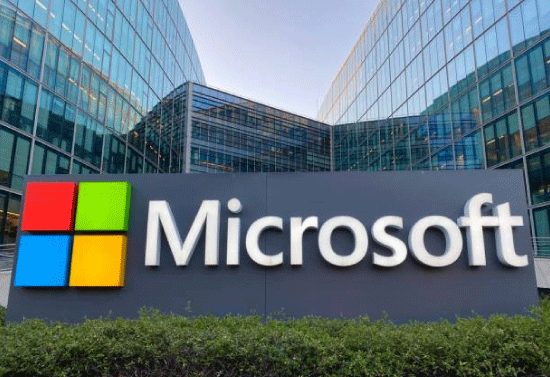


Kathmandu. Veteran IT company Microsoft has decided to adopt a unique method to reduce carbon emissions. This method is related to human waste (excreta).
Microsoft is signing a 12-year deal with startup company Vaulted Deep. Under this agreement, Microsoft will buy 4.9 million tons of organic waste. This waste includes fertilizer, sewage waste and paper mill byproducts.

Microsoft will bury this garbage thousands of feet below. This will prevent greenhouse gases such as methane and Co₂ from entering the atmosphere. Microsoft will spend $41.7 billion on the project.
The company aims to be carbon negative by 2030. This means it will remove more carbon from the atmosphere than it emits.
Microsoft has signed a big deal with a startup called ‘Vaulted Deep’. This agreement is to reduce carbon emissions. The ‘Vaulted Deep’ company was launched in 2023. This company collects waste and waste organic waste. This waste includes fertilizers, sewage waste and paper mill byproducts.
The company keeps this waste through pipes 5000 feet below the ground. The waste stops rotting under the ground. Due to this, gases like methane and Co₂ do not spread in the atmosphere.
Daniel Sanchez, an assistant professor at the University of California-Berkeley, said, “This is dirty waste. For which we have no other work. They want to deposit it permanently under the ground. Sánchez is an expert in biomass systems. This system removes CO₂ from the atmosphere. According to him, this method is very easy.
The ‘vaulted deep’ method not only reduces greenhouse gases, it also prevents soil and water from being contaminated. Due to this dual benefit, Microsoft is investing in this company.
Why did Microsoft take this step?
Microsoft is consuming a lot of energy these days. It is consuming a lot of energy, especially in the work of AI. This has increased carbon emissions. Between 2020 and 2024, the company emitted 75.5 million tonnes of CO₂. Microsoft’s goal is to become carbon negative by 2030.
By 2050, it must remove more carbon than it emits. To achieve this goal, Microsoft is working on many new technologies.
The ‘Vaulted Deep’ project is also one of these technologies. Microsoft is planting trees again in Panama. In Norway, it is capturing smoke from burning waste and storing it under the Northern Sea.
Brian Mars is Microsoft’s senior director of energy and carbon removal. “Microsoft has invested in vaulted deep because it has many benefits,” he said, adding that Vaulted Deep is a waste management company, which has now become a carbon dioxide removal company. ’
The vaulted deep has also started very differently. Co-founders Julia Rechelstein and Omar Abu-Saeed never thought of starting a carbon removal company. Abu-Saeed’s father had previously developed a technique to inject oil waste underground. Umar later commercialized it under the Advanced Tech Company. He worked in a bioslurry from a wastewater facility in Los Angeles.
Today the company manages about 20 percent of Los Angeles’s biosolids. It has also opened a new plant in Hutchinson, Kansas. The plant runs on agricultural and municipal waste. The plant is expected to remove 50,000 tonnes of carbon annually when operating at full capacity.
In some parts of the world, particularly in Europe, waste is converted into biogas. However, north America does not have many energy reuse facilities. So the vaulted deep strategy is more effective here. This process uses normal drilling. It doesn’t require any expensive and new technology. Therefore it is considered less risky and cheaper than alternatives such as direct air capture.
“Currently, it costs about $150 per tonne to collect and collect waste,” Sanchez said. However, working closely with waste facilities can reduce prices further. In this way, Microsoft is investing in new and promising ways to remove carbon through human waste. It can’t just help reduce carbon emissions. However, it can also contribute to waste management and environmental protection.