







Kathmandu. More than 88,000 people have obtained labour permits from Madhes province, which is at the bottom in terms of human development index, in the last six months. Most of those who have obtained labour permits are unskilled manpower.
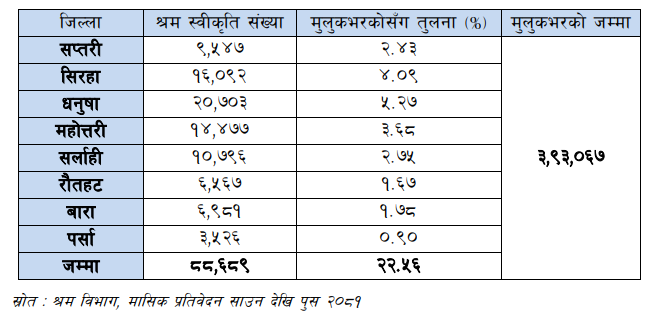
Nepal Rastra Bank (NRB) has published madhes province 2081. According to the half-yearly report on economic activities of 1982, 88,689 people have obtained labour permit from the Department of Foreign Employment till mid-December last year. This is 22.56 per cent of the total number of labour permits received from across the country.


A total of 20,703 people from Dhanusha have obtained labour permits as the district with the highest number of labour exporters for foreign employment in the country. This is 5.27 per cent of the total labour permits.
According to the NRB, a large number of workers from Madhes province have gone abroad for foreign employment.
Last fiscal year 2080. Of the 741,297 Nepalis who went for foreign employment, the highest number are from Madhes province. A total of 172,861 people from Madhes province, which has eight districts, had gone for foreign employment.
According to the report, although the number of workers going for foreign employment is significant, the number of unskilled workers is high. Due to the high number of unskilled workers, the share of Madhes is large in numerical terms, but it is average in terms of remittance inflow.
Qatar, United Arab Emirates, Saudi Arabia, Kuwait and Malaysia have the highest number of foreign workers from Madhes province.
Sharat Singh Bhandari has not been able to do any significant work to increase the efficiency of the workers despite getting the opportunity to handle the Ministry of Labor, Employment and Social Security time and again representing Madhes Province.
Neither the federal nor Madhes state governments have shown any interest in bringing residential training centres into operation even at the provincial level regarding the skill enhancement of unskilled workers and safety precautions to be taken at the workplace and training on the language of labor destinations.
The number of people who have gone abroad for foreign employment due to unskilled human resources and inadequate training on workplace safety is increasing every year.