






Kathmandu. In view of the upcoming elections in Bangladesh, the interim government announced the cancellation of india’s power purchase agreement with GMR in a propaganda style. With this announcement, there are concerns that the electricity generated by GMR-funded hydropower projects in Nepal will be wasted. Come o
Bangladesh’s interim government is preparing to hold general elections in April 2026 (Chaitra month). The interim government has not had cordial relations with India, which has protected ousted Bangladesh Prime Minister Sheikh Hasina. On Saturday, the Indian government announced a ban on the export of nine more types of goods, including jute, from Bangladesh via land route.


There has also been a conflict between the two countries in bilateral trade. As a result, Bangladesh’s announcement to cancel the power purchase agreement with India.
Among the South Asian countries, Pakistan and Bangladesh are facing an acute energy crisis. Only 230 MW Kaptai hydropower project is in operation in Bangladesh so far.
Due to the rivers flowing through the plains, the possibility of constructing big hydropower projects in Bangladesh is low. However, various study reports have pointed out the possibility that Bangladesh can meet a limited share of the national energy demand through small hydropower projects.
Most of the domestic energy demand is met by thermal energy. It relies on electricity and fuel imported from India to meet the demand for energy. India is pushing for import of petroleum fuel by cancelling the power purchase agreement with India.
According to Enr Data, Bangladesh’s energy demand is growing at a rate of 7 percent annually. Power generation capacity was 5 GW in 2009, which was 26.5 GW in March 2024. 1,000 MW is equivalent to 1 GW.
Bangladesh, which has been pushing for import of petroleum fuel from third countries bypassing India, has not been able to find a permanent solution to the demand for electricity within the country. Moreover, since the Government of Bangladesh does not have enough foreign exchange funds, avoiding the energy crisis by regularly buying high-value fuel from third countries will be like chewing iron rods.
Target of solar energy generation:
Bangladesh aims to generate 20 per cent of its electricity demand from renewable energy sources by 2030-40.
According to a recent report by the Institute of Energy Economics and Financial Analysis, Bangladesh will need an investment of more than US$980 million annually by 2030 to meet the goal of generating electricity from renewable sources set in the Renewable Energy Policy 2025.
The report titled “Bangladesh’s Renewable Energy Finance Catalyst” published on Wednesday also said that Bangladesh will have to spend $1.46 billion annually from 2030 to 2040 to generate 30 percent of electricity from renewable energy sources by 2040.
According to The Business Standard, the institute pointed out the risk that policy uncertainty, buyer and currency risks, land acquisition challenges, and a downgraded sovereign valuation could limit capital flows into Bangladesh’s renewable energy sector. Public finance is also unlikely to fully meet these funding requirements, which will require large-scale private investment.
Although Bangladesh has invested continuously for a decade and a half in the development of alternative energy projects, domestic energy production does not seem to be enough to meet the growing demand for electricity in the domestic market.
Challenges in renewable energy financing:
The Institute has identified several challenges in attracting private investment in the renewable energy sector. Challenges are policy and regulatory changes, investor risk, technology and performance risk, weak project pipelines, cumbersome debt disbursement process, land acquisition challenges, currency instability and less sovereign valuation.
In addition, unexpected policy changes have also played a negative role in weakening investor confidence which has ultimately reduced the flow of foreign capital.
Energy generation in Bangladesh:
In Bangladesh, 49 percent of natural gas, 27 percent of petroleum fuel, 15 percent of bio-energy and 7 percent of petroleum coal are supplied. Renewable energy, wind and hydroelectric energy contribute 1.33 percent.
According to statistics published in 2022, Bangladesh generates a5 times more petroleum fuels a. In 2022, its domestic production was limited to a total of 0.3 metric tons. Only 15 percent of the demand for petroleum fuel is met from domestic production.
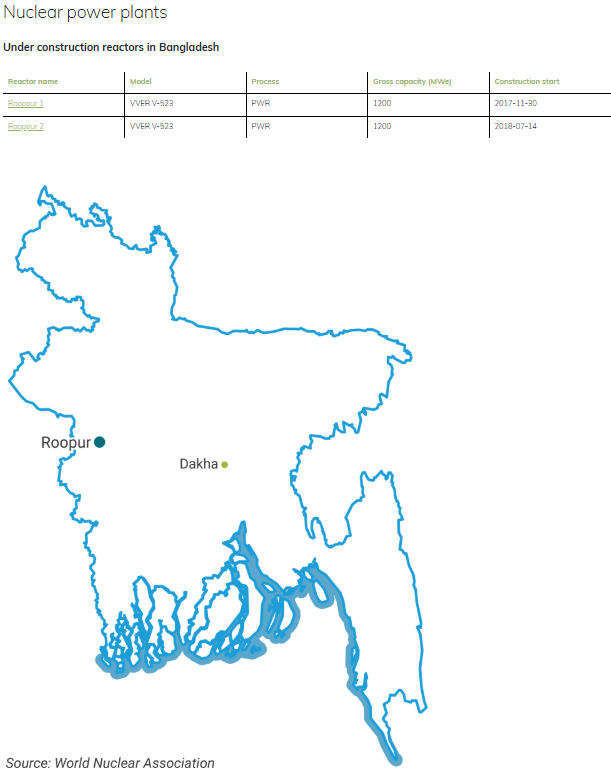
Bangladesh is also planning to set upa second nuclear power plant to avert an energy crisis. Although the first nuclear power plant under construction near the capital Rupur was planned to come into operation from last year, the completion will be delayed by another year.