





Kathmandu. The global economy is currently undergoing a sensitive period of deep uncertainty and structural change. Policy changes, trade barriers and financial risks are weighing on economic growth at the same time.
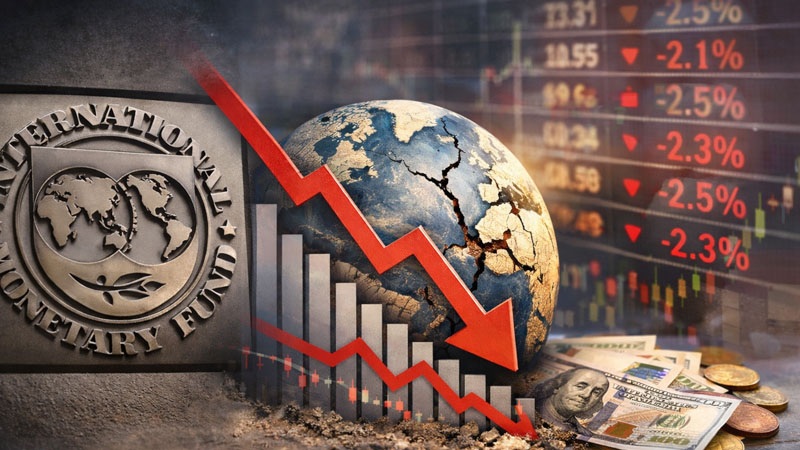
The International Monetary Fund’s (IMF) October 2025 World Economic Outlook expects global GDP growth to slow from 3.3 percent in 2024 to 3.2 percent in 2025 and a further 3.1 percent in 2026. This trend clearly indicates that the global economy is now facing long-term challenges. This is because the initial pace of recovery after the Covid pandemic has slowed.



This slowdown in growth reflects the different realities of each sector. Advanced economies are expected to grow by an average of 1.5 percent in 2025, driven by higher interest rates, labour market disruptions and tighter monetary policy.
On the other hand, emerging and developing economies are expected to grow significantly higher. However, their average growth rate is expected to be slightly above 4 percent. This suggests that while the burden of the global economy has gradually shifted to these countries, the required momentum has not yet been achieved.
Overall, there are some signs of relief in terms of inflation. The IMF expects global inflation to fall to 4.2 per cent in 2025 and 3.7 per cent in 2026. However, despite this downward trend, uncertainty persists in financial markets. Rising borrowing costs, high public and private sector debt, geopolitical tensions, and the risk of sudden repricing of assets in some sectors, including the technology sector, could destabilize the market. These risks can also have a negative impact on the real economy through the financial system.
According to the analysis, there are many interrelated factors behind the slowdown in global growth. Increasingly protectionist policies are impeding the normal flow of international trade and investment. Skills shortages and sluggish productivity in the labour market are hampering economic expansion. In addition, the rapid growth in trade and investment has revived the economy for some time, making it difficult to sustain the growth momentum as it has now lost its impact. In this context, a stable macroeconomic environment is becoming increasingly important, especially for the insurance sector.
Long-term risk management, balance between liabilities and assets, and maintaining financial stability are the cornerstones of the insurance industry. With the normalization of the bond yield curve in some sectors, insurance companies are benefiting from better investment returns, more realistic commodity pricing and stronger capital positions. This is helping to increase the financial resilience of the sector.
However, the insurance sector may also come under pressure if there is significant volatility or long-term uncertainty in the financial markets. This can lead to a decline in asset values, a decrease in investment returns, and difficulties in liability management. Especially for long-term insurance products where inflation and interest rate fluctuations play a very sensitive role. Nevertheless, the well-diversified and high-quality investment portfolios of most insurance companies continue to play a major role in reducing consolidation risk, ensuring liquidity and protecting overall solvency.
At a time when the global economy as a whole is currently experiencing slow growth and multidimensional uncertainty, this reality opens the door to future prospects. Effective trade negotiations, deep structural reforms, and technology-enabled productivity enhancement efforts, if implemented in a timely and coordinated manner, could propel the global economy. When addressing current challenges, a long-term vision and policy stability may be the strongest foundation for sustainable and inclusive growth.