



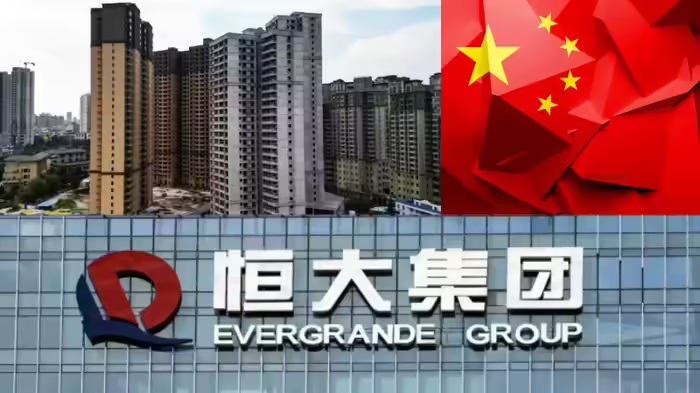


Kathmandu. Evergrand, China’s largest property company, has come to an end. There was a time when this company was a symbol of China’s economic power. Now it has become history.
Evergrand was removed from the Hong Kong Stock Exchange on Monday. The news came without any noise. The company started its business in Hong Kong 16 years ago. Profits were then expected for investors in China.


Evergrand was the fastest growing property developer company. But now it will be remembered as one of the most indebted companies in the world. This sinking threatened China’s financial system.
The company challenged Beijing’s “it’s too big, we won’t let it sink” policy. The Chinese government was against lending to big companies without thinking. Evergrand broke this policy.
In 2021, Evergrande was plunged into debt of more than $300 billion. This exposed the weakness of China’s economy. It was revealed how much China’s economy is dependent on real estate. Now only the structure of this company remains. In more than 280 cities, 1,300 real estate projects are incomplete.
Millions of people are waiting for their homes. Apart from this, many are indebted. From companies working in China to investors in London and New York, everyone is waiting for their money. Evergrande’s recently released document shows how difficult it is.
Borrowers have taken hundreds of legal actions against Evergrande’s projects in China. Many properties have been confiscated. In some cases, investors or local governments have seized projects.
Evergrande’s business is very complex. It has thousands of subsidiaries. Therefore, it is becoming increasingly difficult for Hong Kong’s liquidators to acquire other assets.
Liquidators will have to take control of all subsidiaries one by one to withdraw money from Evergrande. So far, more than 100 companies and assets worth $3.5 billion have been seized.
Hong Kong borrowers will have to get $45 billion. Of this, only $255 million has been returned. The liquidators also said the value of the seized property was questionable. They said they had serious doubts about how much money the company’s lenders would receive.